

Why Is Drone Propeller Noise Hard for Speech Recognition?
- Basic
- Article
- Ages 14+
- 6 min read

Propeller noise makes speech harder to recognize because the microphone records both the speaker and the motor sound, and the noise can mask acoustic details that distinguish words. The received speech-to-noise balance changes with microphone placement and motor state. That is why a quiet-room transcript cannot predict performance near a running vehicle.
Contents
- Speech, upper branch
- Microphone capturing mixed sound
- Propeller noise source, below
What you will learn
- Explain how competing sound hides information in speech.
- Relate microphone position and motor state to the recorded mixture.
- Design a fair recognition sample and interpret its limits.
Before you start
You only need to know that a microphone records a mixture of sounds around it.
How does propeller noise interfere with speech?
At the microphone, the desired voice and unwanted sound are added together. A recognizer must infer words from patterns such as consonant bursts, vowel energy and pitch movement. If motor noise is strong in the same time and frequency regions as a speech cue, it can cover or distort that cue; the recognizer then has less evidence for the intended word. This is acoustic masking.
The signal-to-noise ratio describes the speech level relative to the masker level. A lower ratio means the recorded voice is less prominent against the unwanted sound. A small command can be especially vulnerable: when its only distinguishing consonant or tone cue is obscured, the rest of the short phrase may not provide enough context to recover it. The resulting error can be a substitution, deletion or a command not recognized at all; it is not a fixed percentage for every vehicle.
Why do microphone position and motor speed matter?
A microphone close to the speaker usually captures a stronger voice relative to surrounding noise than one farther away. Google’s speech-recognition guidance recommends positioning the microphone close to the person, particularly when background noise is present, and warns that excessive noise and echo may reduce accuracy. On a vehicle, the microphone may also sit close to a motor or vibration path, so moving it can improve voice pickup or make motor sound stronger. The exact result depends on the enclosure, mounting and acoustic path; it needs measurement on the intended setup.
Motor speed changes the sound reaching the microphone, and a different operating state may change both its level and its tonal pattern. The recognizer is not told that a rotor is producing the sound unless the system provides that context. Consequently, testing only with motors stopped misses a major condition of the target environment. Noise processing is not automatically a fix: Google cautions that preprocessing noise reduction typically reduces recognition accuracy for its service, so compare processed and unprocessed samples rather than assuming a filter helps.
How do you measure the effect?
Use the same microphone, mounting, audio path and command set intended for use. Prepare reference transcripts, record representative speakers and conditions, and separate recordings by motor state and distance category. Compare recognized words with the reference using a consistent metric; also count command-level outcomes such as correct intent, wrong target, missing field and no recognition. Report the number and type of recordings in each group so a difference is interpretable.
A useful reading is comparative: if recognition errors increase only when motor noise is present, noise is a plausible contributor; if errors cluster by speaker or phrase even in quiet, vocabulary, pronunciation or the model may matter too. Do not claim a noise reduction percentage from one speaker or a single recording. A representative sample should be random enough to avoid selecting only clear examples and should resemble the deployment environment.
Walkthrough: isolate one source of failure
Hypothetical recording-analysis example, not measured results.
A team uses existing recordings of the same short command list, including quiet and representative motor-noise conditions. This software exercise does not require running motors. The team labels each file with microphone position and motor state, then compares transcript errors and command decisions against references. If only one position loses the same consonants, they inspect the mounting and audio path; if all positions degrade as motor sound rises, the recognizer’s noisy-condition performance needs attention. Any filter is assessed on the same held-out recordings and checked for new speech distortion.
Common misunderstanding
A good result in a quiet room predicts performance near a drone. It does not reproduce the motor sound, mounting or acoustic balance of the target environment.
Frequently asked questions
What does signal-to-noise ratio mean?
It compares the speech level with the unwanted masker level. A smaller ratio means the microphone captures less prominent speech relative to noise.
Should I always add noise reduction?
No. Processing may alter useful speech cues, and the service guidance warns that noise-reduction preprocessing can reduce recognition accuracy. Measure with the actual pipeline.
How do I know whether a microphone location is better?
Compare recordings made with the same speakers and phrases under matched conditions, then check transcript and command-level errors rather than judging only how loud the audio sounds.
Summary
- Motor sound can mask time-frequency cues that distinguish spoken words.
- Microphone placement and motor state change the voice-to-noise mixture.
- Use representative recordings and paired error measures to decide whether a design change helps.
Terms in this article
English and Vietnamese terms, with the meanings used here. Hover, tap or Tab to a term with a dotted underline for an explanation as you read.
- acoustic maskingche lấp âm học
- A competing sound hides cues in the sound that needs to be recognized.
- signal-to-noise ratiotỷ lệ tín hiệu trên nhiễu
- A comparison of speech level with masker level at the listening or recording position.
- target environmentmôi trường đích
- The acoustic conditions and equipment the system is expected to encounter in use.
- representative samplemẫu đại diện
- A set of recordings that reflects real use well enough for comparison.
This article is not marked as viewed
Spotted something wrong or unsafe?
Tell the administrator by email. The message already has the article title and address.
You may also like
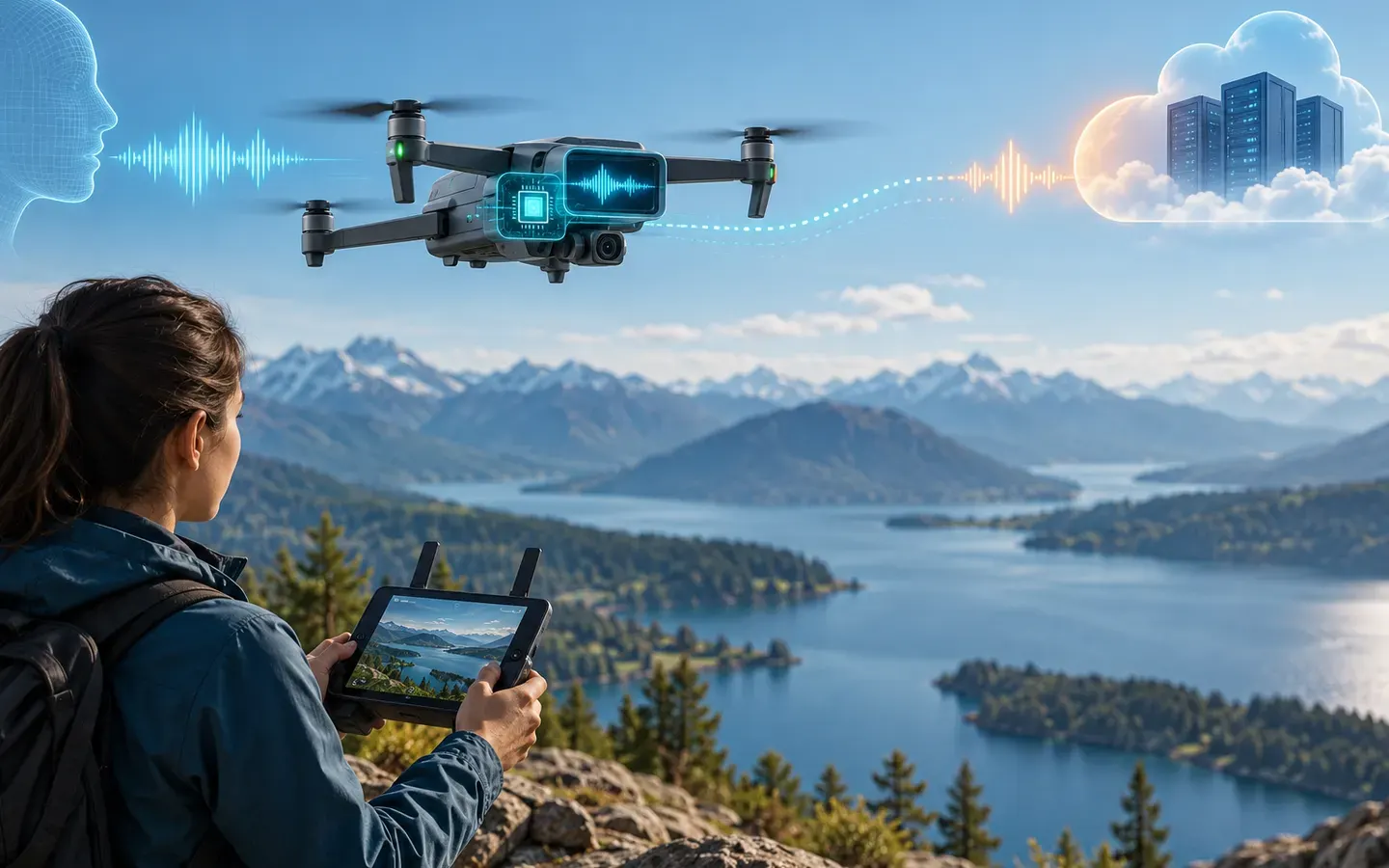 Basic
How Do On-Device and Cloud Speech Recognition Differ?
Compare on-device and cloud speech recognition by data path, connectivity, privacy, latency, quality, resources and cost.
Artificial intelligence5 min read Intermediate
How Are Intent and Parameters Extracted from Speech?
Trace a spoken sentence into intent, entities and normalized parameters, then handle missing or ambiguous fields.
Artificial intelligence6 min read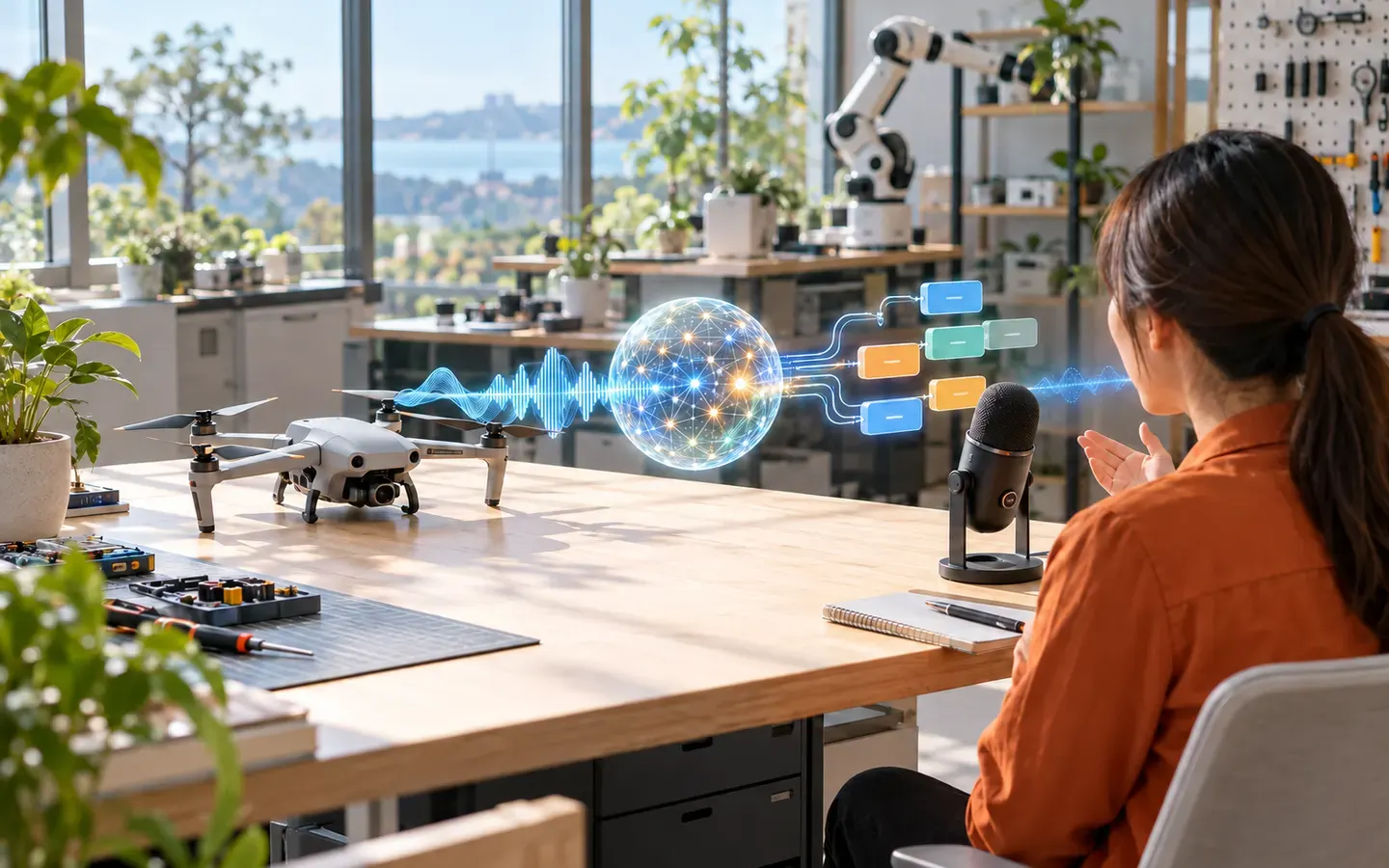 Intermediate
How Do LLMs Turn Speech into Structured Commands?
Trace audio to transcript to model-proposed JSON, then validate its values before forwarding.
Artificial intelligence7 min read Intermediate
How Can a Drone Command Be Checked Before Execution?
Check a command from structure through current state, operator decision and the autopilot failsafe’s separate role.
Artificial intelligence7 min read


Sources
These sources are written for older readers. If they feel hard, read them with an adult.
- Measure and Improve Speech Accuracy(opens in a new tab)
Google CloudTier C: other sourcesRead on October 30, 2026
- Cloud Speech-to-Text Best Practices(opens in a new tab)
Google CloudTier C: other sourcesRead on October 30, 2026
- NIST Speech Signal-to-Noise Ratio Measurements(opens in a new tab)
NISTTier A: government, standards or research bodiesRead on October 30, 2026