

Overview of ESP32, Arduino and Other Boards
- Starter
- Article
- Ages 10+
- 4 min read

A microcontroller board is a board with a microcontroller and pins that bring its functions out. The cited ESP32-C3-DevKitM-1 includes Wi-Fi and Bluetooth Low Energy; features vary across ESP32 models and boards. Arduino includes many boards with different form factors, layouts and features. When choosing a board, check its microcontroller, connectors and power options.
Contents
- ESP32 board
- Arduino board
What you will learn
- Distinguish the ESP32 chip family from the Arduino platform.
- Understand what the pin headers are for.
- Identify board features to compare, including the microcontroller, connectors and power options.
Before you start
GPIO means general-purpose input/output: configurable pins used to read signals or control outputs.
What does an ESP32 board have?
The ESP32-DevKitC V4 is a small development board based on the ESP32, made by Espressif. Most of the I/O pins on the ESP module are broken out to the pin headers on the board. The ESP32-C3-DevKitM-1 board integrates complete Wi-Fi and Bluetooth Low Energy functions.
- ESP32-C3-DevKitM-1
- Wireless link
- ESP32-C3 module
How is an Arduino board different?
Arduino is an open-source platform used for building electronics projects. Arduino boards make microcontroller functions accessible; some share compatible form factors and pin layouts. The Arduino UNO Rev3 contains everything needed to support its microcontroller; connect it to a computer with a USB cable to get started.
- Computer
- USB cable
- Arduino UNO Rev3
What criteria help choose a board?
In the cited Arduino comparison table, boards are grouped by main microcontroller, which defines many but not all of their characteristics. Boards also differ in voltage, pin count, connectivity, power and form factor. Before connecting peripherals, check that the board and device have compatible logic voltages. Clock speed relates to command execution speed, but alone it is not enough to compare performance.
- Main microcontroller
- Board characteristics
- Clock speed
Real-world example
Hypothetical example: for a sensor sending readings over a network, choose a board with connectivity and a protocol compatible with that network. A simple blinking light can use an easy-to-start board; no one board type is required for every project.
Common misunderstandings
All boards are alike. The main microcontroller affects many board characteristics, while connectors, power and form factor also vary.
An Arduino UNO Rev3 needs many extra parts to get started. The board contains everything needed to support its microcontroller; connect it to a computer with a USB cable to get started.
Frequently asked questions
How does an ESP32 board differ from an Arduino board?
The cited ESP32-C3-DevKitM-1 supports Wi-Fi and Bluetooth Low Energy; Arduino is a platform with boards using different chips and layouts; the Arduino Nano ESP32 is one example: the board is based on the ESP32-S3. Its board package is part of the Arduino ESP32 Core.
What are the pin headers for?
To connect peripherals with jumper wires or mount the board on a breadboard.
What should I choose a board by?
By considering the microcontroller, connectivity, power and form factor; the microcontroller determines only part of a board's characteristics.
What is clock speed?
The operating frequency of the microcontroller, related to how fast it executes commands.
Summary
- The ESP32-C3-DevKitM-1 supports Wi-Fi and Bluetooth Low Energy, with most I/O pins brought out to headers.
- Arduino boards come in different form factors, and the UNO Rev3 can be started by connecting it to a computer with USB.
- The microcontroller, connectivity, power and form factor are all selection criteria; clock speed is one factor to consider.
Terms in this article
English and Vietnamese terms, with the meanings used here. Hover, tap or Tab to a term with a dotted underline for an explanation as you read.
- Microcontroller boardBo vi điều khiển
- A board with a microcontroller and pins that bring its functions out.
- ESP32
- Chip family made by Espressif.
- Arduino
- An open-source platform of boards and software for electronics projects.
- Clock speedTốc độ xung nhịp
- The operating frequency of a microcontroller, related to how fast it executes commands.
- Pin headerHàng chân
- Rows of pins on the board for joining peripherals with jumper wires or a breadboard.
This article is not marked as viewed
Spotted something wrong or unsafe?
Tell the administrator by email. The message already has the article title and address.
You may also like
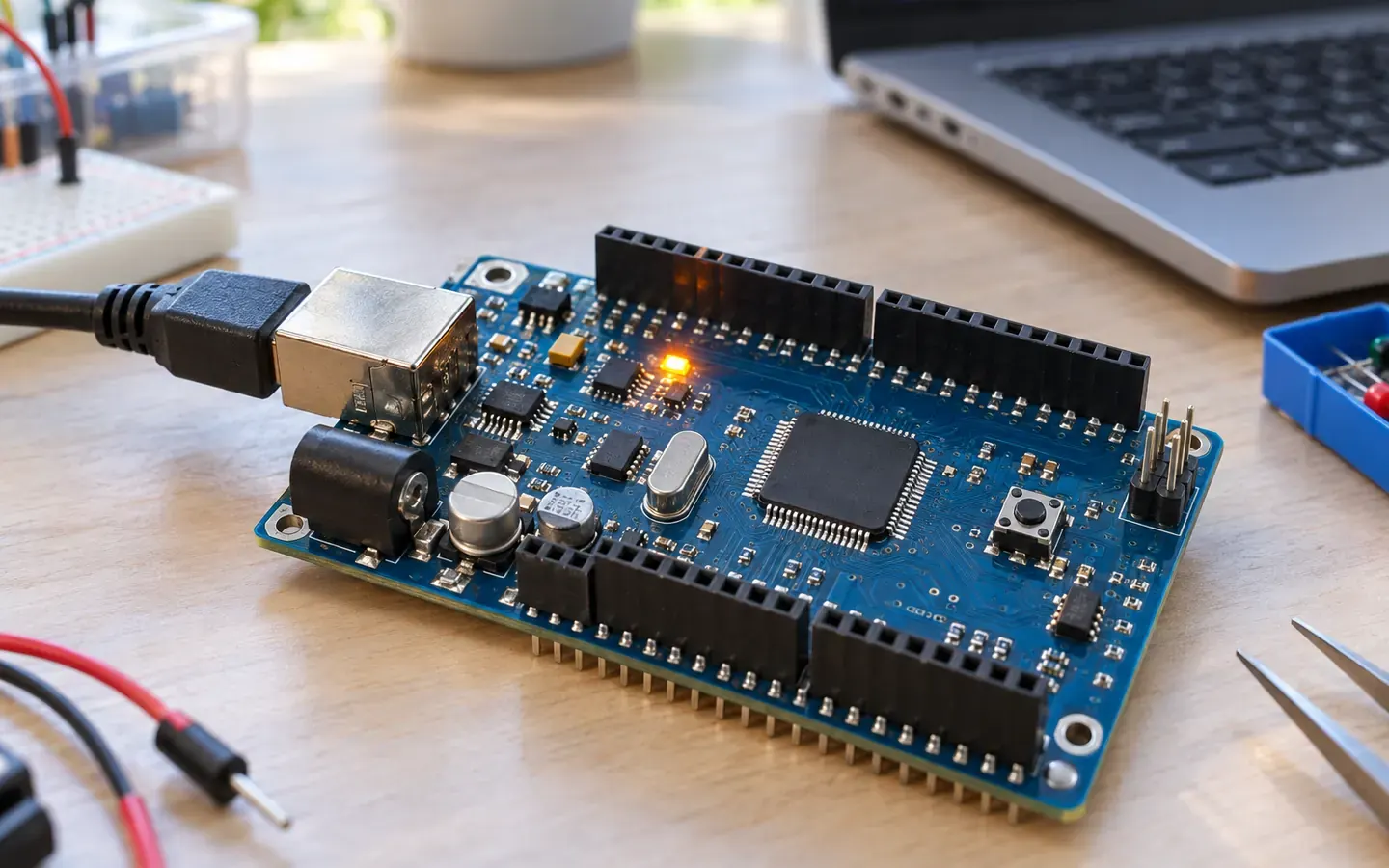 Basic
How Does Arduino Run setup and loop?
An Arduino sketch has two functions: setup runs once and loop repeats forever. See the run order, why loop never pauses and what delay does.
Internet of Things (IoT)4 min read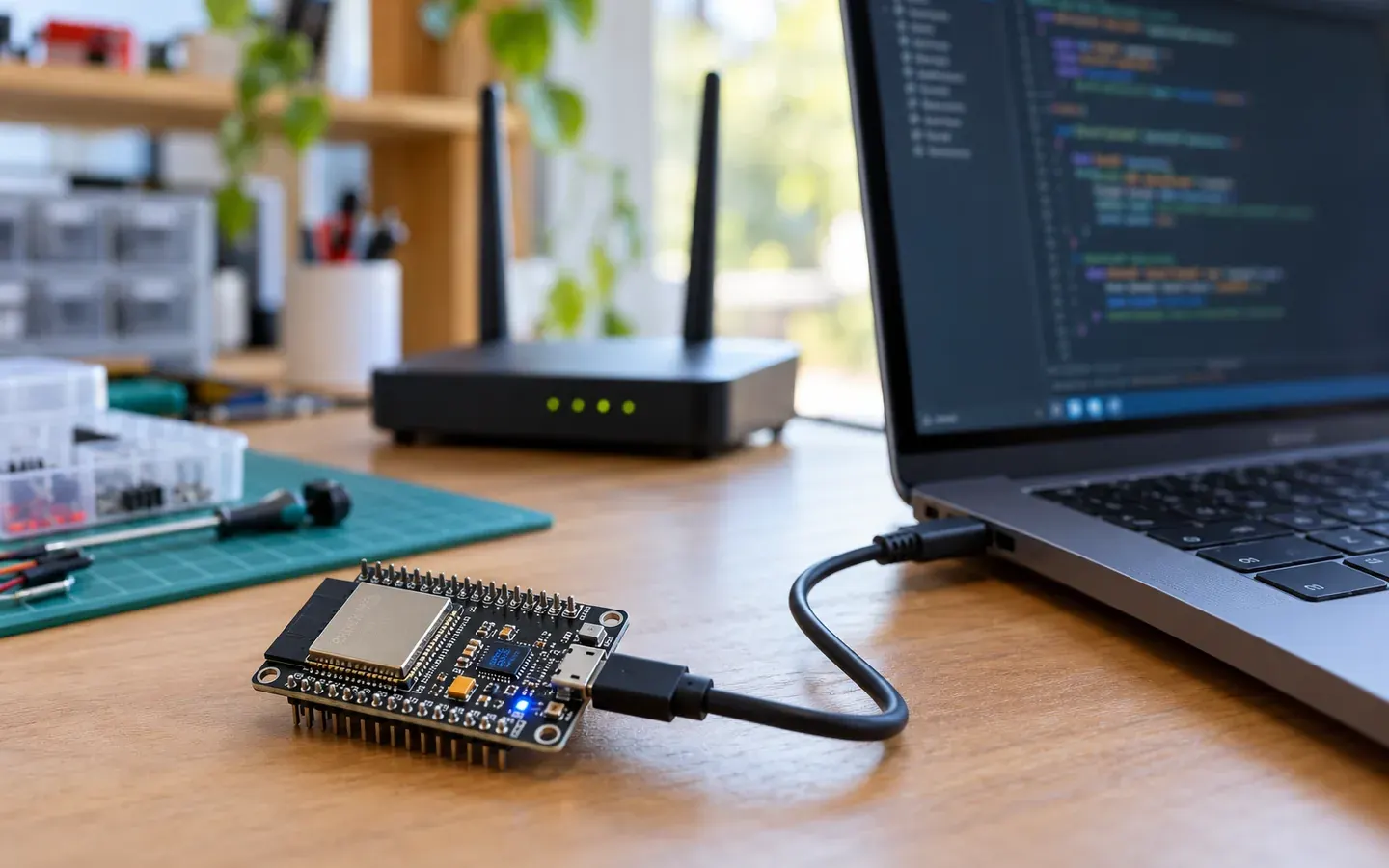 Starter
Overview of Firmware and IoT Networking
An overview of IoT firmware, the setup and loop cycle, how MQTT sends messages over a network, and security guidance published by NIST.
Internet of Things (IoT)4 min read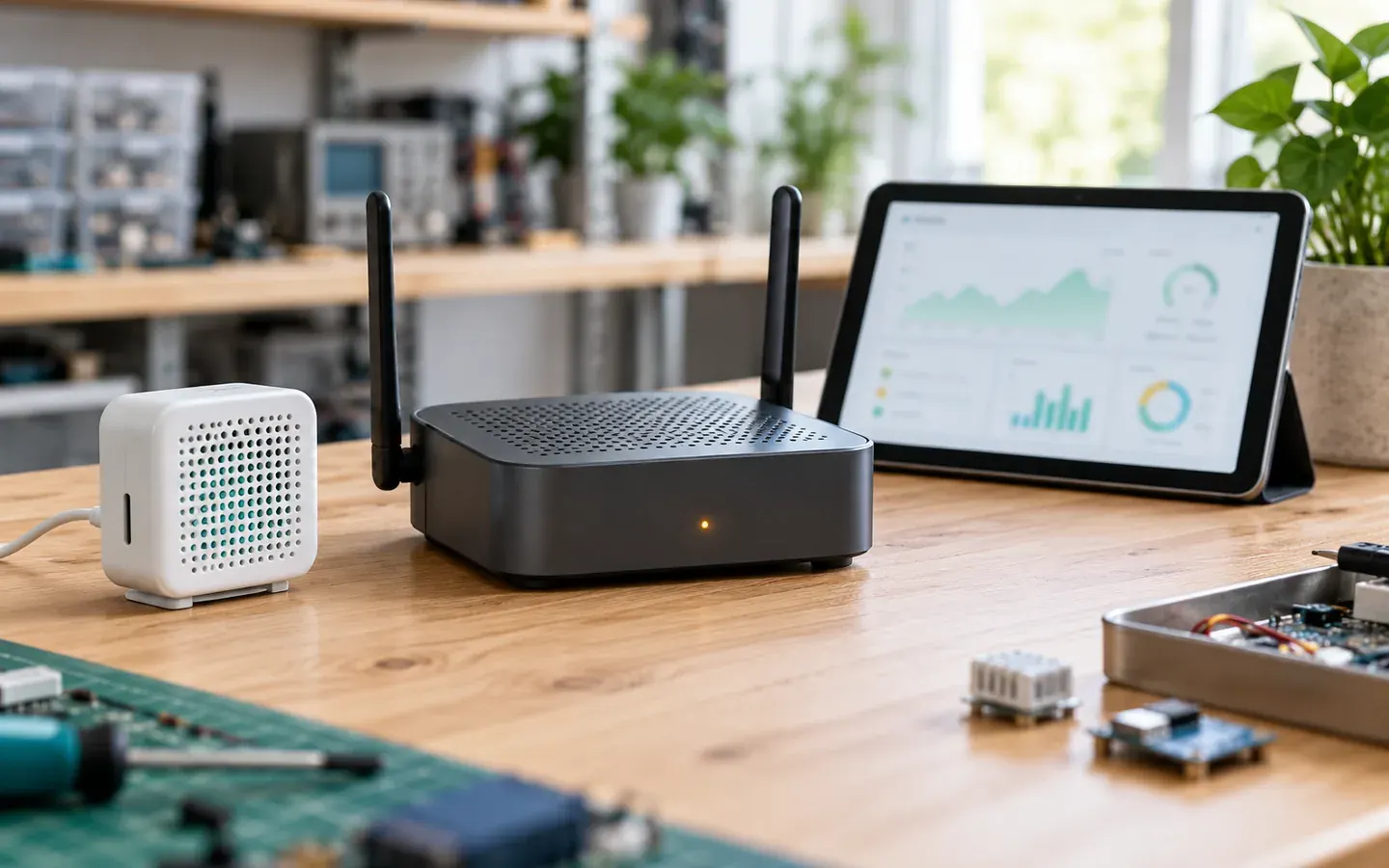 Basic
How Does MQTT Route Messages Through a Broker?
MQTT is a publish and subscribe protocol: a broker takes messages by topic and passes them to subscribers. Covers topics, wildcards and three QoS levels.
Internet of Things (IoT)4 min read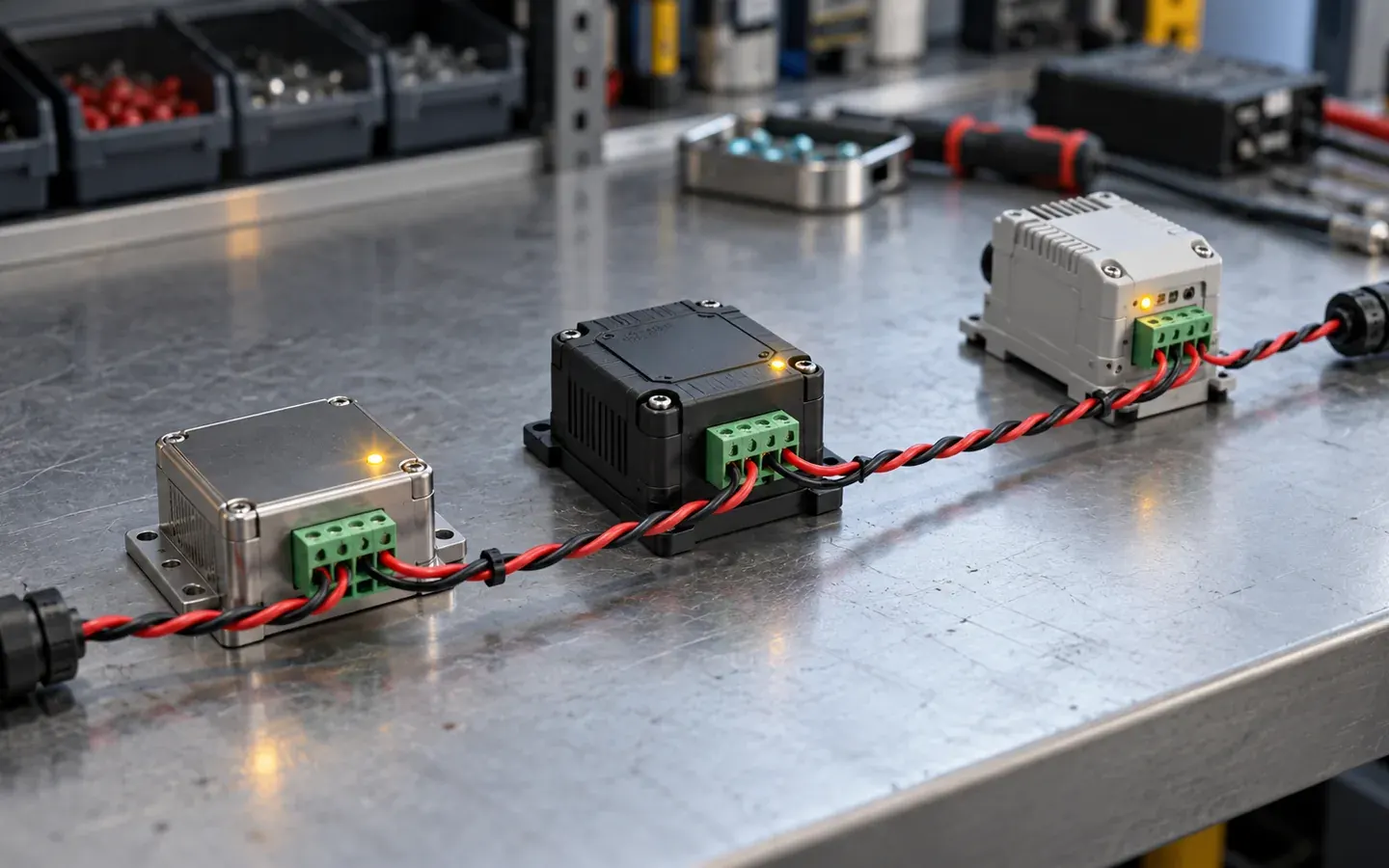 Basic
How Does RS-485 Transmit Differential Signals?
RS-485 sends signals over two wires and compares the voltage between them, so it resists noise, reaches far and lets many devices share one line.
Internet of Things (IoT)4 min read


Sources
These sources are written for older readers. If they feel hard, read them with an adult.
- ESP32-DevKitC V4 Getting Started Guide(opens in a new tab)
Espressif SystemsTier C: other sourcesRead on October 29, 2026
- ESP32-C3-DevKitM-1 User Guide(opens in a new tab)
Espressif SystemsTier C: other sourcesRead on October 29, 2026
- What is an Arduino?(opens in a new tab)
SparkFun ElectronicsTier C: other sourcesRead on October 29, 2026
- Arduino UNO Rev3(opens in a new tab)
ArduinoTier C: other sourcesRead on October 29, 2026
- Arduino Comparison Guide(opens in a new tab)
SparkFun ElectronicsTier C: other sourcesRead on October 29, 2026
- Getting Started with the Arduino Nano ESP32(opens in a new tab)
ArduinoTier C: other sourcesRead on October 29, 2026
- Arduino Nano ESP32 Datasheet(opens in a new tab)
Arduino (official documentation repository)Tier C: other sourcesRead on October 29, 2026