

How Do Analog and Digital Chips Differ?
- Starter
- Article
- Ages 10+
- 5 min read

Analog chips handle signals whose value changes continuously, while digital chips handle separate values written as binary code. The real world of sound, light and temperature is analog, and computation is digital. That is why a converter, acting as a translator, usually sits between the two kinds of chip.
Contents
- Analog chip
- Continuous signal
- Digital chip
- Stepped signal
What you will learn
- Tell an analog signal from a digital one.
- Say what analog chips and digital chips each work with.
- See how an ADC links the two kinds of chip.
Before you start
No prior knowledge is needed. You only need to know that a chip is a small integrated circuit inside an electronic device.
How do analog and digital signals differ?
An analog signal changes continuously; a digital signal has only separate values. According to the IEEE page on mixed-signal circuits, a chip can handle signals that span both the continuous analog domain and the discrete digital domain.
Picture a lamp with a dial. Turn it slowly and the brightness changes smoothly: that is the analog kind. A switch that is only on or off is like a digital signal, and binary code is a way of writing those separate values.
- Dial: changes continuously
- Switch flipped up
- Switch flipped down
Why do we need both kinds of chip?
Because the real world and computers speak two different languages. IEEE says temperature, pressure, light and sound are inherently analog, while computation and communication are inherently digital. Digital chips do the computing; analog chips deal with the real quantities.
The two kinds of circuit also have different design requirements. IEEE describes conflicting demands on fabrication, layout, power supply and substrate. Combining the two in a device requires attention to both sets of requirements.
How does an ADC link the two kinds of chip?
An ADC turns an analog signal into a digital one. According to Analog Devices' electronics text, an analog-to-digital converter (ADC) samples an analog waveform at uniform time intervals and assigns a digital value to each sample. The digital value appears at the output in a binary coded format.
That text notes that an ADC represents an analog signal, which has infinite resolution, as a digital code that has finite resolution. So the digital copy is only an approximation of the original. This digital representation can then be processed, manipulated, computed, transmitted or stored. The reverse job belongs to the digital-to-analog converter (DAC): according to IEEE, it reconstructs an analog waveform from a sequence of digital codes.
- Analog signal
- Sampling moments
- Measured values
- Separate digital values
Real-world example
When you speak into a phone microphone, the sound is an analog signal. An ADC samples it into a series of codes that a digital chip can process, store or send. On playback, a DAC rebuilds that series into an analog signal that drives the speaker. This is an illustrative model of how the work is divided; a real phone may arrange it differently.
Common misunderstandings
A digital chip can read the real world directly. A digital chip understands only separate values. To read temperature or sound it needs an ADC in between.
The digital copy is identical to the original. An ADC uses a digital code of finite resolution, so the digital version only approximates the analog signal.
Analog chips are out of date. Sensor signals still need analog receiving and processing circuitry before entering the digital domain.
Frequently asked questions
What does ADC stand for?
ADC stands for analog-to-digital converter.
What is binary code?
It is a way of writing a value with just two symbols, usually called zero and one. An ADC's output is in this form.
Does a DAC do the opposite of an ADC?
Yes. A DAC reconstructs an analog waveform from a sequence of digital codes.
Summary
Terms in this article
English and Vietnamese terms, with the meanings used here. Hover, tap or Tab to a term with a dotted underline for an explanation as you read.
- analog signaltín hiệu tương tự
- A signal whose value changes continuously rather than in steps.
- digital signaltín hiệu số
- A signal represented by discrete values, usually binary codes.
- analog-to-digital converter (ADC)bộ chuyển đổi tương tự–số
- A circuit that samples an analog signal and turns each sample into a digital value.
- digital-to-analog converter (DAC)bộ chuyển đổi số–tương tự
- A circuit that rebuilds an analog signal from a sequence of digital codes.
- binary codemã nhị phân
- A way of writing a value using only two symbols, usually called zero and one.
This article is not marked as viewed
Spotted something wrong or unsafe?
Tell the administrator by email. The message already has the article title and address.
More in this topic
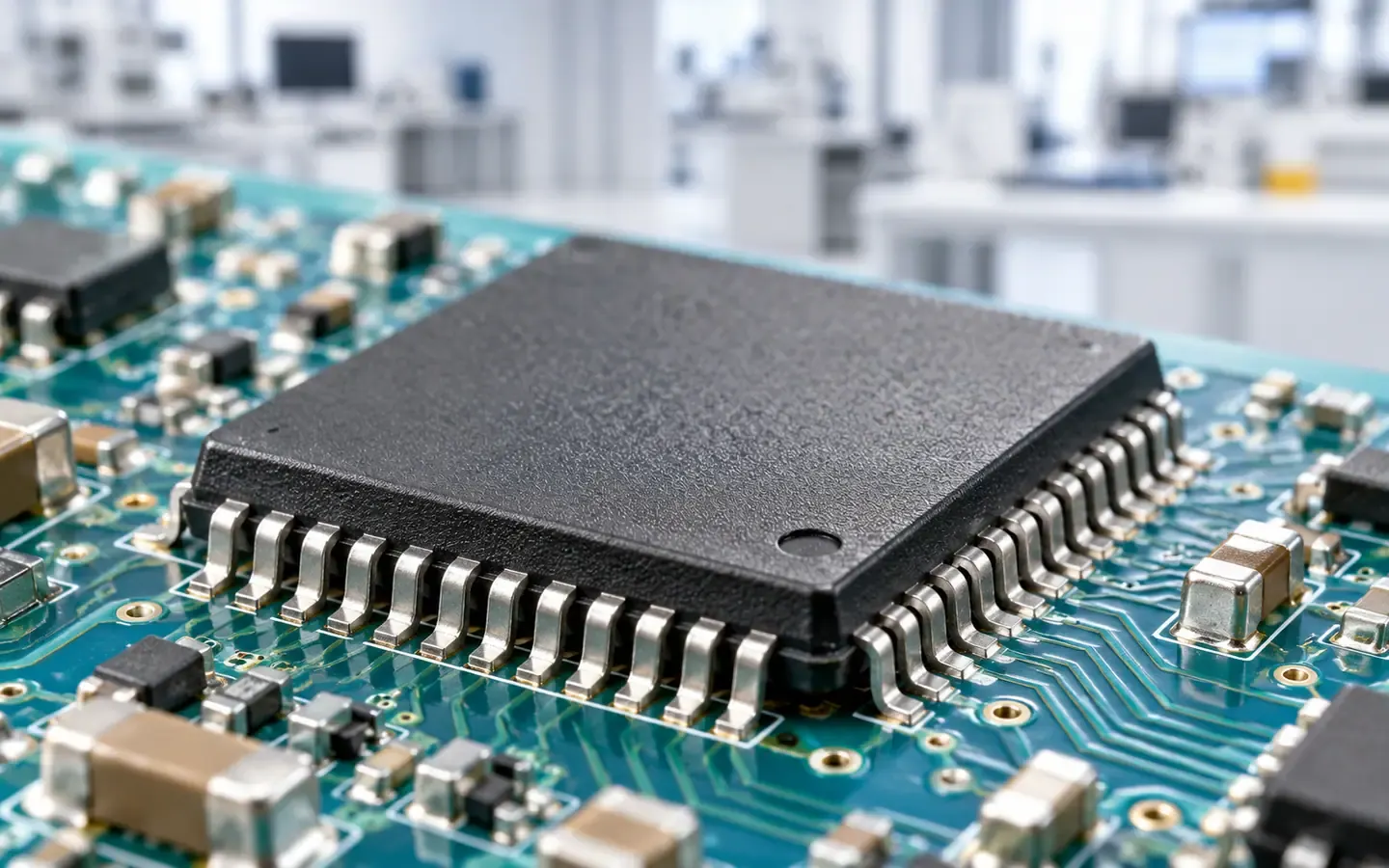 Starter
What Is a Microchip?
Understand microchips, transistors and chip packages through a phone example, and distinguish a semiconductor material from a finished circuit.
5 min read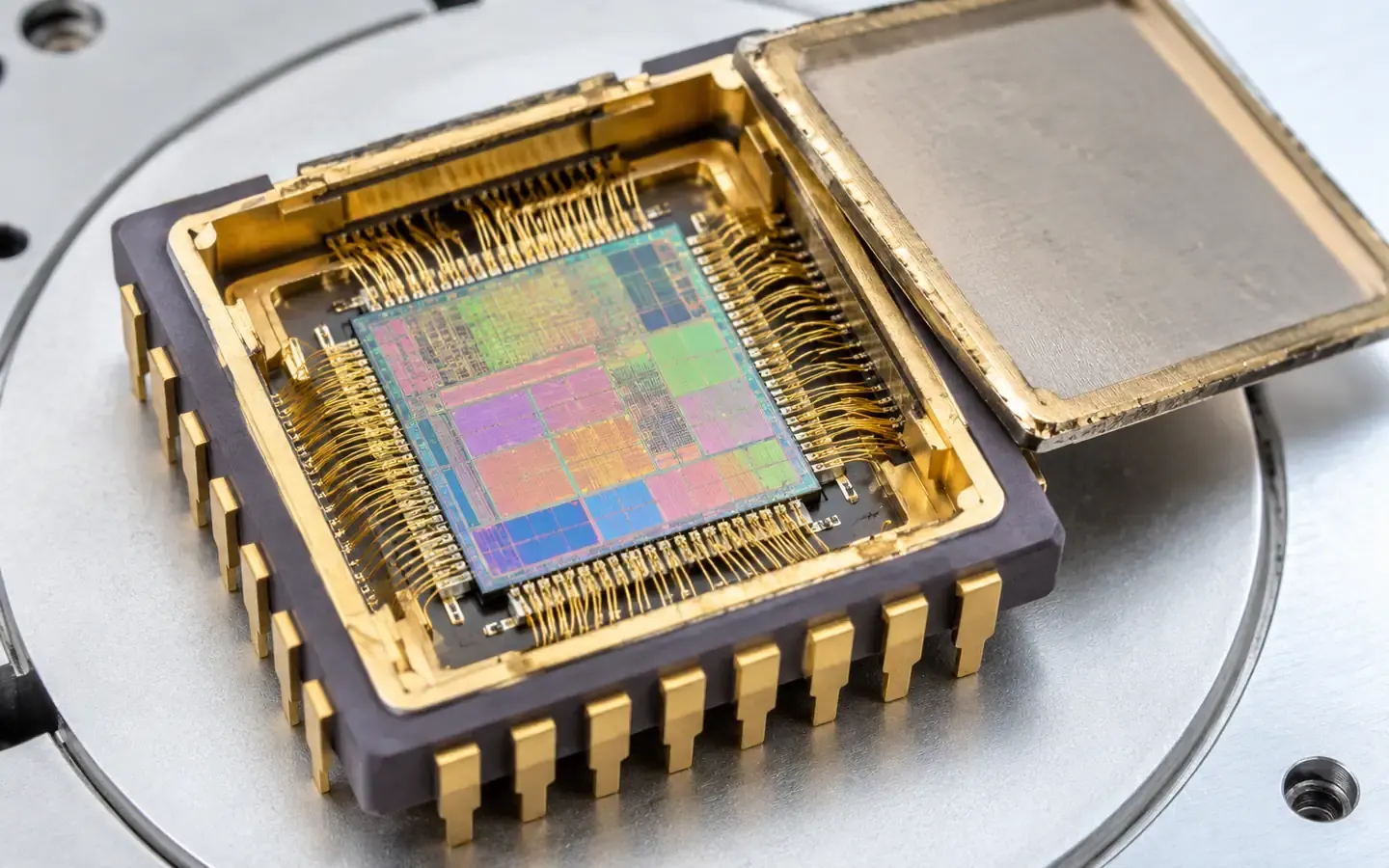 Starter
What Is Inside a Microchip?
Explore the semiconductor base, transistors and chip package, and see how these parts form a component used in electronic devices.
5 min read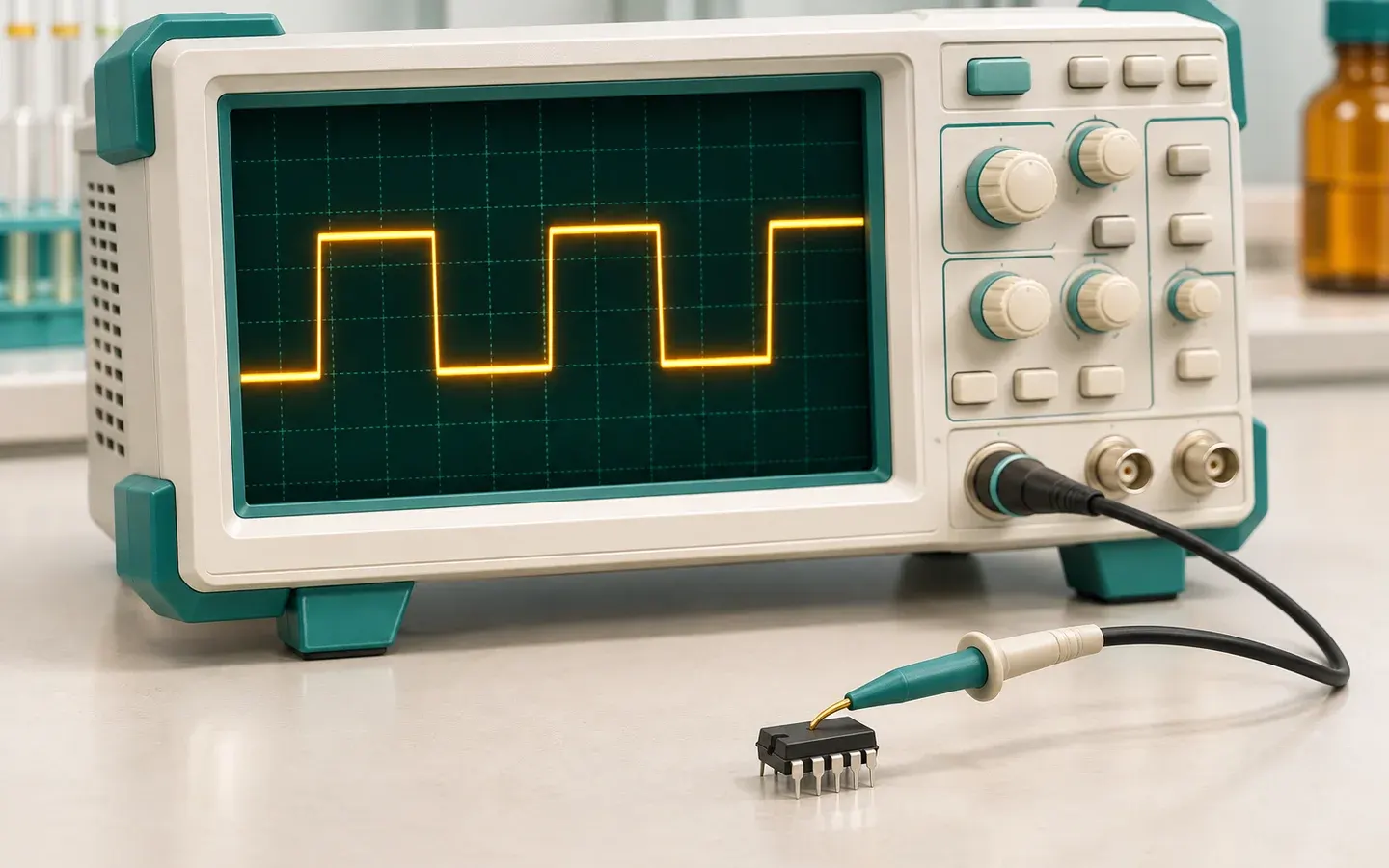 Starter
How Do Voltage Levels Represent Digital Signals?
See how chips read HIGH and LOW from voltage, how logic families set thresholds, and how a transistor switch flips a level.
5 min read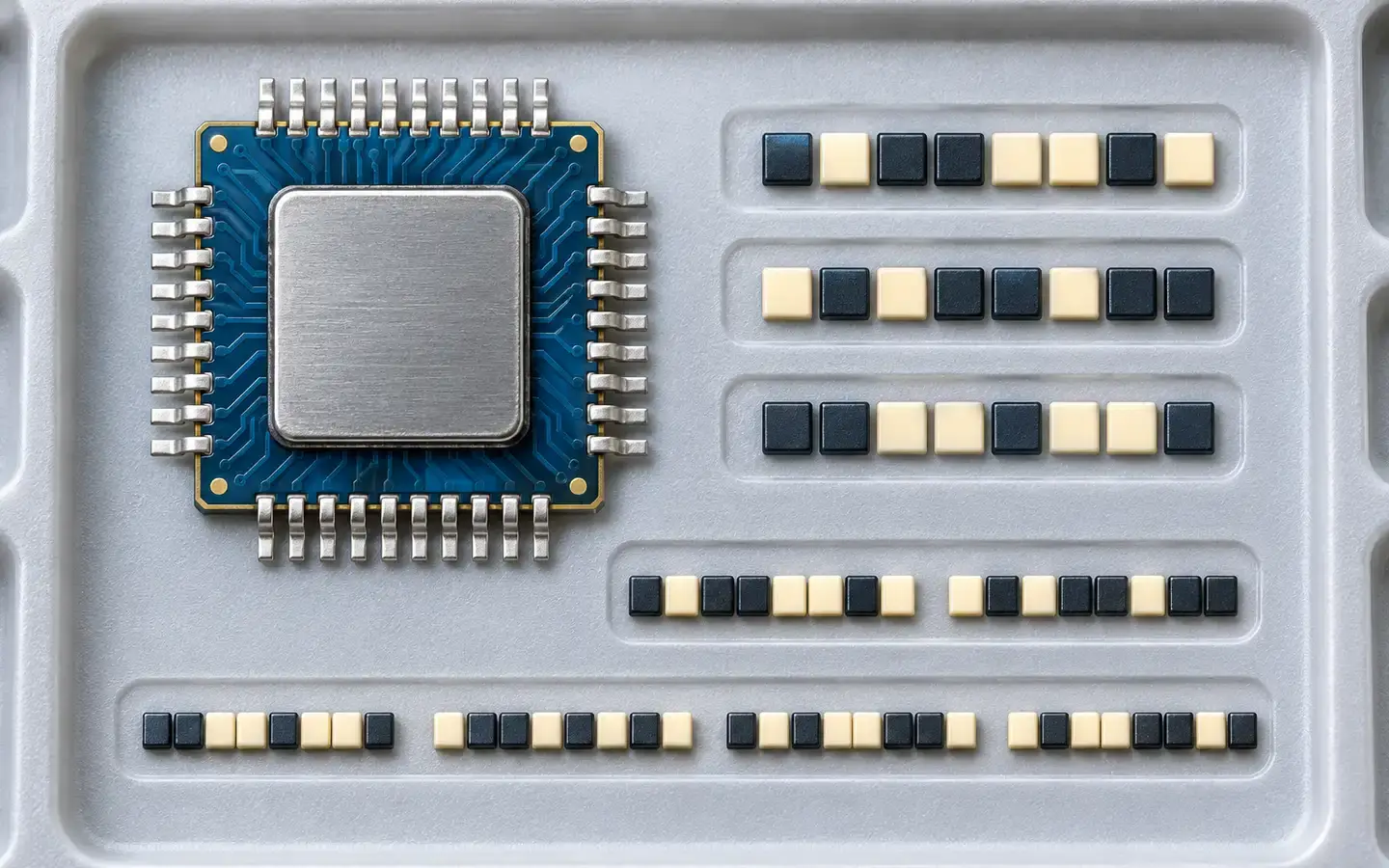 Starter
How Do Bits, Bytes and Machine Words Differ?
Compare bits, nibbles, bytes and machine words by length, and understand why a byte has a fixed size while word length depends on the design.
5 min read


Sources
These sources are written for older readers. If they feel hard, read them with an adult.
- Mixed-signal Integrated Circuits(opens in a new tab)
IEEE Technology NavigatorTier A: government, standards or research bodiesRead on November 5, 2026
- Chapter 20: Analog to Digital Conversion(opens in a new tab)
Analog DevicesTier C: other sourcesRead on November 5, 2026