

What Is a Microchip?
- Starter
- Article
- Ages 10+
- 5 min read

A microchip is a miniature electronic circuit built on the surface of a piece of semiconductor material such as silicon. It holds anywhere from several to billions of transistors, each a very small switch. Packaged on its own, the circuit becomes a chip that can be fitted into a phone or computer.
Contents
What you will learn
- Distinguish a semiconductor material, an integrated circuit and a chip.
- Explain why many tiny switches together can do complex work.
- Recognise chips in everyday devices.
Before you start
No specialist background is needed; technical terms are explained as they appear.
How does a circuit differ from its material?
Semiconductor names a kind of material. An integrated circuit is an electronic circuit that has been formed on that material. Silicon is the semiconductor material that serves as the basis for many industrial circuits, but a plain piece of silicon with no circuit cannot do any job.
To make an integrated circuit, manufacturers start with a wafer, a thin piece of semiconductor material that is the base for building many circuits at once. Lithography etches into or builds onto the wafer surface to produce the circuit patterns. This takes place in a fab, the industrial facility where raw silicon wafers become fully working chips.
Blank paper and a printed page give a similar picture. The paper is the base, and the printing gives the page its meaning.
What does a transistor do inside the circuit?
A transistor is a simple switch made from a semiconductor material. It turns on or off depending on changes in voltage. One switch has only two states, but many transistors combined make complex devices possible.
An integrated circuit holds anywhere from several to billions of transistors. The way they are connected decides what the circuit does. The same number of transistors wired differently gives a different function.
A light switch at home also turns current on or off, but a hand has to move it. In a chip, voltage is what switches a transistor on or off.
How is a chip different from an integrated circuit, and where is it found?
A chip is a self-contained piece that includes the semiconductor surface and the integrated circuit, packaged for use in electronics such as phones or computers. The integrated circuit is the circuit inside. The chip is the whole packaged component. Everyday speech often uses the two words interchangeably, but when precision matters, separate the circuit from its casing.
Chips appear in smartphones, laptops, smart home appliances, TVs and many other devices.
Real-world example
Zoom into a phone in your imagination. From the whole device, go to one packaged chip inside it. Within the chip is the integrated circuit, and within the circuit are individual transistors. Silicon forms the base at the bottom.
The scale is large. The NIST glossary describes a silicon wafer whose surface holds thousands of integrated circuits, together made of more than a trillion transistors.
Each description names one level. “It contains silicon” describes a material. “It contains an integrated circuit” says an electronic circuit has been built. To learn what a specific chip does, you need the documentation of that chip.
Common misunderstandings
A chip is more than a piece of silicon. It consists of an integrated circuit formed on a semiconductor base, plus its package.
A single transistor is not yet an integrated circuit. The circuit combines many of them, from several to billions.
Knowing the transistor count does not tell you what a chip does. The function lies in how the transistors are connected.
Frequently asked questions
How many transistors does an integrated circuit have?
Anywhere from several to billions, depending on the circuit.
Where are chips made?
In a fab, the industrial facility that turns raw silicon wafers into fully working chips.
Are a chip and an integrated circuit the same thing?
Nearly so in casual speech. Strictly, the integrated circuit is the circuit, and the chip is the packaged component that contains it.
Summary
- A semiconductor is a material; an integrated circuit is a circuit formed on it.
- A transistor is a tiny switch; many together can do complex work.
- A chip is the circuit and its semiconductor base, packaged for use in a device.
Terms in this article
English and Vietnamese terms, with the meanings used here. Hover, tap or Tab to a term with a dotted underline for an explanation as you read.
- integrated circuitvi mạch
- A small circuit combining many transistors on a chip.
- transistor
- A semiconductor component that can act as a voltage-controlled switch.
- chip
- A self-contained piece with a semiconductor surface and integrated circuit, packaged for use in electronics.
- wafer
- A thin piece of semiconductor material used as a base for building many integrated circuits.
- fab
- An industrial facility where raw silicon wafers become fully working chips.
This article is not marked as viewed
Spotted something wrong or unsafe?
Tell the administrator by email. The message already has the article title and address.
More in this topic
 Starter
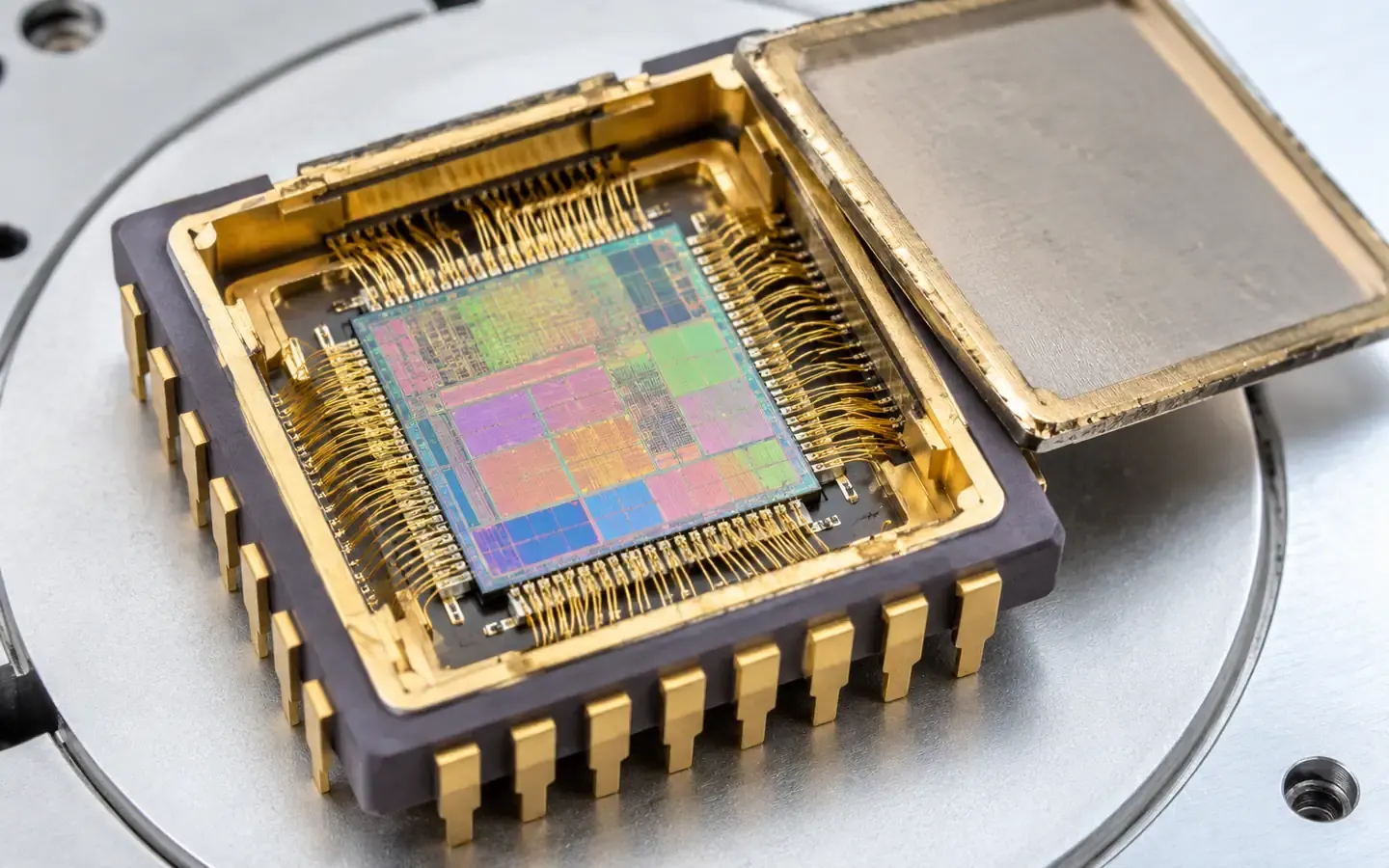
What Is Inside a Microchip?
Explore the semiconductor base, transistors and chip package, and see how these parts form a component used in electronic devices.
5 min read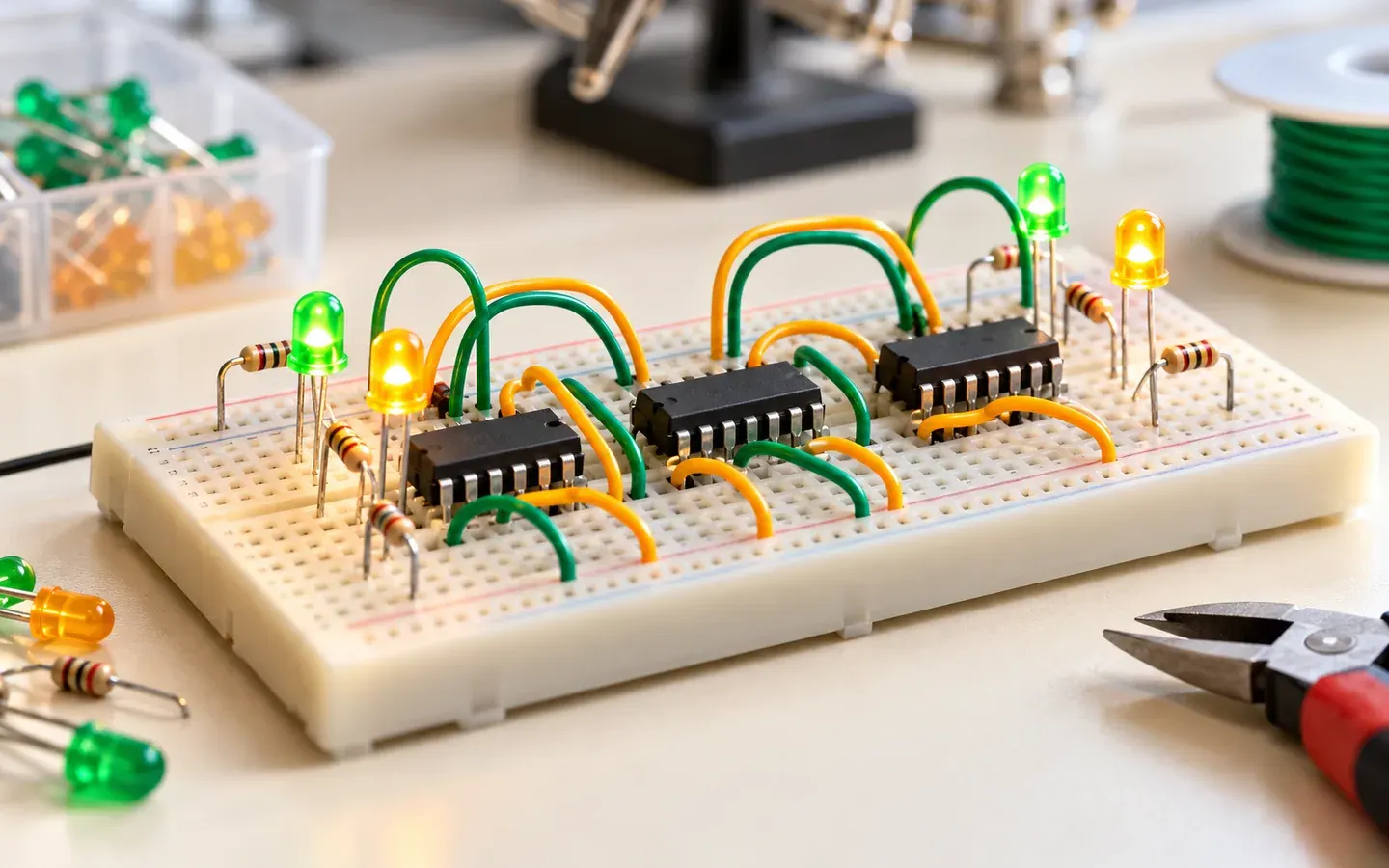 Basic
How Do Logic Gates Combine to Process Signals?
Follow signals through AND, OR and NOT gates using truth tables and a worked light-control example to understand combined logic.
5 min read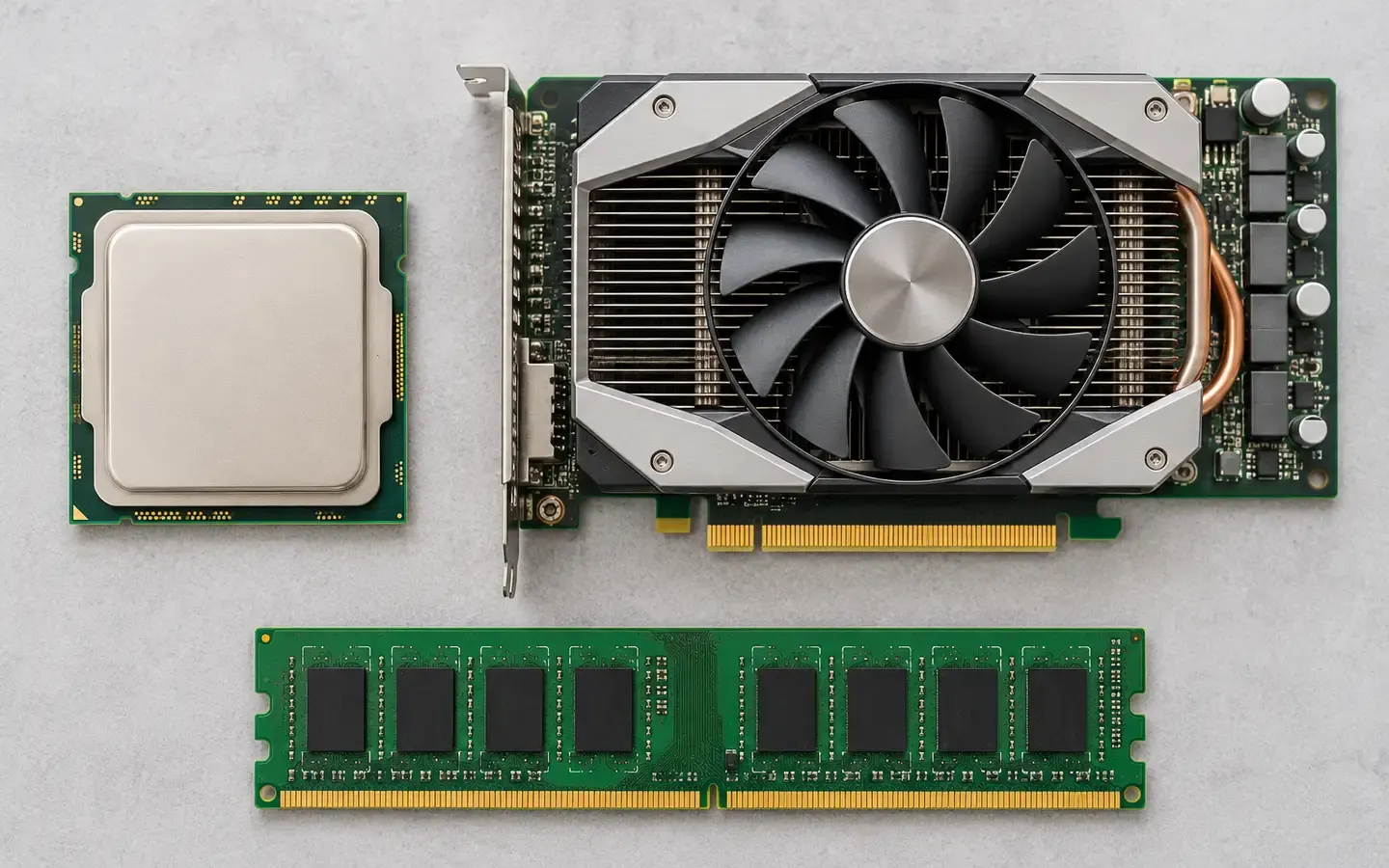 Basic
How Do CPU, GPU and Memory Chips Differ?
Compare CPU, GPU and memory by role, processing style and cooperation in an application, rather than treating them as interchangeable speed upgrades.
3 min read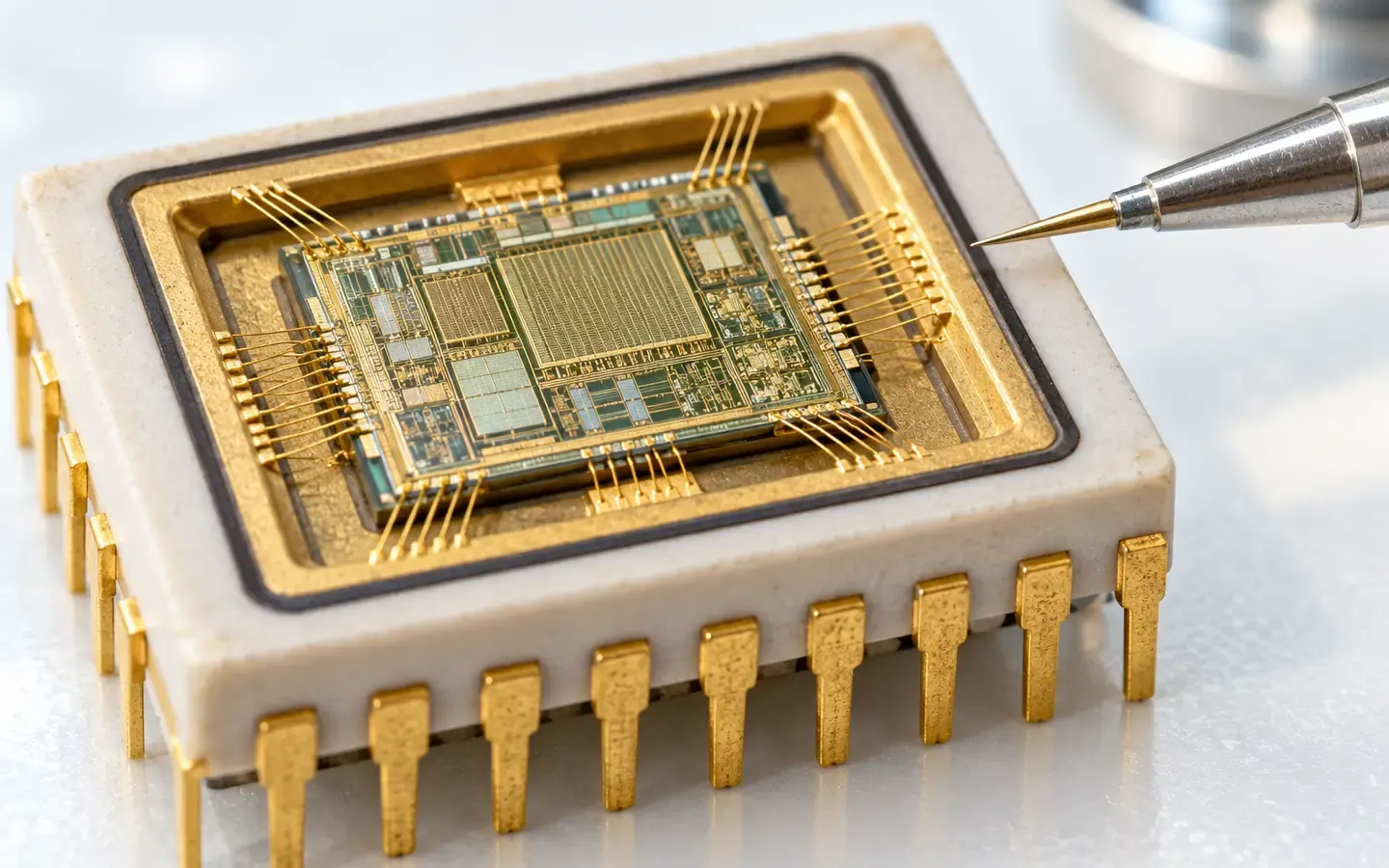 Intermediate
How Does a Microchip Process Instructions?
Follow an instruction through fetch, decode, operand reading, execution and writeback; distinguish a CPU model from all chips and from clock cycles.
3 min read


Sources
These sources are written for older readers. If they feel hard, read them with an adult.
- Semiconductor Glossary(opens in a new tab)
NISTTier A: government, standards or research bodiesRead on October 31, 2026
- What is a semiconductor?(opens in a new tab)
IBMTier B: vendor documentationRead on October 31, 2026