

What Is Green Energy?
- Starter
- Article
- Ages 10+
- 5 min read

Green energy is electricity or energy produced with a large environmental benefit, usually from renewable sources such as sun and wind. The term is not used consistently. This article takes the US Environmental Protection Agency’s (EPA) definition of green power as its anchor and states its scope.
Contents
What you will learn
- Explain what “renewable” means and give examples.
- State how EPA defines green power and where the definition applies.
- Recognise that renewable sources can still have environmental effects.
Before you start
No specialist background is needed; technical terms are explained as they appear.
What does “renewable” mean?
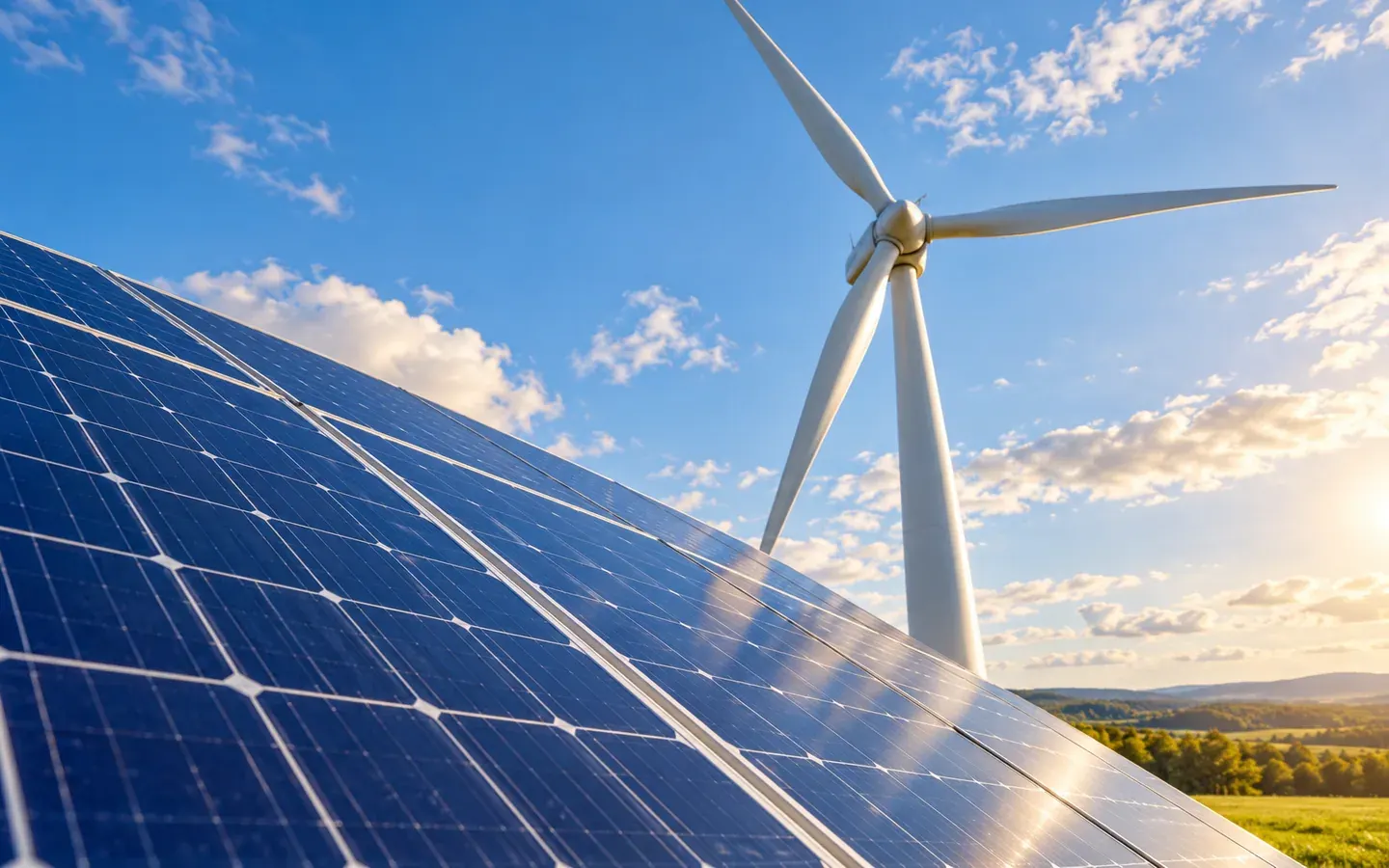
Renewable energy relies on fuel sources that restore themselves over short periods and do not diminish. Such sources include the sun, wind, moving water, organic plant and waste material (eligible biomass), and the earth’s heat.
Examples help. Tomorrow’s sunshine arrives after today’s is used. The wind keeps blowing and water keeps flowing. Conventional power, by contrast, comes from fossil fuels, or from the nuclear fission of uranium.
This split does not say any source is perfectly clean. It answers one question: does the fuel source replenish quickly?
How is green power defined?
According to EPA, green power is a subset of renewable energy. It covers the renewable resources and technologies that provide the greatest environmental benefit. Within the US voluntary market, green power is electricity produced from solar, wind, geothermal, biogas, eligible biomass and low-impact small hydroelectric sources.
There is one more condition. To qualify as green power, this renewable electricity must go above and beyond what is otherwise required by mandate or requirement. In other words, it is voluntary, or surplus to regulation. Customers often buy green power for its zero-emissions profile and carbon-footprint reduction benefits.
Note the scope. This is the definition of the US voluntary market. Elsewhere, terms and conditions can differ, so it should not be treated as a universal definition.
Do renewable sources have no environmental effects?
They do have effects. The benefits of renewable energy are substantial, but some renewable technologies can affect the environment. For example, large hydroelectric resources can involve trade-offs for fisheries and land use. That is why EPA counts only low-impact small hydro as green power.
Comparing with conventional power shows the difference in environmental costs. Fossil fuels have costs from mining, drilling or extraction, and they emit greenhouse gases and air pollution when burned. Nuclear power emits no greenhouse gases during generation, but it does require mining, extraction and long-term radioactive waste storage.
The takeaway is that power sources do not share the same environmental benefits and costs. A “green” label tells you a source falls within some definition. It does not replace looking at each project.
Real-world example
Suppose a company in the United States wants to buy green power. First it asks what sources the electricity comes from. Solar, wind, geothermal, biogas, eligible biomass and low-impact small hydro are all on EPA’s list.
Second, it asks whether the electricity goes beyond what is mandatory. If it only meets what the rules require, it does not count as green power under this definition. Third, it looks at the project itself, for example how a hydroelectric dam affects fish and land.
Common misunderstandings
Renewable and green power are not the same thing. In EPA’s definition, green power is a narrower subset of renewable energy.
It is wrong to assume every renewable source has no environmental impact. Large hydropower is an example with trade-offs for fisheries and land.
EPA’s definition applies only to the US voluntary market. It is not a global convention.
Frequently asked questions
Does EPA include wind in its green-power examples?
Yes. Solar, wind, geothermal, biogas, eligible biomass and low-impact small hydro are all in EPA’s list.
Does all hydropower have the same impacts?
No. Large hydropower can involve trade-offs for fisheries and land use, so EPA counts only low-impact small hydro.
Is a green label enough to assess a project?
Not on its own. You also need the source, whether it exceeds requirements, and the project’s actual effects.
Summary
- Renewable means a fuel source that replenishes quickly and does not diminish.
- Under EPA, green power is a subset of renewable electricity in the US voluntary market.
- Every source has trade-offs, so each project needs its own look.
Terms in this article
English and Vietnamese terms, with the meanings used here. Hover, tap or Tab to a term with a dotted underline for an explanation as you read.
- renewabletái tạo
- Describing energy resources replenished over short periods.
- green powerđiện xanh
- Under EPA’s definition, a subset of renewable electricity in the US voluntary market.
- fossil fuelsnhiên liệu hóa thạch
- Fuels such as coal and oil used to produce power.
- biomasssinh khối
- Organic plant and waste material used as fuel.
This article is not marked as viewed
Spotted something wrong or unsafe?
Tell the administrator by email. The message already has the article title and address.
More in this topic
 Starter
How Do Solar and Wind Power Generate Electricity?
Trace sunlight through photovoltaic cells and wind through a rotor and generator, comparing how each technology produces electricity.
5 min read Basic
How Do Batteries Store Energy?
Follow charging, storage and discharge in a rechargeable battery, distinguishing external electron flow from internal ion movement.
5 min read Basic
How Do Power Banks Store and Deliver Energy?
Trace energy while charging and using a power bank; distinguish chemical storage, charging control and output voltage conversion in an illustrative design.
3 min read Intermediate
How Does Battery Capacity Affect Runtime?
Relate battery energy, power demand and runtime; compare devices under matching conditions rather than judging only capacity or remaining percentage.
3 min read


Sources
These sources are written for older readers. If they feel hard, read them with an adult.
- What Is Green Power?(opens in a new tab)
US EPATier A: government, standards or research bodiesRead on October 31, 2026