

How Does a Resistor Control Current?
- Basic
- Article
- Ages 13+
- 4 min read

Contents
- Resistor
- Current
- Load
What you will learn
- Name three jobs a resistor commonly does in a circuit.
- See that resistors in series make a total resistance.
- Explain how a pull-up resistor gives a button input a default level.
Before you start
It helps to know what current, voltage and resistance are. If unsure, read the article on voltage and current first.
What are resistors used for?
Resistors are commonly used to limit current, divide voltages and pull up I/O lines. These three jobs cover most of what you meet when reading a simple circuit diagram. Variable types, such as potentiometers, can be adjusted.
It is very common to see resistors in the kilohm and megaohm range. The size of an axial resistor is relative to its power rating, so an axial resistor with a higher power rating is usually larger.
- Limit current
- Divide voltage
- Pull up
When sizing a current-limiting resistor for an LED, look for two characteristic values of the LED: the typical forward voltage and the maximum forward current. Continuous current through the LED must not exceed that maximum. The supply voltage is also needed to calculate the resistor value. Check current across the supply and LED forward-voltage variation, and choose a sufficient resistor power rating to avoid overheating.
What happens when resistors are in series or parallel?
When resistors are combined in series or parallel, they create a total resistance. For series, the total resistance is the sum of all of them.
- First resistor
- Second resistor
- Total resistance
A potentiometer has a resistive element and a sliding contact; the two sections on either side of the contact can be modeled as series resistors forming an adjustable voltage divider. A volume knob is a familiar example.
How does a pull-up help a button input?
An input pin with no connection or internal pull can be in an unknown state. This is called floating. A pull-up or pull-down resistor makes sure the pin is in either a high or low state while using only a small current.
With a pull-up resistor, the input pin reads a high state when the button is not pressed. When the button is pressed, it connects the input pin directly to ground.
- Pull-up resistor
- Button
- Microcontroller input pin
In this button circuit, if the pull-up resistor is replaced with a wire, pressing the button connects VCC to ground and creates a short. Simply removing the resistor disconnects the supply from the pin, which can float when the button is released.
Real-world example
With an adult, look at a board that has a button. A circuit diagram can show a pull-up resistor between the supply and input pin; proximity alone cannot identify a part. Some boards use an internal pull or a different arrangement.
Common misunderstandings
A resistor only makes a circuit hot. A resistor does dissipate electrical energy as heat, but it can also limit current, divide voltage and pull I/O lines up.
An input without a pull always reads low. Such an input can float and read an unknown state.
Frequently asked questions
What is a resistor used for?
A resistor is used to limit current, divide voltages and pull up I/O lines.
What is a pull-up resistor?
A pull-up resistor holds an input pin high when nothing pulls it down, and uses only a small current.
What is the total of two resistors in series?
The total resistance of series resistors is the sum of all of them.
What is a potentiometer?
A potentiometer is a resistor with an adjustable middle tap, forming an adjustable voltage divider.
Summary
- A fixed resistor has a specified nominal resistance; resistors are commonly used to limit current, divide voltage and pull up lines.
- Resistors in series or parallel make a total resistance, and in series they add up.
- A pull-up resistor keeps a pin high while the button is not pressed, avoiding a floating state.
Terms in this article
English and Vietnamese terms, with the meanings used here. Hover, tap or Tab to a term with a dotted underline for an explanation as you read.
- ResistorĐiện trở
- A component that provides resistance in a circuit; static types have a set value, while variable types can be adjusted.
- Voltage dividerBộ chia áp
- Two resistors in series that give a voltage at the point between them.
- PotentiometerBiến trở
- A resistor with an adjustable middle tap that forms a variable voltage divider.
- Pull-up resistorĐiện trở kéo lên
- A resistor from an input pin to the supply that keeps the pin high when nothing pulls it down.
- Floating pinChân trôi nổi
- An input pin not connected or internally pulled to a defined level, so its reading can be unknown.
This article is not marked as viewed
Spotted something wrong or unsafe?
Tell the administrator by email. The message already has the article title and address.
You may also like
 Basic
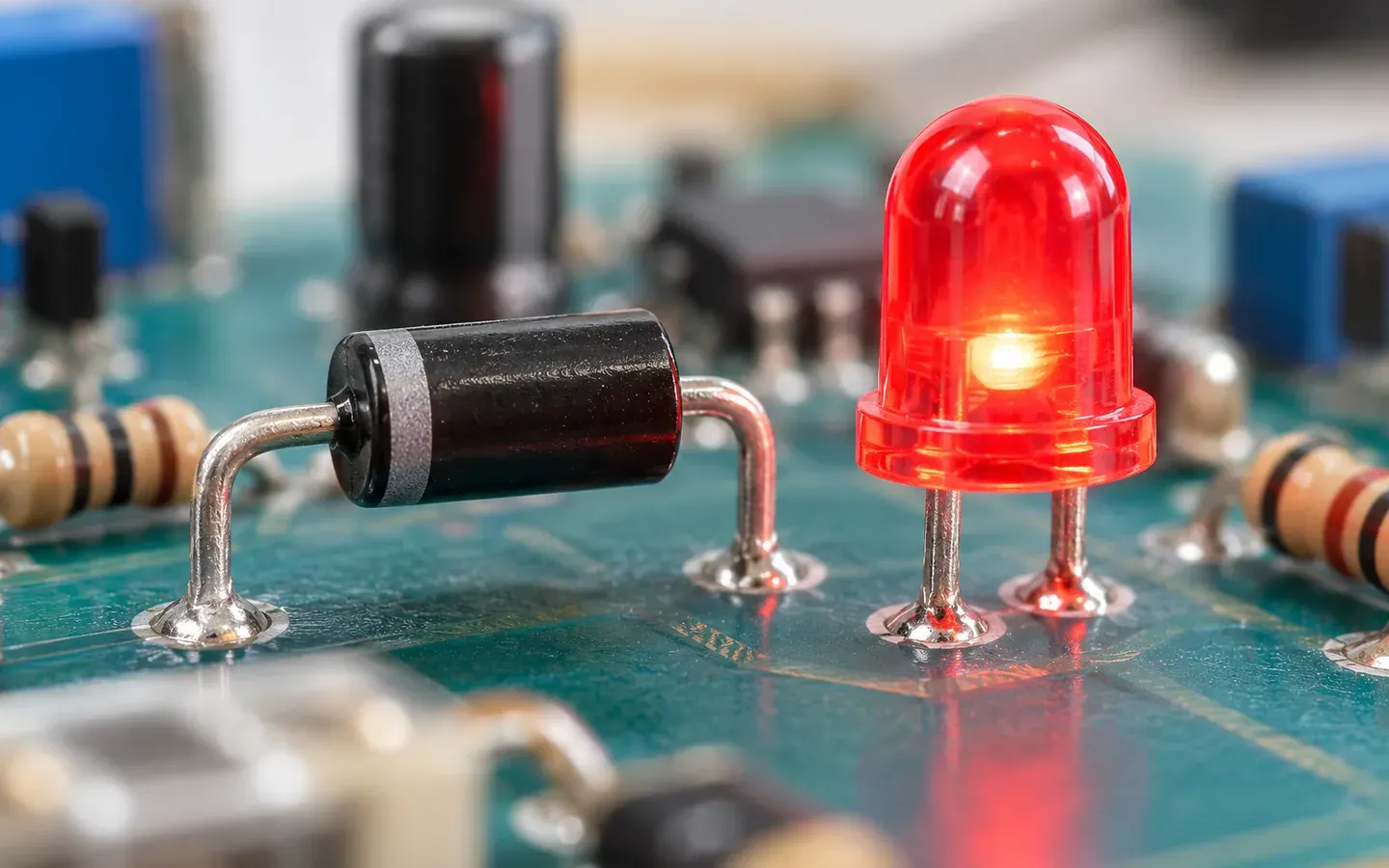
How Do Diodes and LEDs Conduct Current?
A diode mainly conducts in the forward direction and needs forward voltage to conduct significantly; an LED emits light and needs current limiting.
Internet of Things (IoT)4 min read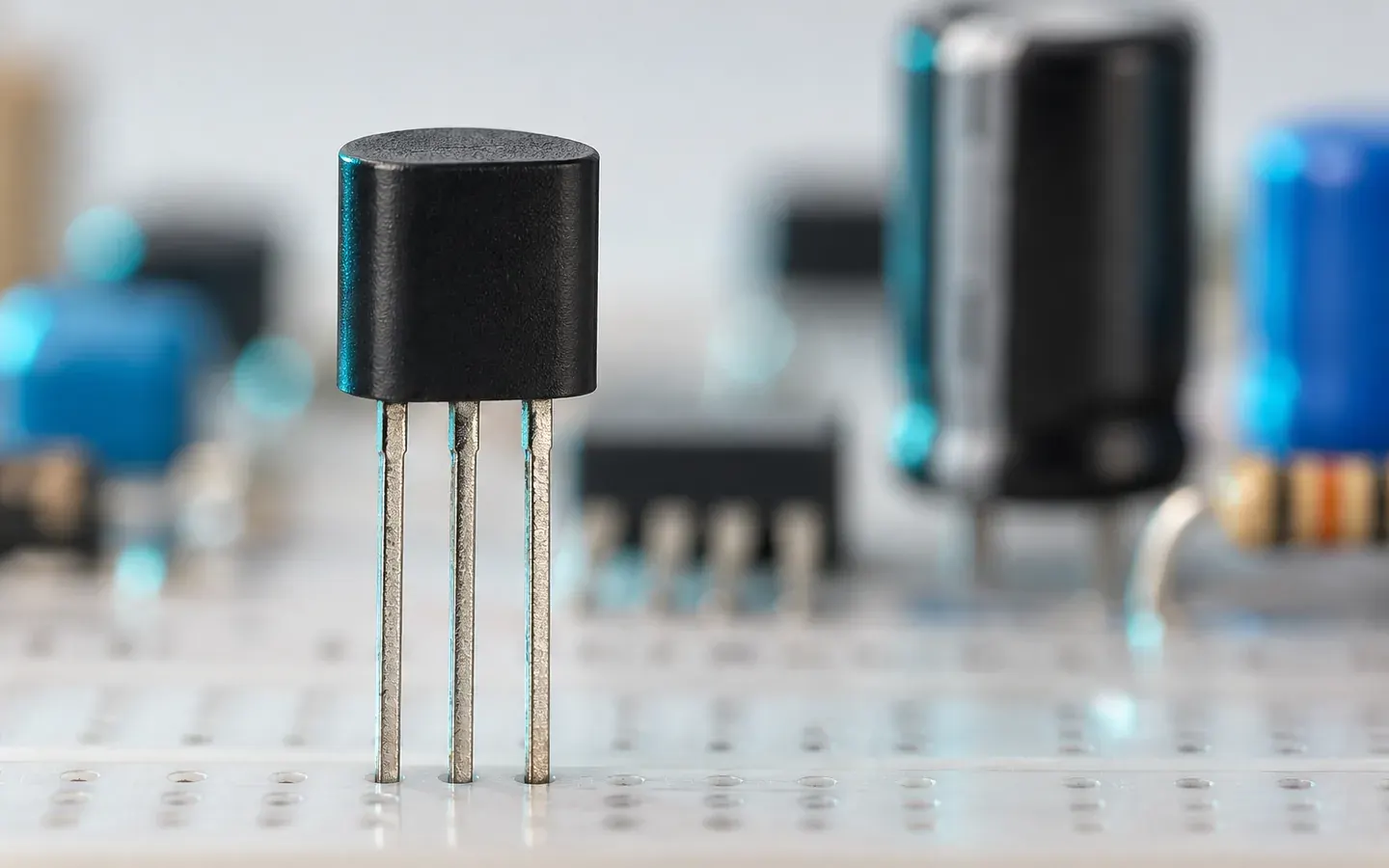 Basic
How Does a BJT Switch and Amplify Signals?
A BJT has collector, base and emitter pins; a small current at the base steers a larger one, so it works as an electronic switch or a signal amplifier.
Internet of Things (IoT)4 min read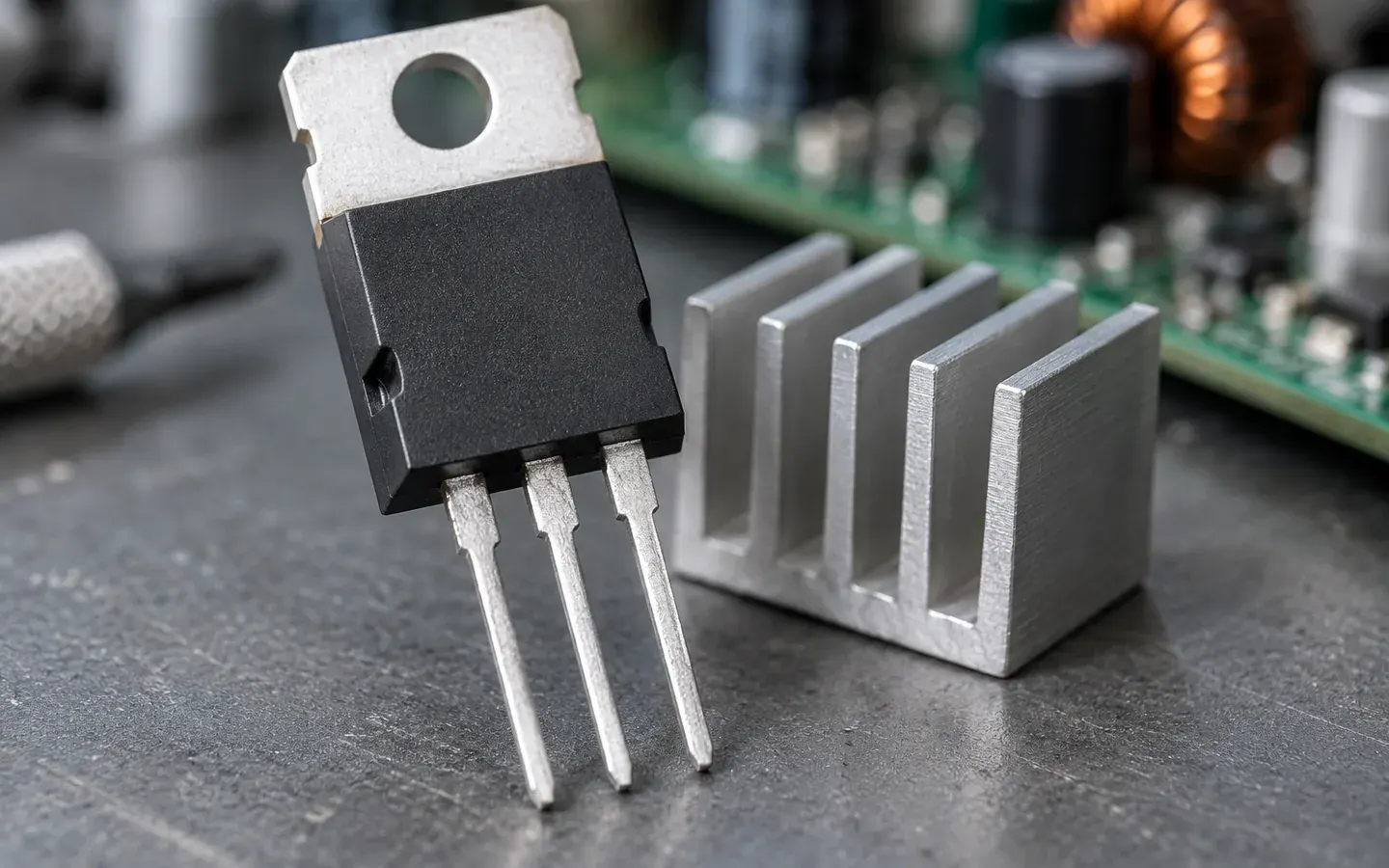 Basic
How Does a MOSFET Control a Load?
Learn how gate-to-source voltage controls a MOSFET, its common terminals, and enhancement and depletion modes.
Internet of Things (IoT)4 min read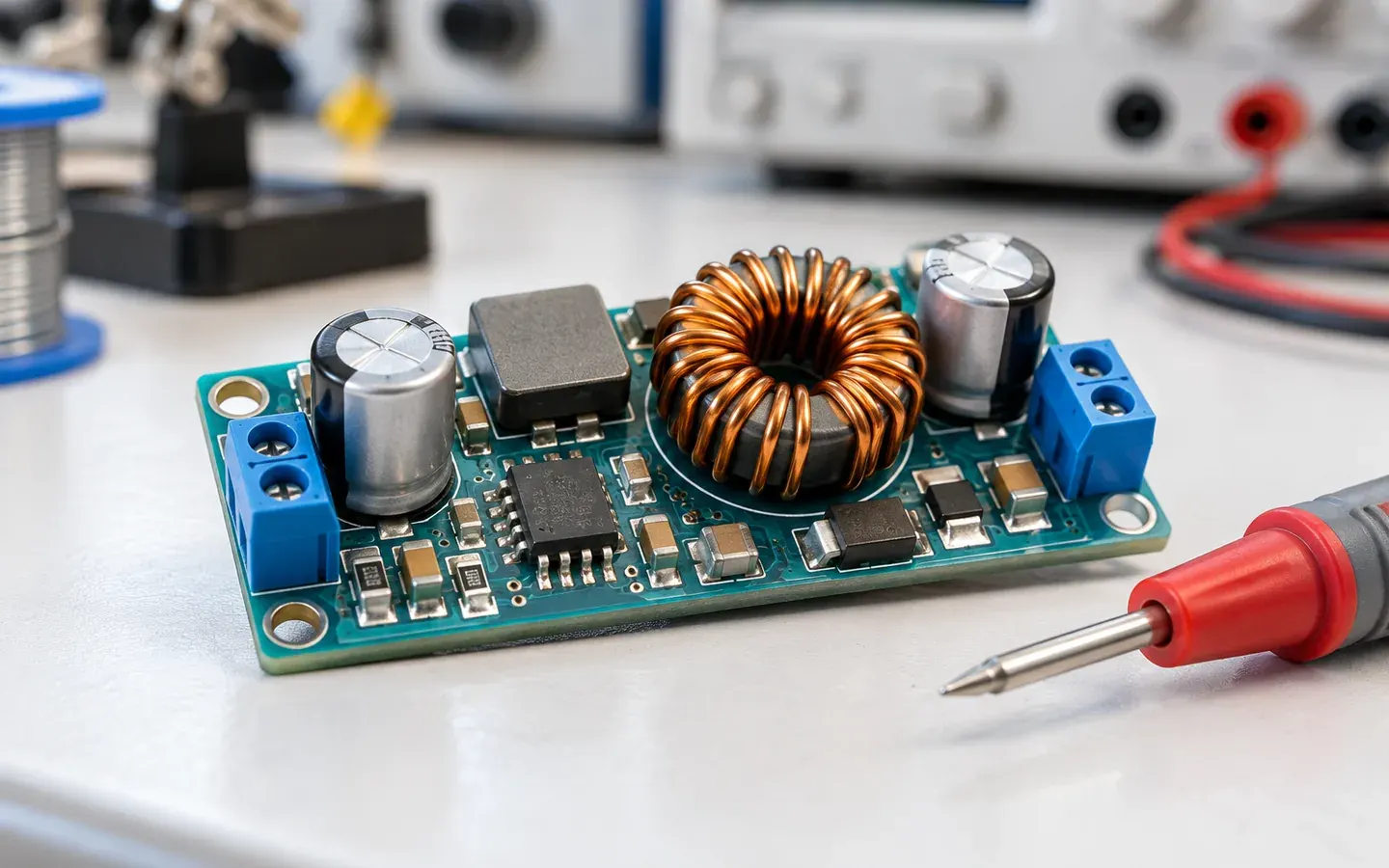 Basic
How Do LDO and Buck Regulators Work?
An LDO lowers voltage with an always-conducting transistor and sheds heat; a buck converter switches through an inductor. See how duty cycle sets output.
Internet of Things (IoT)4 min read


Sources
These sources are written for older readers. If they feel hard, read them with an adult.
- Resistors(opens in a new tab)
SparkFun ElectronicsTier C: other sourcesRead on October 29, 2026
- Pull-up Resistors(opens in a new tab)
SparkFun ElectronicsTier C: other sourcesRead on October 29, 2026
- Digital Pins - official Arduino documentation(opens in a new tab)
Arduino (official documentation repository)Tier C: other sourcesRead on October 29, 2026
- Analog Input - official Arduino documentation(opens in a new tab)
Arduino (official documentation repository)Tier C: other sourcesRead on October 29, 2026