

How Do Voltage and Current Differ?
- Starter
- Article
- Ages 10+
- 4 min read

Voltage is the difference in electrical potential energy per unit charge between two points. Current is the rate at which charge passes a point in a circuit. Voltage describes the energy difference available to each unit of charge, while current describes how quickly charge passes. Resistance is the third quantity that links these ideas.
Contents
- Battery
- Direction of current
- Lamp
What you will learn
- Tell voltage, current and resistance apart.
- Explain why a simple battery circuit needs a closed loop for sustained current.
- Describe how resistance changes the current.
Before you start
No prior knowledge needed. Having seen a flashlight or a battery is enough.
What are voltage and current?
Voltage is the difference in electrical potential energy per unit charge between two points, and current is the rate at which charge passes a point in a circuit.
A picture helps: think of a water tank. The amount of water is the charge, the water pressure is the voltage and the water flow is the current. The tank is like a battery, a place where a certain amount of energy is stored and then released.
- Water tank, like a battery
- Pipe
- Flowing water
In this analogy, lower water pressure goes with less water flow. In a flashlight, a drop in voltage can make the light dim.
Why does a battery circuit need a closed loop?
In a simple battery-and-lamp circuit, a closed loop provides a continuous path for sustained current. When the loop is open, the lamp does not stay lit.
Components in the circuit, such as a lamp, let us control the charge and use it to do work. A lit lamp is one such job.
- Battery
- Closed wire
- Lamp
- Direction of current
How does resistance change the current?
Resistance is a material's tendency to resist the flow of charge. In the tank picture, opposition to water flow corresponds to resistance; a narrower hose offers more opposition when other conditions stay the same.
Take two tanks with the same amount of water and the same pressure, but one hose is narrower. The circuit with the higher resistance allows less charge to flow, so it has less current.
- Wide pipe, low resistance
- Narrow pipe, high resistance
- Large stream
- Small stream
For a resistor that follows Ohm's law, the formula is V = I × R: V is voltage in volts, I is current in amperes, and R is resistance in ohms. If two values are known, the third can be worked out.
Real-world example
With an adult, look at a flashlight. The battery is the source of voltage, the wires and bulb form a closed loop and current running through the bulb makes it glow. Ask yourself: if the loop is cut at one spot, does the bulb still light?
Common misunderstandings
Voltage and current are the same thing. Voltage is the difference in electrical potential energy per unit charge between two points, while current is the rate at which charge passes a point in a circuit.
Higher resistance gives a bigger current. At the same voltage, the circuit with higher resistance has less current.
Frequently asked questions
What is voltage?
Voltage is the difference in electrical potential energy per unit charge between two points. In the water picture it matches the pressure of the water.
What is current?
Current is the rate at which charge passes a point in a circuit. In the water picture it matches the flow of water.
What is resistance?
Resistance is a material's tendency to resist the flow of charge. A narrower pipe is like a higher resistance.
What is Ohm's law used for?
Ohm's law lets you work out one of the three quantities when the other two are known.
Summary
- Voltage is the difference in electrical potential energy per unit charge between two points; current is the rate at which charge passes a point.
- A battery-and-lamp circuit needs a closed loop for sustained current; components in the circuit help do work.
- At the same voltage, higher resistance gives a smaller current, and Ohm's law links the three quantities.
Terms in this article
English and Vietnamese terms, with the meanings used here. Hover, tap or Tab to a term with a dotted underline for an explanation as you read.
- VoltageĐiện áp
- The difference in electrical potential energy per unit charge between two points.
- CurrentDòng điện
- The rate at which charge passes a point in a circuit.
- ResistanceĐiện trở
- How strongly a material resists the flow of charge.
- CircuitMạch điện
- Electrical components form a path for charge. When the path is closed, current can be sustained.
- Ohm's lawĐịnh luật Ohm
- For a resistor that follows Ohm's law, V = I × R.
This article is not marked as viewed
Spotted something wrong or unsafe?
Tell the administrator by email. The message already has the article title and address.
You may also like
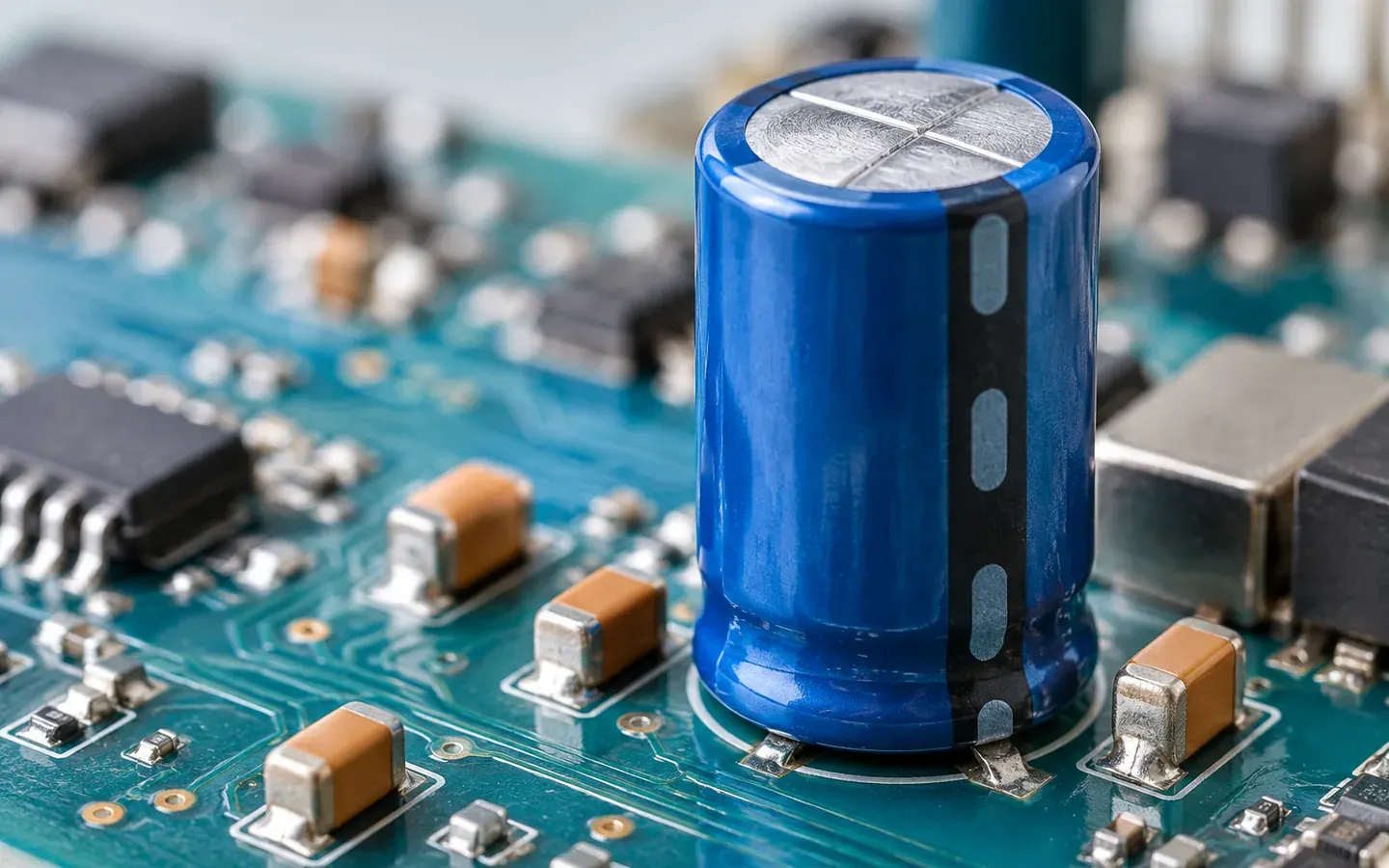 Basic
How Does a Capacitor Charge and Filter Noise?
A capacitor is two metal plates and an insulator that charges and discharges energy, and sits near a chip to calm noise on the power line.
Internet of Things (IoT)4 min read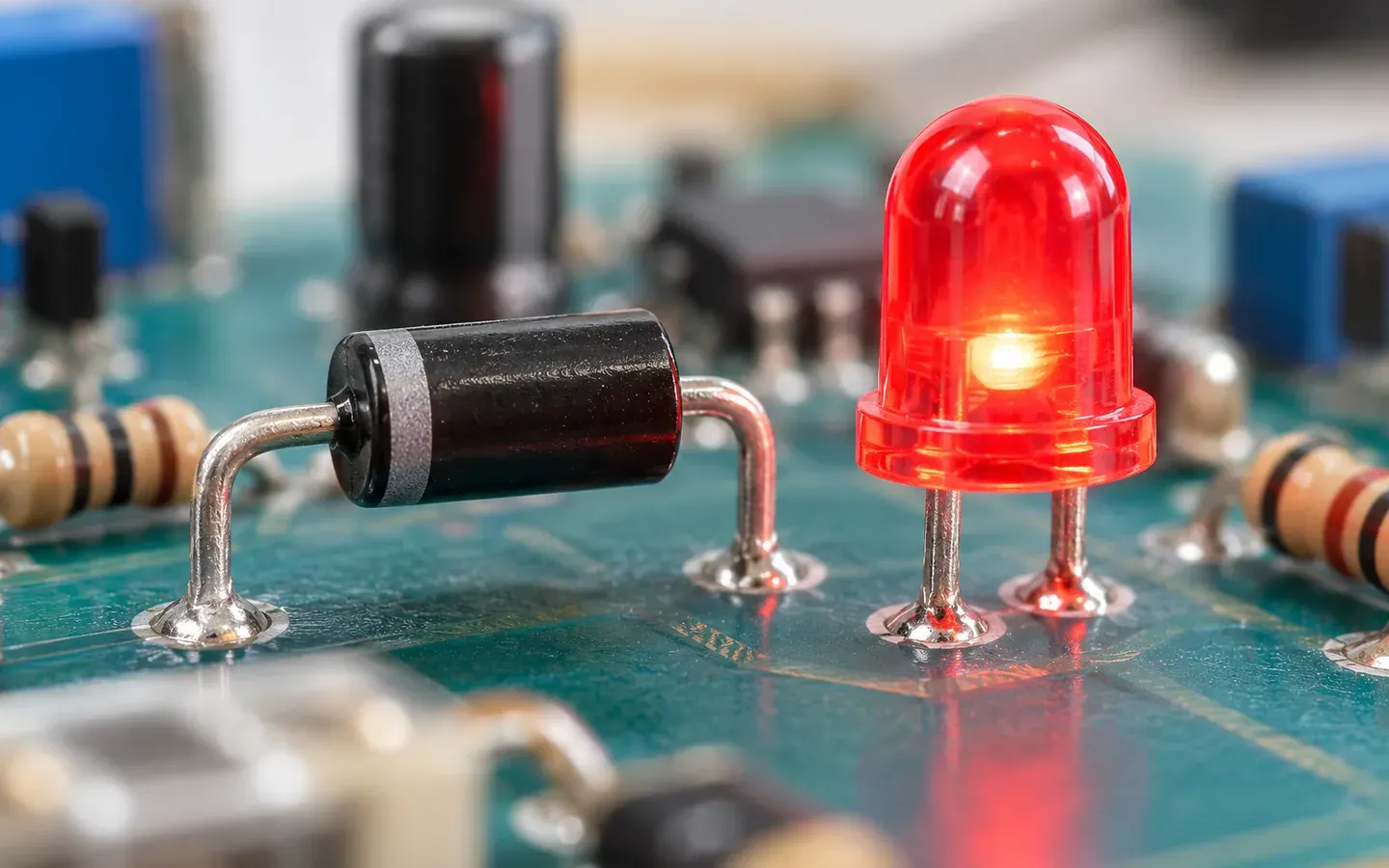 Basic
How Do Diodes and LEDs Conduct Current?
A diode mainly conducts in the forward direction and needs forward voltage to conduct significantly; an LED emits light and needs current limiting.
Internet of Things (IoT)4 min read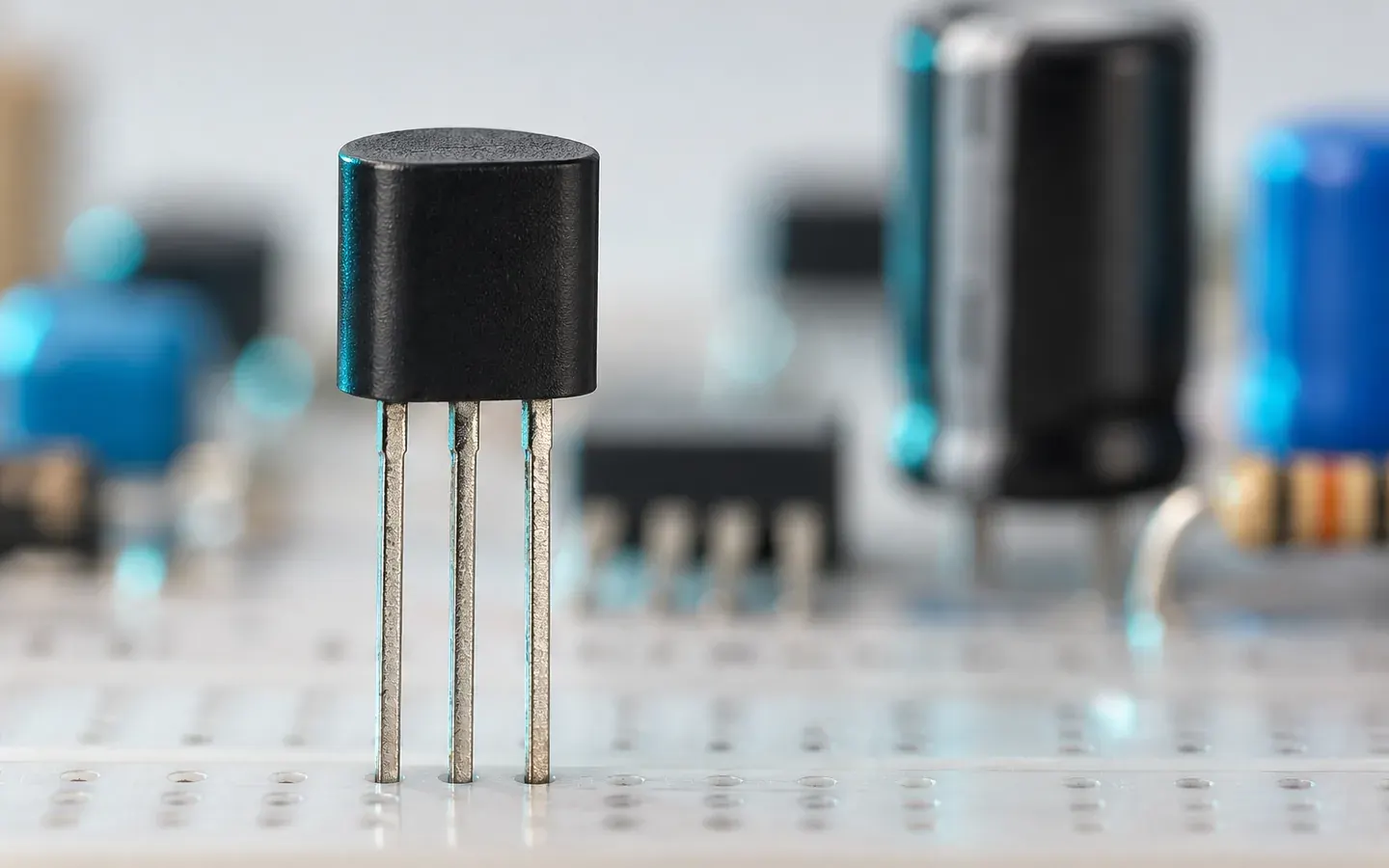 Basic
How Does a BJT Switch and Amplify Signals?
A BJT has collector, base and emitter pins; a small current at the base steers a larger one, so it works as an electronic switch or a signal amplifier.
Internet of Things (IoT)4 min read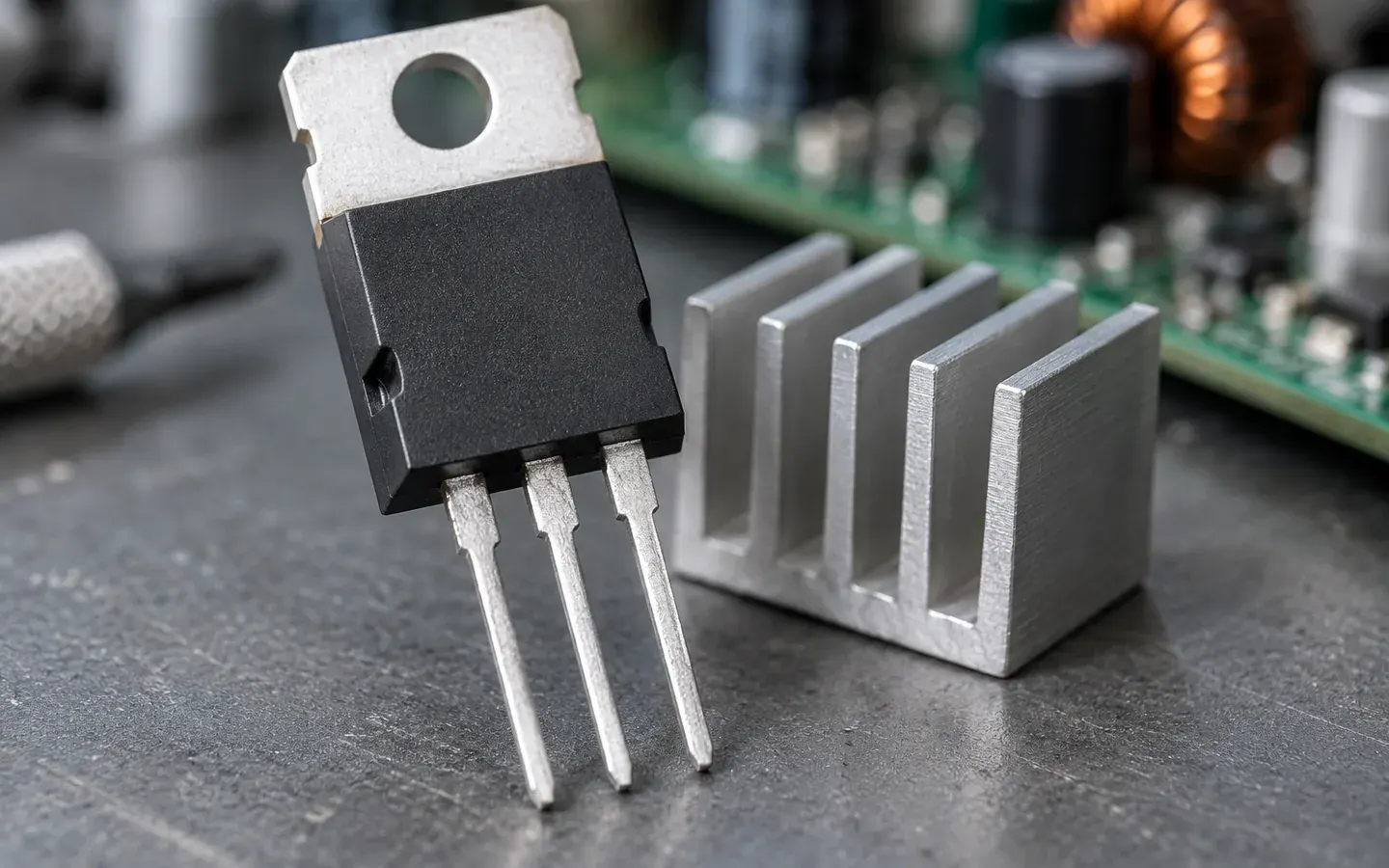 Basic
How Does a MOSFET Control a Load?
Learn how gate-to-source voltage controls a MOSFET, its common terminals, and enhancement and depletion modes.
Internet of Things (IoT)4 min read


Sources
These sources are written for older readers. If they feel hard, read them with an adult.
- Voltage, Current, Resistance, and Ohm's Law(opens in a new tab)
SparkFun ElectronicsTier C: other sourcesRead on October 29, 2026
- Ohm’s Law: Resistance and Simple Circuits - College Physics 2e(opens in a new tab)
OpenStax, Rice UniversityTier C: other sourcesRead on October 29, 2026