

What Requirements Define a Clean Material Stream?
- Starter
- Article
- Ages 10+
- 5 min read

A clean material stream contains only the kinds of items the programme accepts, with the food scraped off. According to the US EPA, a container only needs to be "spatula-clean" to be recycled; containers contaminated with food cannot be recycled. Those two requirements, the right kind and clean enough, keep the whole stream usable.
Contents
- Clean tub
- Tub with heavy residue
- Shared bin
What you will learn
- Say what "clean" means for a used item.
- Explain what "the right kind" depends on.
- Understand why one dirty item affects the whole stream.
Before you start
You only need to know that recyclables from many homes are collected together and trucked to a sorting facility.
What does "clean" mean for a used item?
Clean means free of significant food residue, not like new. According to the US EPA, rinse or scrape the residue off; "spatula-clean" is clean enough to recycle. Otherwise, containers contaminated with food cannot be recycled.
The practical test is how much food is left: empty the leftovers, then rinse or scrape; put it in the bin only once significant residue is removed and the programme accepts that container.
- Thin residue and scraper
- Residue to remove
What does "the right kind" depend on?
The right kind is whatever your programme accepts and the machines can handle. According to the US EPA, not all kinds of recyclables are collected in every community, so check your local programme. According to UW Recycling, mechanised sorting equipment was created to sort the most common recyclables.
An unusual item or one outside the list can be misjudged or jam the machines, even if it is clean.
- Dirty tub
- Clean paper
- Clean bottle
Why does one dirty item affect the whole stream?
Because the dirt spreads to the clean items beside it. According to UW Recycling, food and liquids cause mould, and mould can spread to other accepted items such as bottles and cans, lowering their value. According to Pinellas County, soiled food containers and paper cannot be recovered and can contaminate clean, quality recyclables.
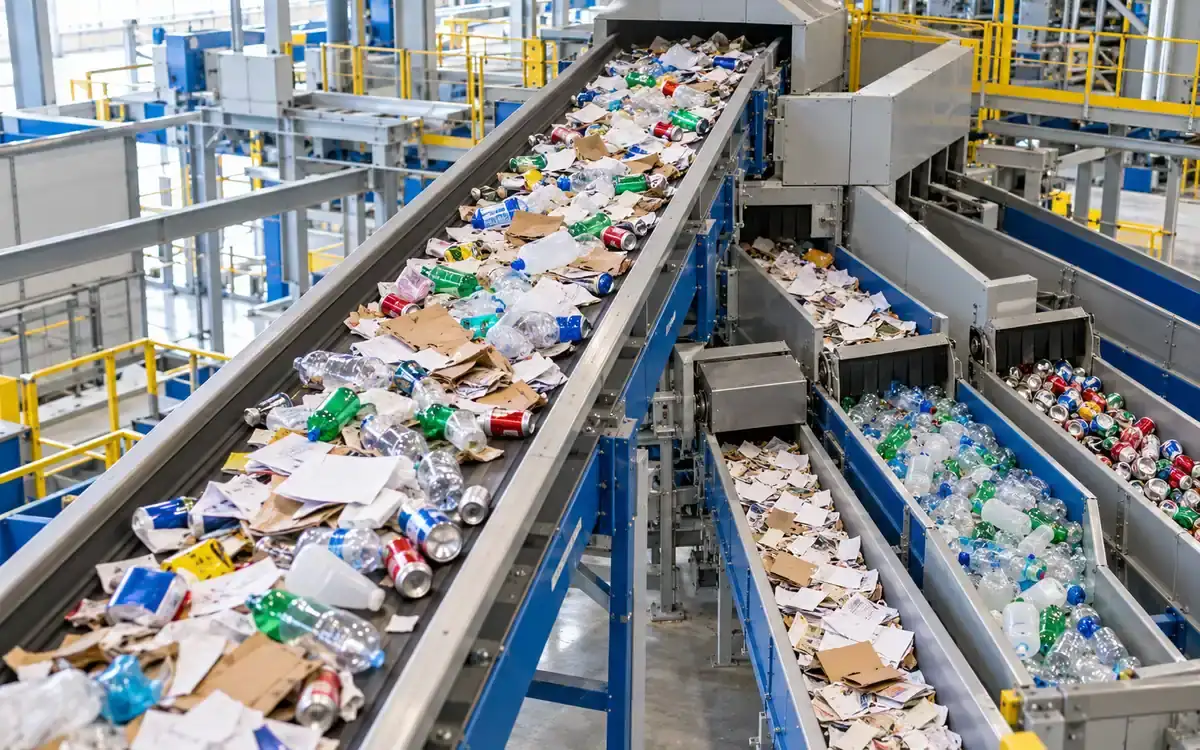
At the end of the line, the facility described by the Wasatch Integrated Waste Management District also has a quality-control sorter who removes contamination before the material enters the storage bunkers. Catching it there helps some, but being clean from the source is still better.
Real-world example
Picture two plastic tubs of the same kind: one rinsed and scraped clean, the other still thick with food. This is a hypothetical comparison. If the programme accepts this plastic, the first tub qualifies and the second does not, and if tossed in together it may soil the paper beside it.
Common misunderstandings
Clean does not mean spotless. "Spatula-clean" is enough.
Clean is also not enough if the item is the wrong kind. A clean item the programme does not accept still should not go in the bin.
Frequently asked questions
How clean must recyclables be?
Spatula-clean is enough. Containers with a lot of food left cannot be recycled.
Can a clean item outside the accepted list go in the bin?
It should not. If the programme does not accept it, it still contaminates the stream.
Why does food residue harm the whole bin?
Food causes mould, and mould spreads to the paper, bottles and cans beside it.
Summary
- A clean stream needs two things: the right kind of item and enough cleanliness.
- Clean means free of significant food, and spatula-clean is enough.
- One dirty item can spread mould to the whole stream, so cleanliness from the source is best.
Terms in this article
English and Vietnamese terms, with the meanings used here. Hover, tap or Tab to a term with a dotted underline for an explanation as you read.
- material streamdòng vật liệu
- A flow of material of one kind or route moving through a facility.
- spatula-cleansạch như đã nạo bằng thìa
- The level of clean that is enough for recycling: free of significant food residue.
- mouldmốc
- A growth on leftover food and liquid that can spread to other items.
- quality controlkiểm soát chất lượng
- A checking step that removes contamination from sorted material.
This article is not marked as viewed
Spotted something wrong or unsafe?
Tell the administrator by email. The message already has the article title and address.
More in this topic
 Starter
How Is Waste Sorted?
Follow sorting from the point of disposal to a materials recovery facility, and understand why local acceptance rules come before bin choice.
6 min read Starter
Which Materials Can Be Recycled?
Compare paper, plastic, glass and aluminium, distinguishing technical recyclability from acceptance by a local collection programme.
5 min read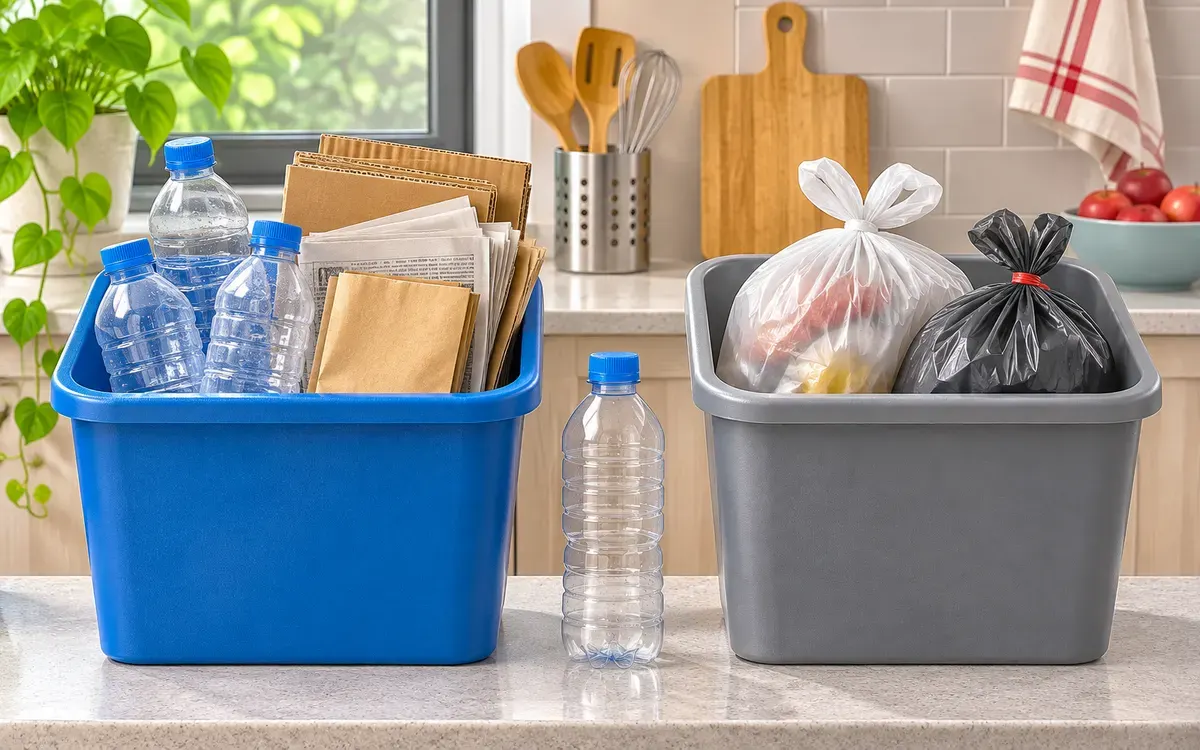 Starter
What Does Source Separation Contribute?
Source separation directs recyclables into the right collection route. See why misplaced items may be lost and why local rules matter.
5 min read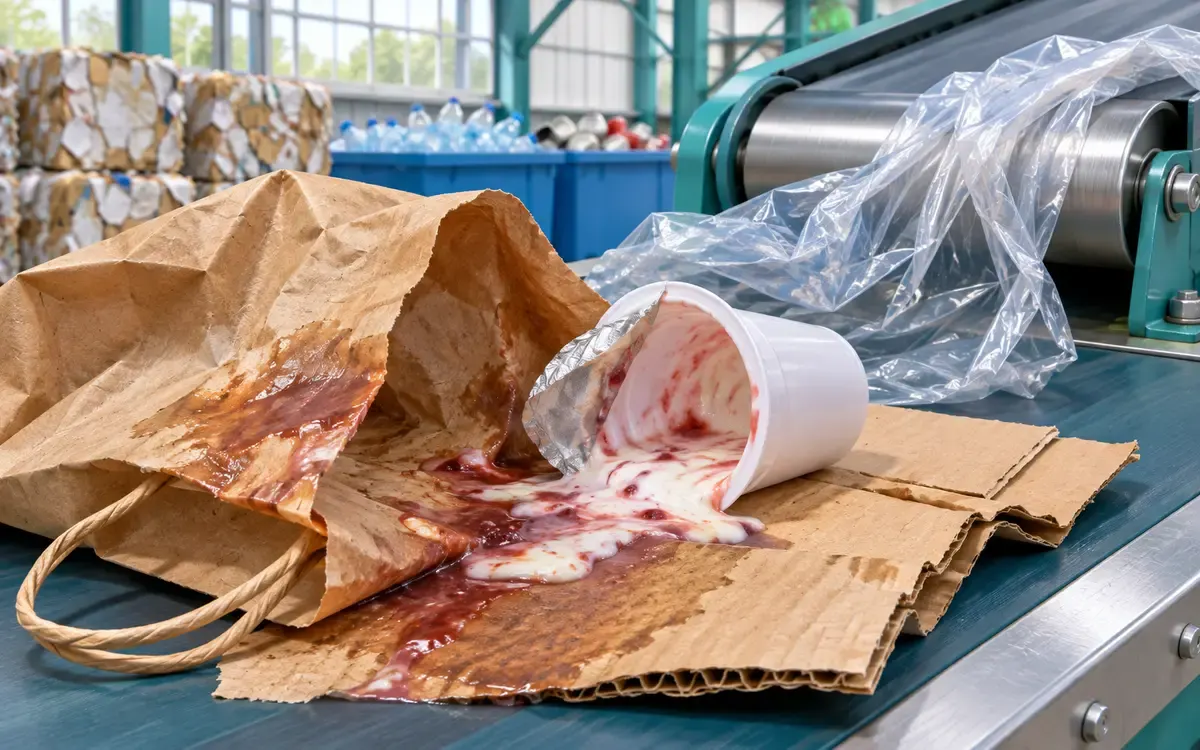 Starter
How Does Recycling-Bin Contamination Cause Problems?
Food grows mould, bags and cords tangle machines, and a load with too much contamination can be discarded whole. See how contamination does harm.
5 min read


Sources
These sources are written for older readers. If they feel hard, read them with an adult.
- How do I recycle common recyclables?(opens in a new tab)
US EPATier A: government, standards or research bodiesRead on November 3, 2026
- What is recycling contamination?(opens in a new tab)
University of Washington SustainabilityTier A: government, standards or research bodiesRead on November 3, 2026
- Recycling FAQ(opens in a new tab)
Pinellas CountyTier A: government, standards or research bodiesRead on November 3, 2026
- Recycling Basics and Benefits(opens in a new tab)
US EPATier A: government, standards or research bodiesRead on November 3, 2026
- Material Recovery and Transfer Facility(opens in a new tab)
Wasatch Integrated Waste Management DistrictTier A: government, standards or research bodiesRead on November 3, 2026