

What Does Source Separation Contribute?
- Starter
- Article
- Ages 10+
- 5 min read

Source separation means putting each item into the right bin where it is discarded, helping it enter the collection route accepted by the local programme. According to Pinellas County, in that county no recyclable material other than metal is pulled back out of the garbage once it reaches the disposal complex, so an item meant for recycling has to go in the recycling bin.
Contents
- Recycling bin
- Garbage bin
- Waste disposal facility
What you will learn
- Say what source separation is and which collection routes exist.
- Explain what happens to recyclables put in the garbage.
- Know how to put items in the recycling bin so the facility can handle them.
Before you start
You only need to know that your home has a garbage bin and may have a separate bin or drop-off point for recyclables.
What is source separation?
It is separating recyclables from garbage the moment you throw them away. According to the US EPA, recyclables are collected in several ways: kerbside collection, drop-off centres, and deposit or refund programmes. According to Pinellas County, to recycle an item you place it in your kerbside or drop-off recycling bin or cart.
According to the US EPA, not all kinds of recyclables are collected in every community, so correct separation also depends on the programme where you live.
- Kerbside
- Drop-off
- Deposit-refund
What happens if items are not separated at the source?
Depending on the system, an item put in the garbage by mistake may never be recycled. According to Pinellas County, in that county no recyclable material other than metal is removed from garbage after it arrives at the disposal complex. The county's 2025 waste composition study found that 11.6% of the waste arriving at the complex was recyclable material such as paper, cardboard, and plastic, glass and metal containers, things that could have been recycled through kerbside and drop-off programmes.
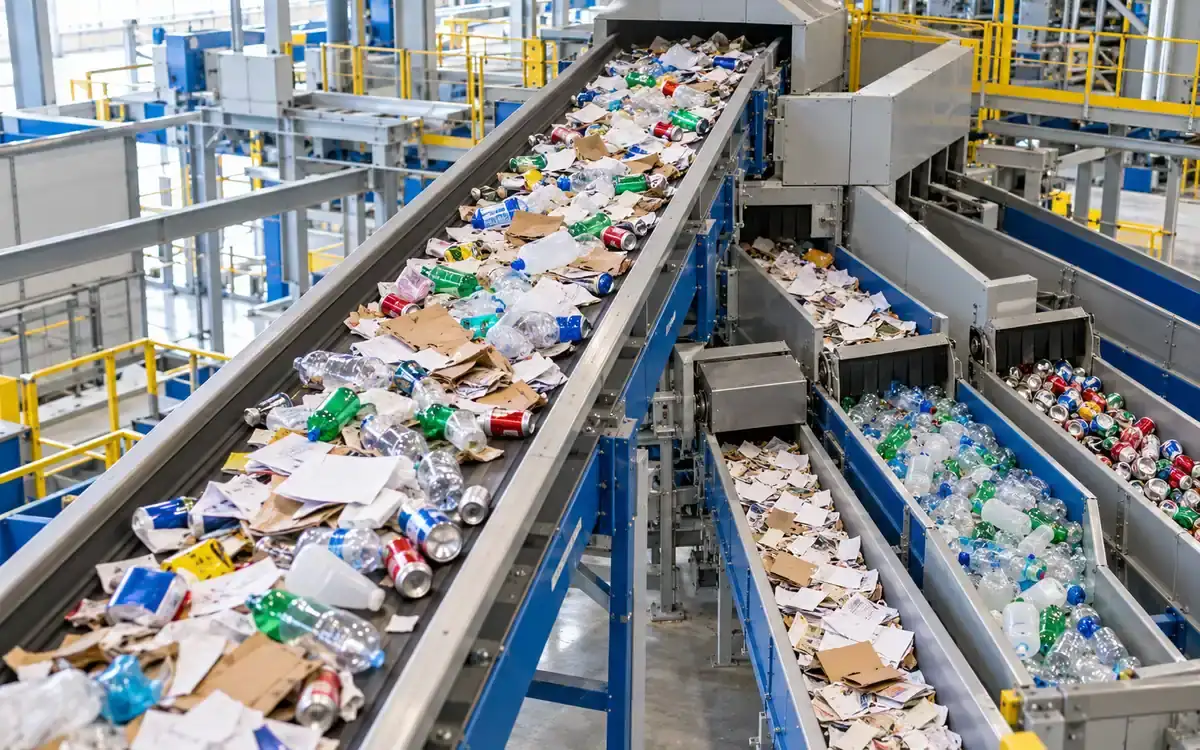
Other systems differ. According to the Wasatch Integrated Waste Management District, its recovery facility sorts material with recyclable value from both curbside recycling collection and curbside garbage cans. So you cannot assume garbage is picked through everywhere.
How should you put items in the bin?
Put them in loose, not bagged. According to the Wasatch Integrated Waste Management District, recyclables should not be bagged; material placed in plastic bags is much harder to recover and much more likely to end up in the landfill.
Before you toss an item, check the guidance of the programme where you live to see whether it is accepted.
- Loose items
- Bagged items
Real-world example
Picture two clean plastic bottles side by side in a kitchen, one put in the recycling bin and one dropped in the garbage by mistake. This is a hypothetical walk-through based on how one locality's system works. Where garbage is not picked through, the bottle in the recycling bin has a chance of becoming new material and the one in the garbage does not.
Common misunderstandings
Separating at home is not wasted effort on the grounds that "the plant will pick it out later". Where garbage is not picked through, an item dropped in the garbage loses its chance to be recycled.
Nor should you put everything in the recycling bin "just in case". An item the programme does not accept adds to contamination.
Frequently asked questions
What is source separation?
Putting each item in the right bin where it is discarded, keeping recyclables apart from garbage.
Are recyclables dropped in the garbage picked out later?
It depends on the system. Not in Pinellas County except metal; at the Wasatch facility, material is also sorted from garbage cans.
Should I bag my recyclables before binning them?
No. Material in plastic bags is much harder to recover.
Summary
- Source separation means keeping recyclables apart from garbage the moment you discard them.
- In some places, items dropped in the garbage are not picked out later, so correct separation decides the result.
- Put items in loose, not bagged, and follow the guidance of your local programme.
Terms in this article
English and Vietnamese terms, with the meanings used here. Hover, tap or Tab to a term with a dotted underline for an explanation as you read.
- source separationphân loại tại nguồn
- Keeping recyclables apart from garbage at the moment you discard them.
- kerbside collectionthu gom tại cửa nhà
- A collection vehicle picking up bins directly outside the home.
- drop-off centređiểm tiếp nhận
- A place where residents bring recyclables to drop them off.
- deposit or refund programmechương trình đặt cọc hoàn tiền
- A programme that refunds a deposit when containers are returned.
This article is not marked as viewed
Spotted something wrong or unsafe?
Tell the administrator by email. The message already has the article title and address.
More in this topic
 Starter
How Is Waste Sorted?
Follow sorting from the point of disposal to a materials recovery facility, and understand why local acceptance rules come before bin choice.
6 min read Starter
Which Materials Can Be Recycled?
Compare paper, plastic, glass and aluminium, distinguishing technical recyclability from acceptance by a local collection programme.
5 min read Starter
What Requirements Define a Clean Material Stream?
The right kind of item and clean enough, spatula-clean. See why one dirty item can affect the whole stream of recyclables.
5 min read Starter
How Does Recycling-Bin Contamination Cause Problems?
Food grows mould, bags and cords tangle machines, and a load with too much contamination can be discarded whole. See how contamination does harm.
5 min read


Sources
These sources are written for older readers. If they feel hard, read them with an adult.
- Recycling FAQ(opens in a new tab)
Pinellas CountyTier A: government, standards or research bodiesRead on November 3, 2026
- Material Recovery and Transfer Facility(opens in a new tab)
Wasatch Integrated Waste Management DistrictTier A: government, standards or research bodiesRead on November 3, 2026
- Recycling Basics and Benefits(opens in a new tab)
US EPATier A: government, standards or research bodiesRead on November 3, 2026