

How Do Resistivity and Resistance Differ?
- Starter
- Article
- Ages 10+
- 6 min read

Resistivity is a material property at specified conditions, independent of shape or size in the uniform-wire model. The resistance of a particular piece depends on both material and geometry: the longer the wire, the greater its resistance; the larger its cross-section, the smaller its resistance. Material sets resistivity; geometry sets resistance.
Contents
- Material (the swatch)
- Length
- Cross-section (the cut face)
What you will learn
- Tell a material's resistivity apart from the resistance of a particular piece.
- Say how length and cross-section change resistance.
- Explain why conductors, semiconductors and insulators have different resistivities.
Before you start
No prior knowledge needed. It is enough to know that current is moving charge, and that a longer or thinner wire lets electricity through less easily.
How does resistivity differ from resistance?
Resistivity belongs to a material, while resistance belongs to a particular piece. Resistivity is an intrinsic property of a material, independent of its shape or size. The resistance of an object depends on its shape and the material it is made of.
The resistance of a piece of conductive material also depends on its dimensions and on an intrinsic property of the material called its resistivity.
Think of flour. The quality of the flour belongs to the flour, like resistivity. Whether a loaf is large or small, long or short depends on its shape, like resistance. The same flour can make different loaves.
- Three bars of one material, different shapes
- Resistance (amber bar)
How does the material set resistivity?
The material decides how many free charges can move. Different materials impede the flow of charge differently. Conductors have the smallest resistivities, insulators the largest, and semiconductors intermediate ones.
The reason lies in the charges. Conductors have varying but large free charge densities. In insulators most charges are bound to atoms and not free to move. Semiconductors have properties that make the number of free charges depend strongly on the type and amount of impurities in them. That is what lets people tune semiconductors for electronic components.
- Conductor: many free charges
- Semiconductor: fewer, depending on impurities
- Insulator: charges held in place
How does geometry set resistance?
The longer the wire, the greater the resistance, and the thicker the wire, the smaller the resistance. The resistance of a piece of material is directly proportional to its length and inversely proportional to its cross-sectional area.
Look at length first. The longer the cylinder, the more collisions the charges make with its atoms. Increasing the length of the material adds resistance linearly.
Then cross-section. The greater the diameter of the cylinder, the more current it can carry, so increasing the cross-sectional area decreases the resistance in proportion to the increase in area. A cylinder's resistance to current is similar to the opposition a pipe poses to fluid flow: a long pipe resists more, and a wide pipe lets more through.
In a demonstration with two nichrome wires of equal length but different diameters, the resistances of the two wires were in the inverse ratio of their cross-sectional areas.
- Long and thin: high resistance, little current
- Short and thick: low resistance, plenty of current
Does temperature change resistivity?
Yes, and in two directions depending on the material. The resistivity of conductors increases with increasing temperature, because at higher temperatures the atoms vibrate more rapidly and over larger distances, so the electrons moving through a metal make more collisions.
For the semiconductors in the OpenStax textbook's table, resistivity decreases with increasing temperature. They become better conductors at higher temperature because increased thermal agitation increases the number of free charges available to carry current.
- Conductor (metal): rises
- Semiconductor: falls
Real-world example
Compare two hypothetical copper wires of the same material. The first is short and thick, the second long and thin. At the same temperature and material state, their resistivity is the same, but their resistance differs: the long thin wire resists current more. That is why a very long or very thin cable makes it harder for electricity to get through. This is an illustrative model, not a measurement of a specific wire.
Common misunderstandings
Resistivity depends on the length of the wire. Resistivity is an intrinsic property of the material, independent of its shape or size. Length changes only the resistance.
Resistance and resistivity are the same. Resistance belongs to a particular piece; resistivity belongs to the material.
Heat makes every material resist current more. That holds for conductors, but for the semiconductors in the OpenStax textbook's table, resistivity decreases with increasing temperature.
Frequently asked questions
Does a wire's resistivity change if you cut it shorter?
If temperature and material state stay unchanged, no. In the uniform-wire model, cutting the wire shorter only lowers its resistance.
Why does a thick wire resist current less than a thin one?
Because a larger diameter carries more current, so resistance falls in proportion to the increase in cross-section.
Why do semiconductors sit between conductors and insulators?
Because their resistivity is intermediate, and their number of free charges depends strongly on the type and amount of impurities.
Summary
- Resistivity is a property of a material; resistance belongs to a particular piece and depends on both material and geometry.
- Length adds resistance linearly; a larger cross-section lowers it in proportion.
- Conductors, semiconductors and insulators differ in their number of free charges, and temperature also changes resistivity.
Terms in this article
English and Vietnamese terms, with the meanings used here. Hover, tap or Tab to a term with a dotted underline for an explanation as you read.
- resistivityđiện trở suất
- An intrinsic property of a material that tells how strongly it resists current, at specified conditions, regardless of shape.
- resistanceđiện trở
- How strongly a particular object resists current, depending on both its material and shape.
- cross-sectional areatiết diện
- The area of the cut across a wire or bar, the part current flows through.
- conductorchất dẫn điện
- A material with low resistivity and many free charges.
- insulatorchất cách điện
- A material with high resistivity in which most charges are bound to atoms.
- semiconductorchất bán dẫn
- A material with intermediate resistivity whose number of free charges depends strongly on impurities.
This article is not marked as viewed
Spotted something wrong or unsafe?
Tell the administrator by email. The message already has the article title and address.
More in this topic
 Starter
What Are Semiconductors?
Learn about semiconductor materials, controlled conduction and doping, and distinguish the material from a transistor or a packaged chip.
5 min read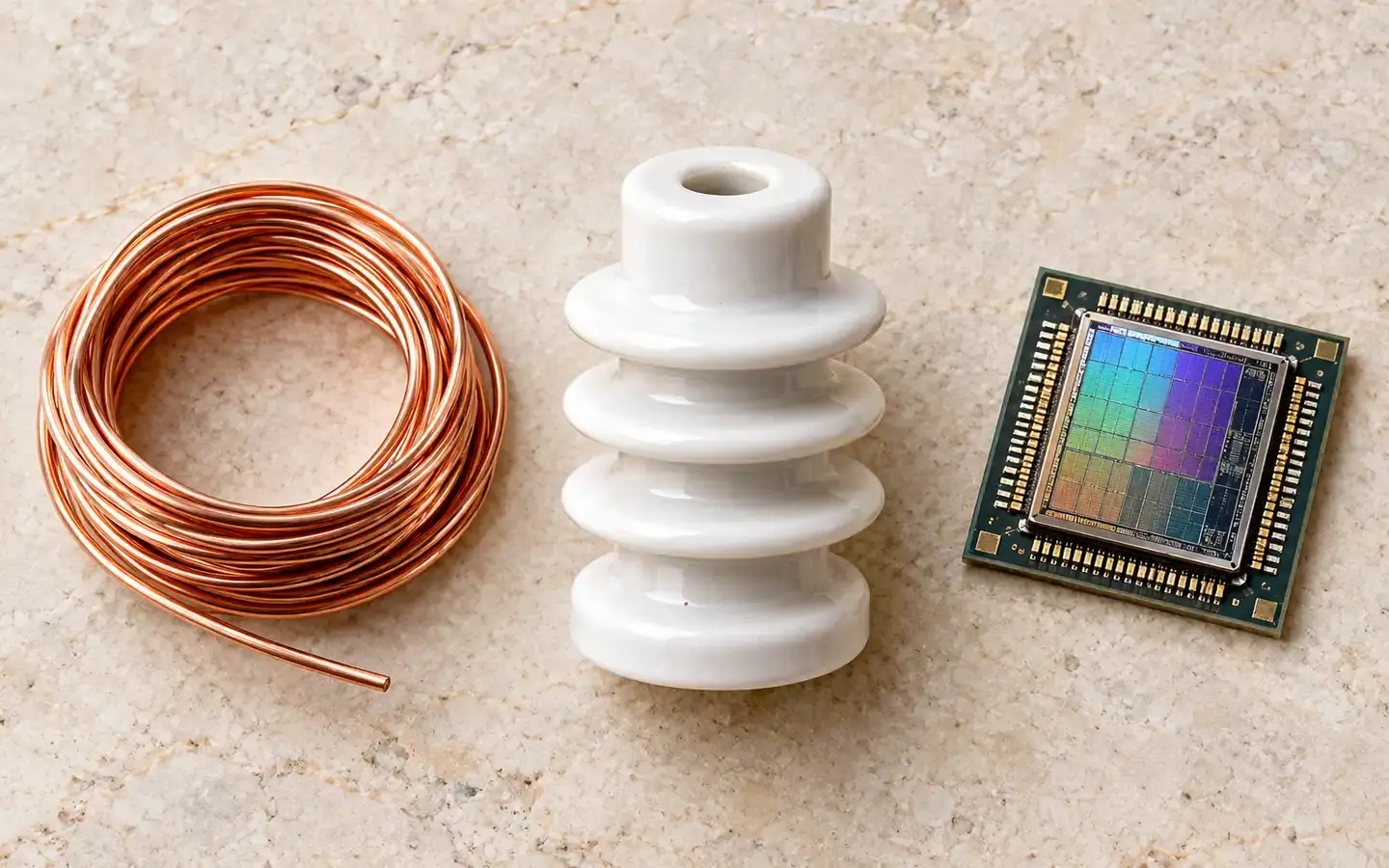 Starter
How Do Conductors, Insulators, and Semiconductors Differ?
Compare conduction and the roles of conductors, insulators and semiconductors, and see why electronic components use different materials.
5 min read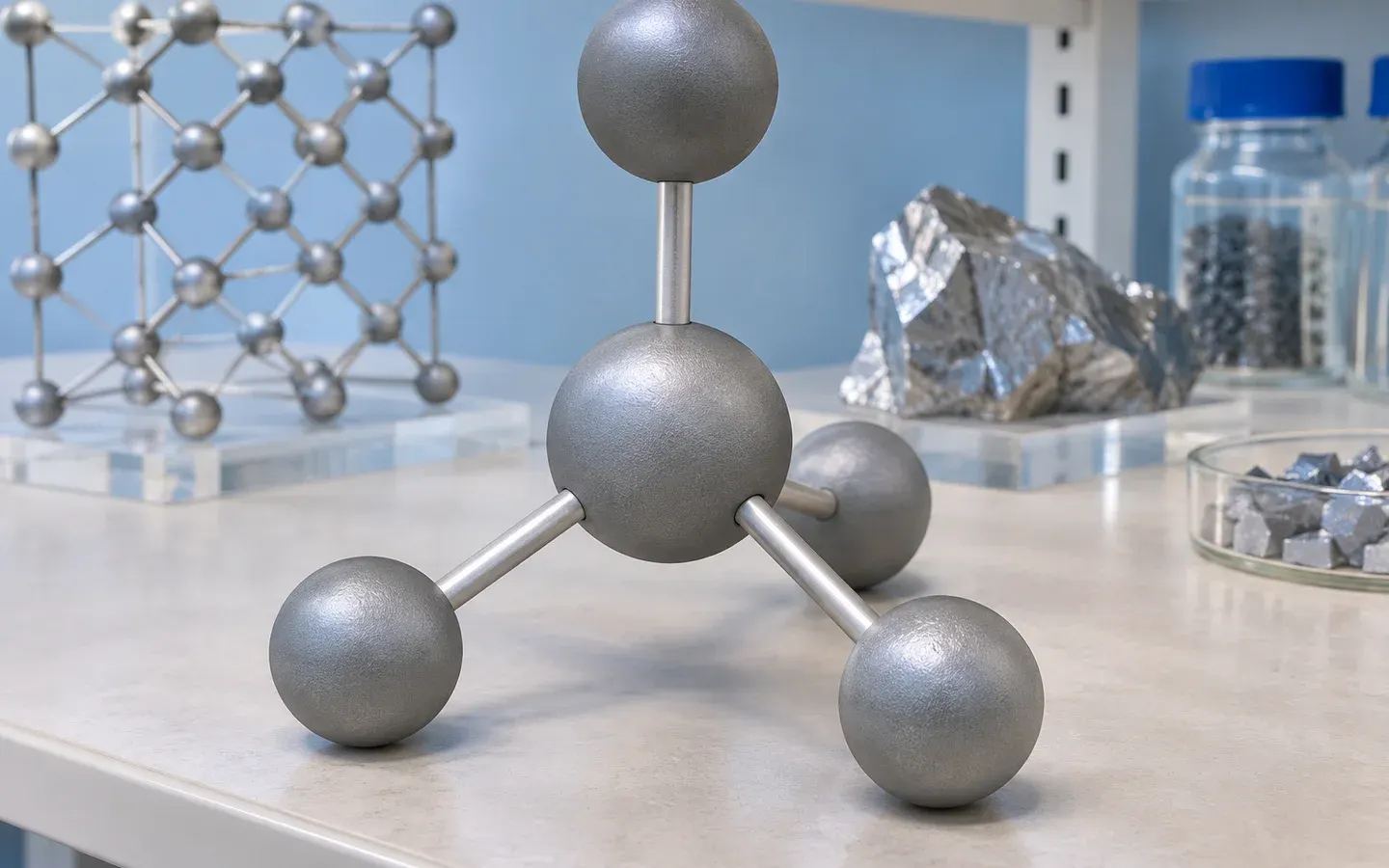 Starter
How Do Valence Electrons Form Silicon Bonds?
How the four outer electrons of silicon are shared with four neighbouring atoms to form the covalent bonds of the crystal, and what breaks or changes them.
5 min read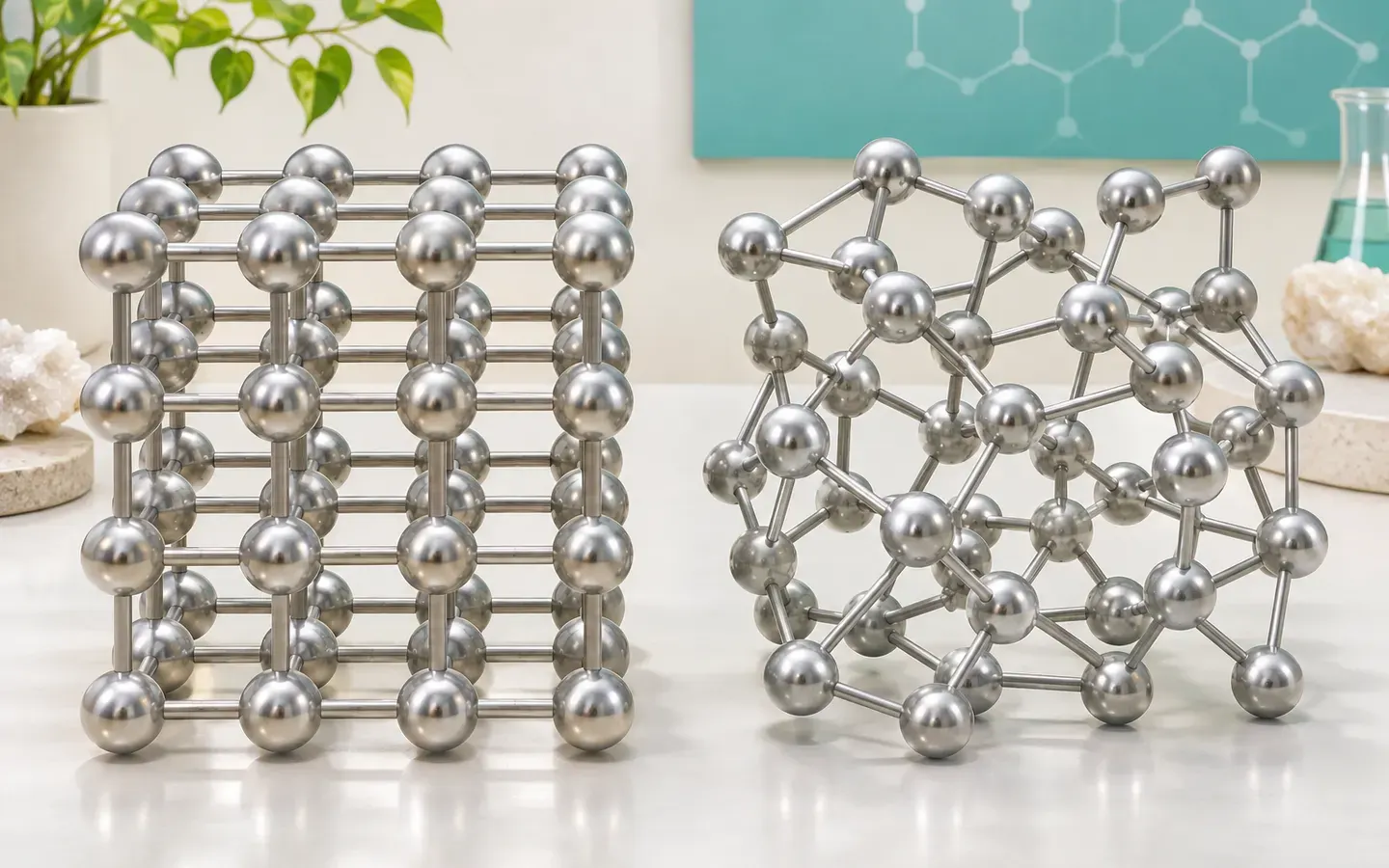 Starter
How Do Crystals and Amorphous Materials Differ?
Compare a crystal's long-range order with a disordered amorphous material, and see how crystalline and amorphous silicon differ in absorbing light.
5 min read


Sources
These sources are written for older readers. If they feel hard, read them with an adult.
- 20.3 Resistance and Resistivity (OpenStax College Physics for AP Courses 2e)(opens in a new tab)
OpenStaxTier C: other sourcesRead on November 7, 2026
- Resistance in different-diameter wires (UCSB Physics Lecture Demonstrations)(opens in a new tab)
University of California, Santa BarbaraTier A: government, standards or research bodiesRead on November 7, 2026