

Overview of Basic Electronic Components
- Starter
- Article
- Ages 10+
- 4 min read

Basic electronic components include resistors, capacitors, diodes, LEDs and transistors. A resistor limits current, a capacitor stores energy, a diode mainly conducts forward, and a transistor switches or amplifies a signal. These are common building blocks in many IoT circuits.
Contents
- Resistor
- Capacitor
- Diode
- Transistor
What you will learn
- Say the main job of each component.
- Tell a resistor from a capacitor.
- Describe how these components affect a circuit.
Before you start
It helps to know what voltage is.
What do resistors and capacitors do?
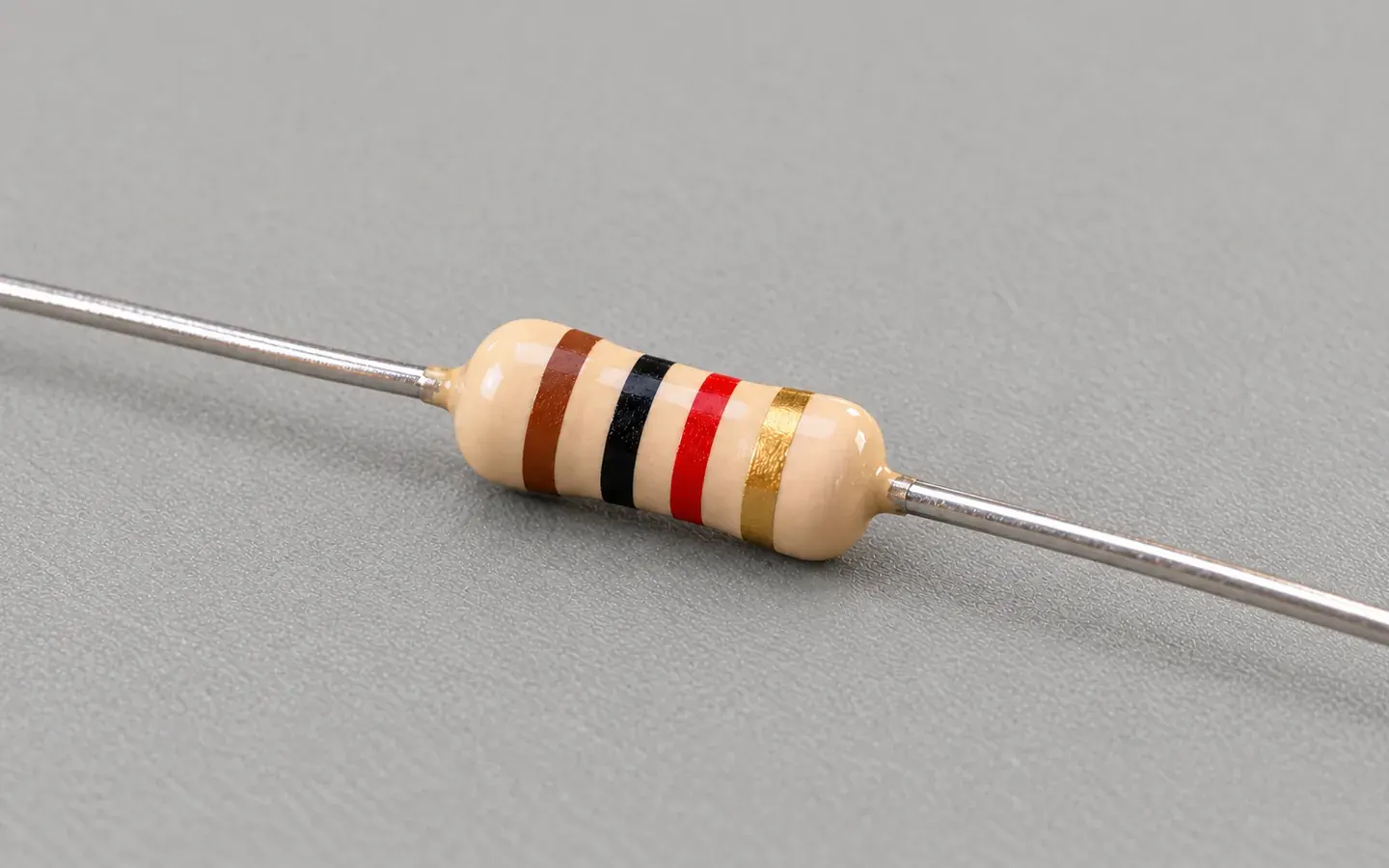
Resistors are commonly used to limit current, divide voltages and pull up I/O lines. What makes capacitors special is their ability to store energy. A decoupling capacitor's job is to suppress high-frequency noise in power supply signals.
- Current-limiting resistor
- Capacitor storing energy
- Energy held back
How do diodes and LEDs pass current?
In normal operation, a diode conducts mainly in the forward direction and restricts reverse current. A sufficiently large reverse voltage can cause breakdown. LEDs also have a forward direction and need suitable current limiting in a practical circuit; forward voltage alone does not limit current.
- Diode
- Direction of current
- LED
What can a transistor do?
Driven in cutoff or saturation mode, a bipolar junction transistor (BJT) creates the binary on/off effect of a switch. Transistors can also amplify electrical signals: the output has a similar shape but much higher power, supplied by the power source.
- Transistor
- On/off switching
- Amplified signal
Real-world example
With an adult, look at a photograph of a small circuit board and try to find resistors, capacitors, diodes or transistors. Use the photograph only; this activity does not require touching or powering a board.
Common misunderstandings
A resistor and a capacitor do the same job. A resistor limits current, while a capacitor stores energy.
All diodes block reverse current in the same way. Real diodes have small reverse leakage; if reverse voltage exceeds a threshold, breakdown can occur. Some types, such as Zener diodes, are designed to operate in breakdown.
Frequently asked questions
What is a resistor used for?
To limit current, divide voltages and pull up I/O lines.
What is special about a capacitor?
Its ability to store energy.
What does an LED need to light up?
An LED needs a suitable forward voltage and current limiting in a practical circuit to light up.
What is a transistor for?
As an on/off switch or to amplify electrical signals using energy from a power source.
Summary
- A resistor limits current and a capacitor stores energy.
- Diodes and LEDs mainly conduct in the forward direction under normal operating conditions.
- A transistor switches current or amplifies a signal.
Terms in this article
English and Vietnamese terms, with the meanings used here. Hover, tap or Tab to a term with a dotted underline for an explanation as you read.
- VoltageĐiện áp
- The difference in electrical potential energy per unit charge between two points.
- ResistorĐiện trở
- A component used to limit current, divide voltage or pull up I/O lines.
- CapacitorTụ điện
- A component able to store energy.
- Decoupling capacitorTụ tách
- A capacitor that suppresses high-frequency noise in power supply signals.
- Diode
- A component that usually conducts forward; reverse behavior depends on diode type and operating conditions.
- Light-emitting diodeLED
- A light-emitting diode with a forward voltage required for it to light up.
- Transistor
- A component used as an electronic switch or to amplify signals.
This article is not marked as viewed
Spotted something wrong or unsafe?
Tell the administrator by email. The message already has the article title and address.
You may also like
 Basic
How Does a Resistor Control Current?
A resistor limits current, divides voltage and holds an input at a clear level; this article covers series, parallel and the pull-up resistor for a button.
Internet of Things (IoT)4 min read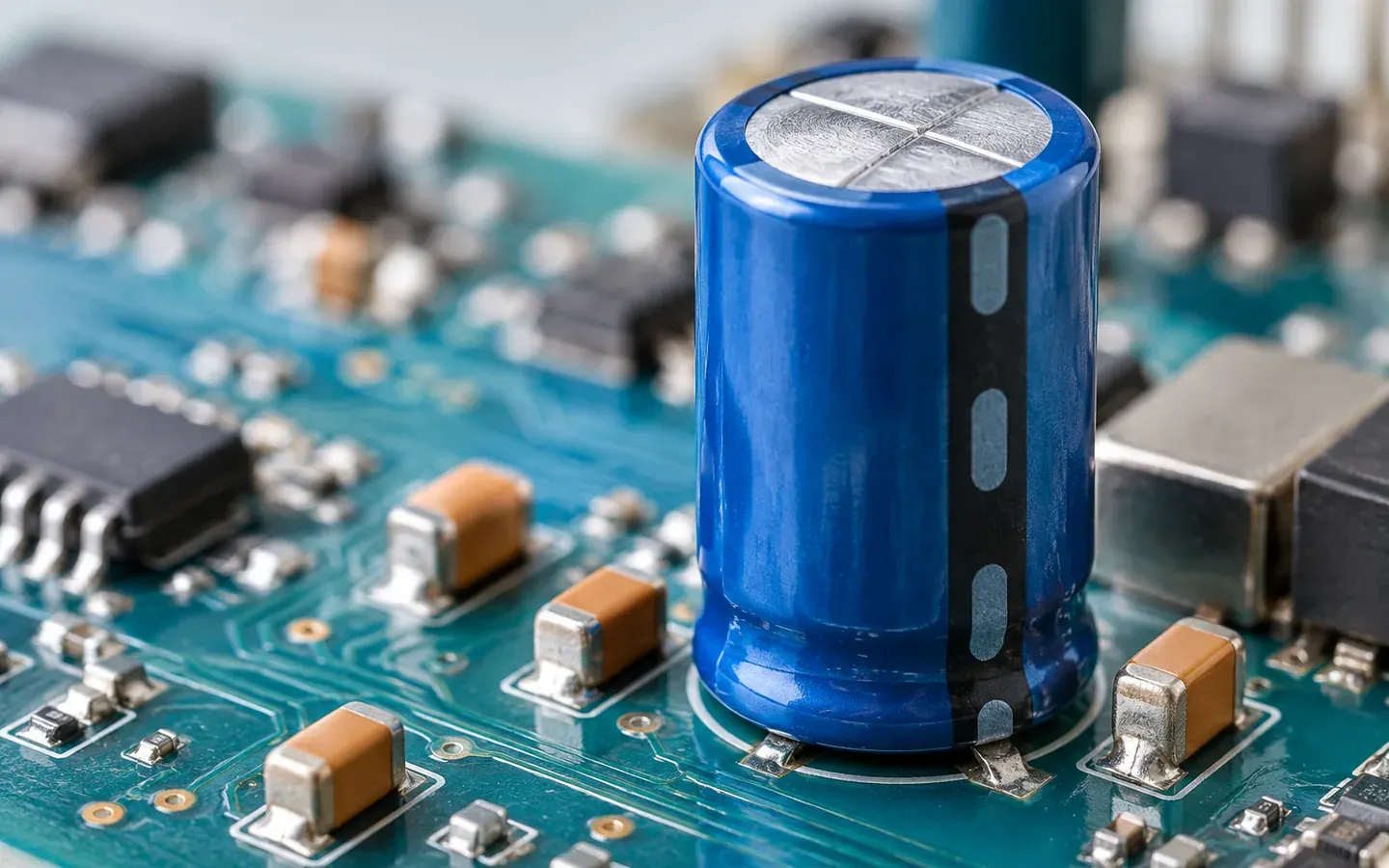 Basic
How Does a Capacitor Charge and Filter Noise?
A capacitor is two metal plates and an insulator that charges and discharges energy, and sits near a chip to calm noise on the power line.
Internet of Things (IoT)4 min read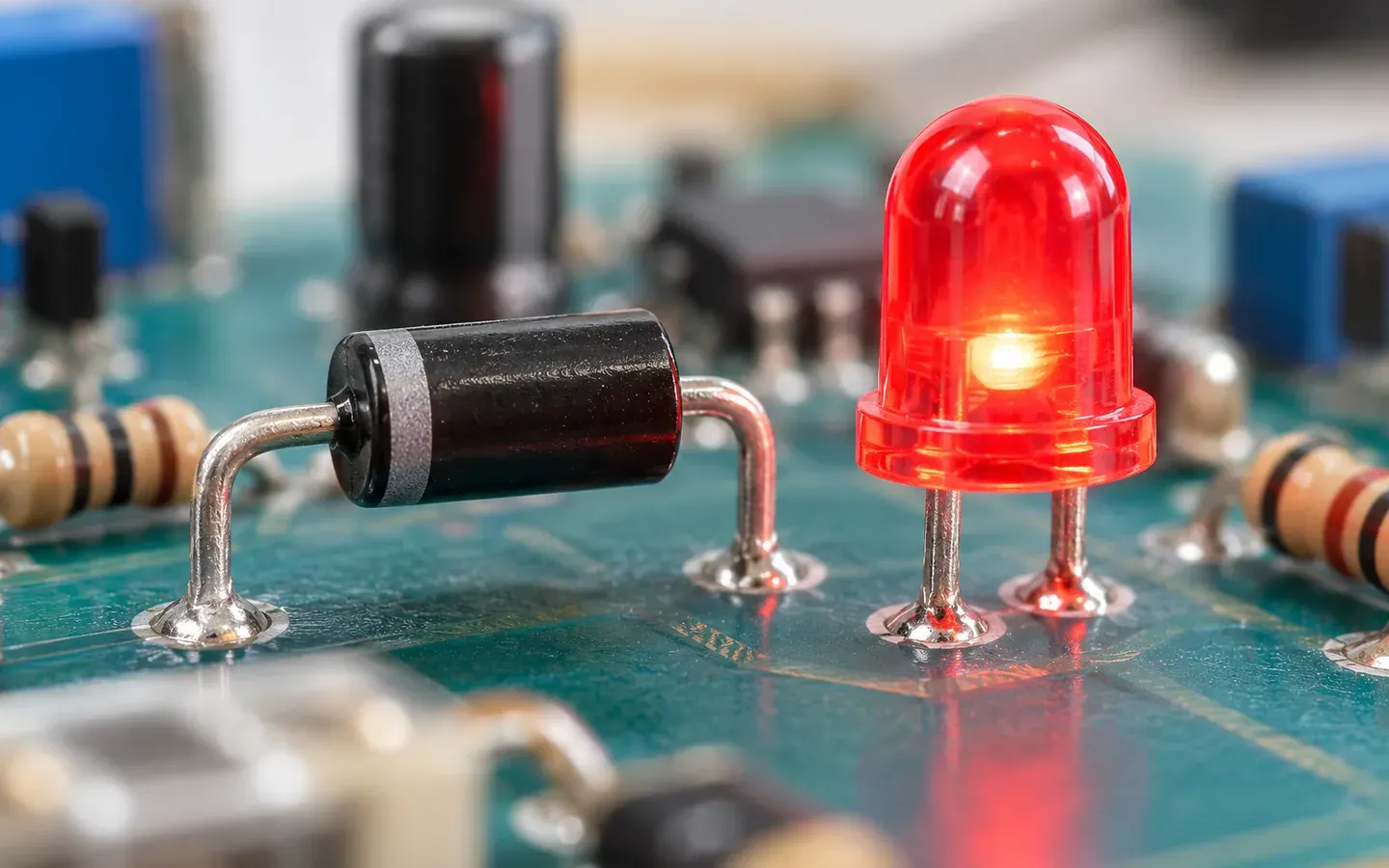 Basic
How Do Diodes and LEDs Conduct Current?
A diode mainly conducts in the forward direction and needs forward voltage to conduct significantly; an LED emits light and needs current limiting.
Internet of Things (IoT)4 min read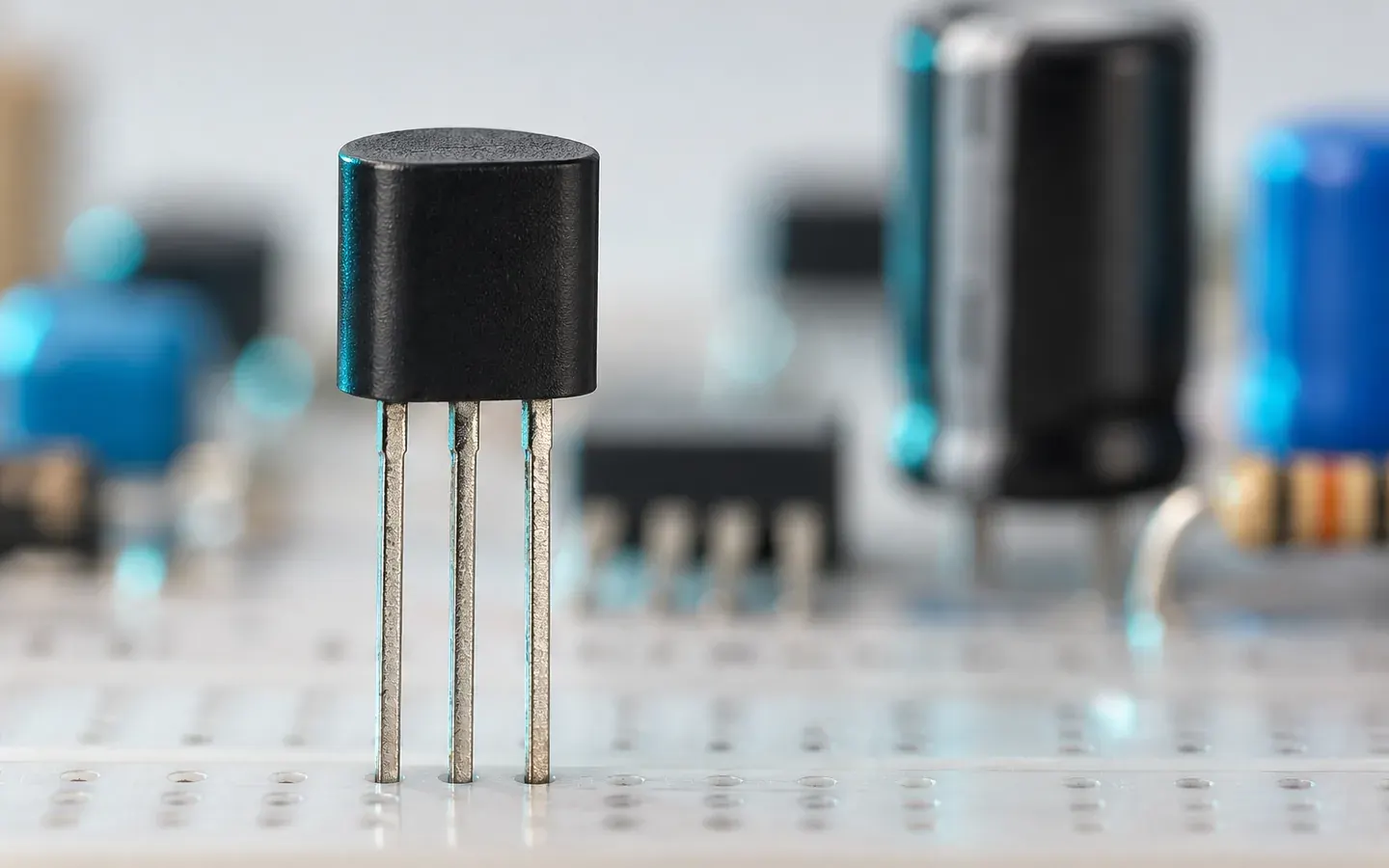 Basic
How Does a BJT Switch and Amplify Signals?
A BJT has collector, base and emitter pins; a small current at the base steers a larger one, so it works as an electronic switch or a signal amplifier.
Internet of Things (IoT)4 min read


Sources
These sources are written for older readers. If they feel hard, read them with an adult.
- Voltage, Current, Resistance, and Ohm's Law(opens in a new tab)
SparkFun ElectronicsTier C: other sourcesRead on October 29, 2026
- Resistors(opens in a new tab)
SparkFun ElectronicsTier C: other sourcesRead on October 29, 2026
- Capacitors(opens in a new tab)
SparkFun ElectronicsTier C: other sourcesRead on October 29, 2026
- Diodes(opens in a new tab)
SparkFun ElectronicsTier C: other sourcesRead on October 29, 2026
- Transistors(opens in a new tab)
SparkFun ElectronicsTier C: other sourcesRead on October 29, 2026