

How Does a Gimbal Keep a Camera Pointing Steady?
- Basic
- Article
- Ages 14+
- 6 min read

A gimbal keeps a camera's viewing direction by measuring or receiving an estimate of frame motion, comparing actual camera direction with its target, then turning motors to correct the difference. MAVLink can carry the orientation request to a gimbal manager; the inner stabilization loop continually controls the mechanism to counter drone motion.
Contents
- Drone airframe
- Camera on the gimbal mount
- Camera viewing-direction motion
What you will learn
- Distinguish an orientation request from the loop that counters frame motion.
- Trace sensors, controller and gimbal motors through a feedback loop.
- Recognize why mechanical limits, delay and lost feedback can leave video unstable.
Before you start
You do not need to know MAVLink; a camera on a drone can rotate somewhat independently of the drone body.
How does a gimbal counter drone motion?
A rigidly mounted camera tilts and vibrates with the frame. A gimbal places the camera on motorized rotating axes; the stabilization goal is to keep its desired orientation in a world frame while the drone body changes direction. A world frame describes orientation relative to the surroundings, while a body frame describes orientation relative to the drone itself.
With stabilization enabled, an IMU on the gimbal or attitude data from the flight controller helps estimate body motion. The controller turns the difference between target camera direction and estimated camera direction into motor commands opposite the disturbance. When the drone pitches down, for example, the gimbal can rotate the camera up to preserve its line of sight. Accuracy depends on sensors, axis alignment, motor speed and mechanical travel.
This is a closed loop: a target specifies orientation; sensors report state; the controller computes compensation; motors move the camera; a new measurement checks whether it is closer to target. If the system only sends a motor command once without measuring the result, errors from vibration, friction or camera load will not be corrected continuously.
How is a MAVLink command different from stabilization?
MAVLink carries a request such as “point the camera down” or “track the target.” The gimbal manager receives commands at the interface layer and forwards them to the gimbal device; that does not describe the motor control loop. PX4 also separates input method from output method: control can come from a transmitter or MAVLink, then be routed to the gimbal over MAVLink or a PWM output.
The two loops have different timing and goals. A MAVLink command may set an absolute angle or desired rotation rate; stabilization must update more often to counter frame motion. So a “look down” command does not mean the camera reaches that angle immediately. PX4 notes that a gimbal takes time to move and may rely on device feedback when available.
How does a disturbance move through the camera loop?
Proposed illustrative simulation design. Aim a virtual camera at a fixed point. When the drone model jolts upward, body attitude changes; the gimbal loop receives the change, computes an opposite correction, drives the pitch motor, then reads the camera angle again. The observation criterion is less camera-direction error than in a no-compensation run under the same disturbance, rather than an assumed performance number.
If the gimbal reaches a mechanical stop, it cannot complete the correction. If sensor data is missing or an axis is misaligned, the controller may compensate in the wrong direction. If commands arrive faster than the mechanism can move, the camera can lag behind the request. A design needs to detect stale feedback, constrain commands to the allowed angle range and report that the target has not been reached, instead of treating successful command transmission as completed motion.
What can camera stabilization not fix?
A gimbal reduces rotational motion transferred from the body to the camera; it does not remove blur from moving objects, vibration that is too fast, shutter behaviour, low light or perspective changes. Gimbal axes have finite travel; a target outside that range cannot be held by simply increasing the command. A gimbal also differs from digital image stabilization, which processes recorded frames rather than physically rotating the camera.
Common misunderstandings
Sending an orientation request is enough to stabilize video. A request only states a target; sensors, motor control and feedback are what maintain it as the frame moves. A gimbal makes footage perfectly still. It only compensates within mechanical, speed and estimation limits.
Frequently asked questions
How does a gimbal know where its camera is pointing?
It uses its own sensors or an attitude estimate from the flight controller, combined with axis calibration, to infer camera orientation.
Does MAVLink directly stabilize the gimbal motors?
MAVLink carries commands between components; an inner loop in the gimbal or flight stack controls motors from feedback.
Why can the camera still shake when stabilization is enabled?
Motion can exceed correction speed, sensor data can be delayed or wrong, an axis can hit its limit, and translation or moving objects can also blur the image.
Summary
A gimbal holds direction through a sensor–controller–motor feedback loop. MAVLink and the gimbal manager carry orientation requests between components, while stabilization counters body motion. Delay, mechanical limits and sensor error mean that a sent command does not prove the camera is steady.
Terms in this article
English and Vietnamese terms, with the meanings used here. Hover, tap or Tab to a term with a dotted underline for an explanation as you read.
- gimbal
- A motorized-axis mechanism that holds a camera or payload and allows its orientation to be controlled.
- gimbal managerbộ quản lý gimbal
- The interface component that receives orientation requests and forwards device commands to the associated gimbal.
- world framehệ tọa độ thế giới
- A reference frame describing orientation relative to the environment rather than the drone body.
- stabilizationổn định
- Feedback correction that maintains desired camera orientation while the drone body moves.
This article is not marked as viewed
Spotted something wrong or unsafe?
Tell the administrator by email. The message already has the article title and address.
You may also like
 Basic
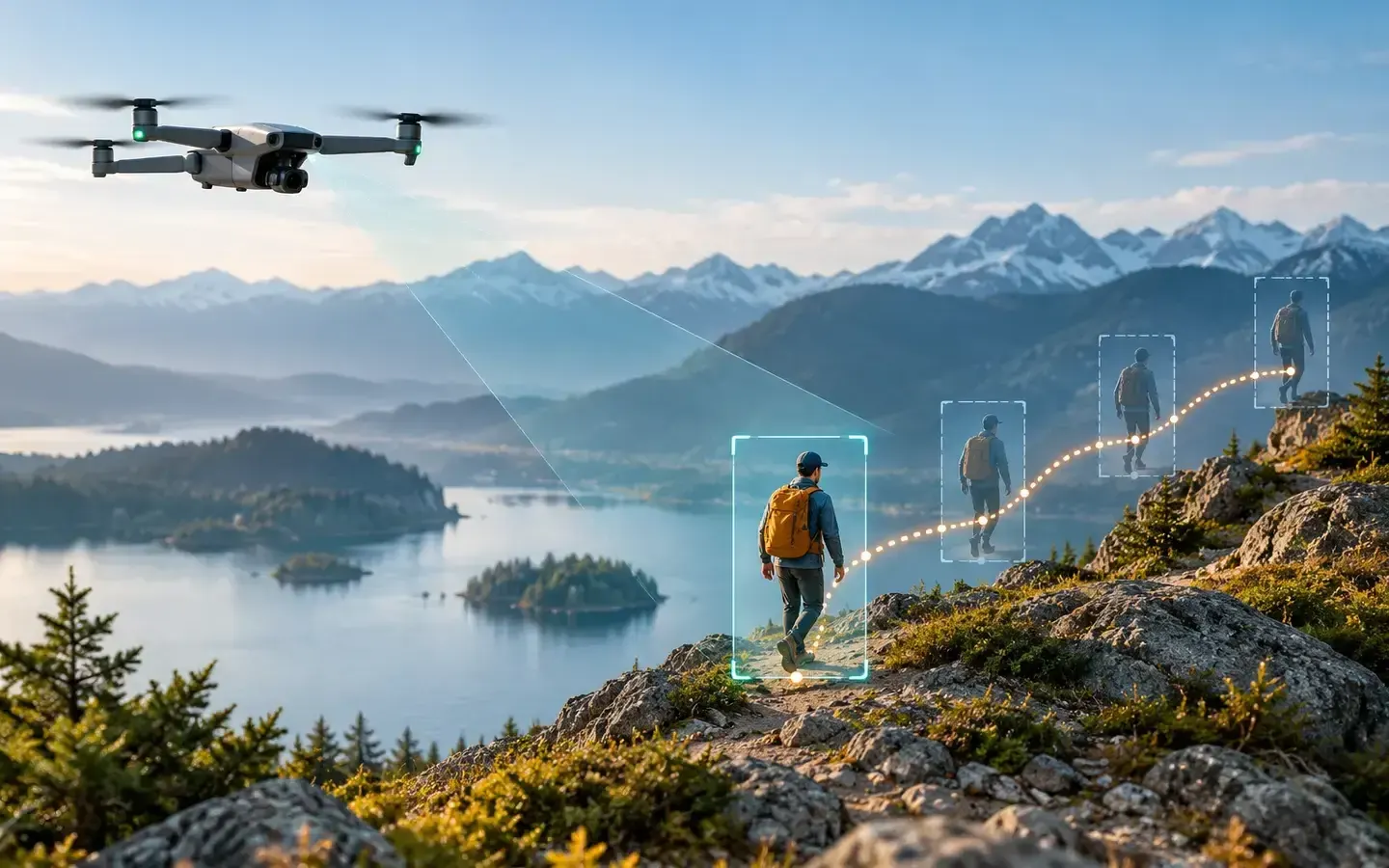
How Does Object Tracking Follow a Target Across Frames?
Follow how a tracker predicts a search region, matches objects across frames, keeps target IDs and handles loss or mismatches.
Artificial intelligence4 min read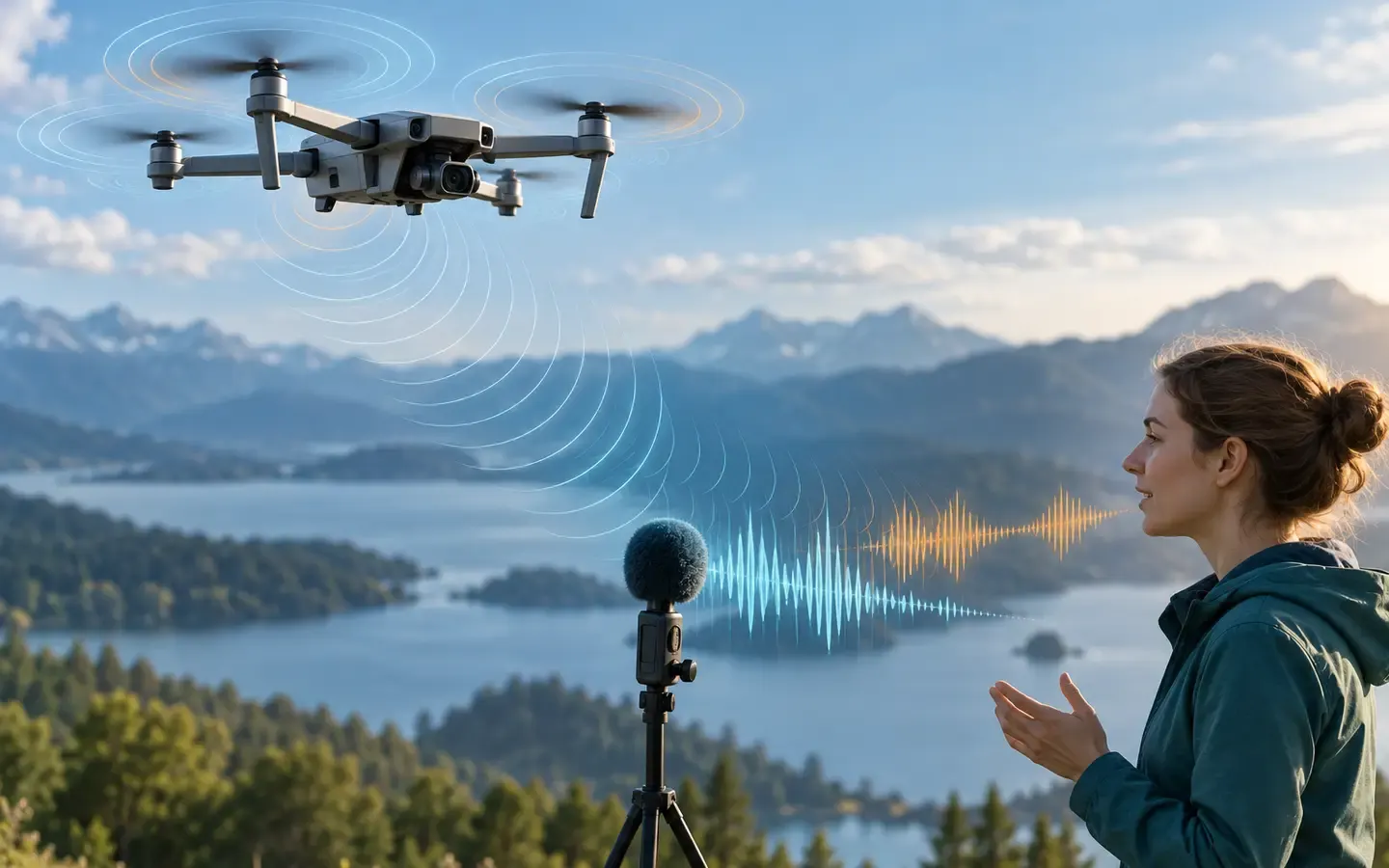 Basic
Why Is Drone Propeller Noise Hard for Speech Recognition?
See how propeller noise masks speech cues and how to measure by microphone placement, speaker and recording condition.
Artificial intelligence6 min read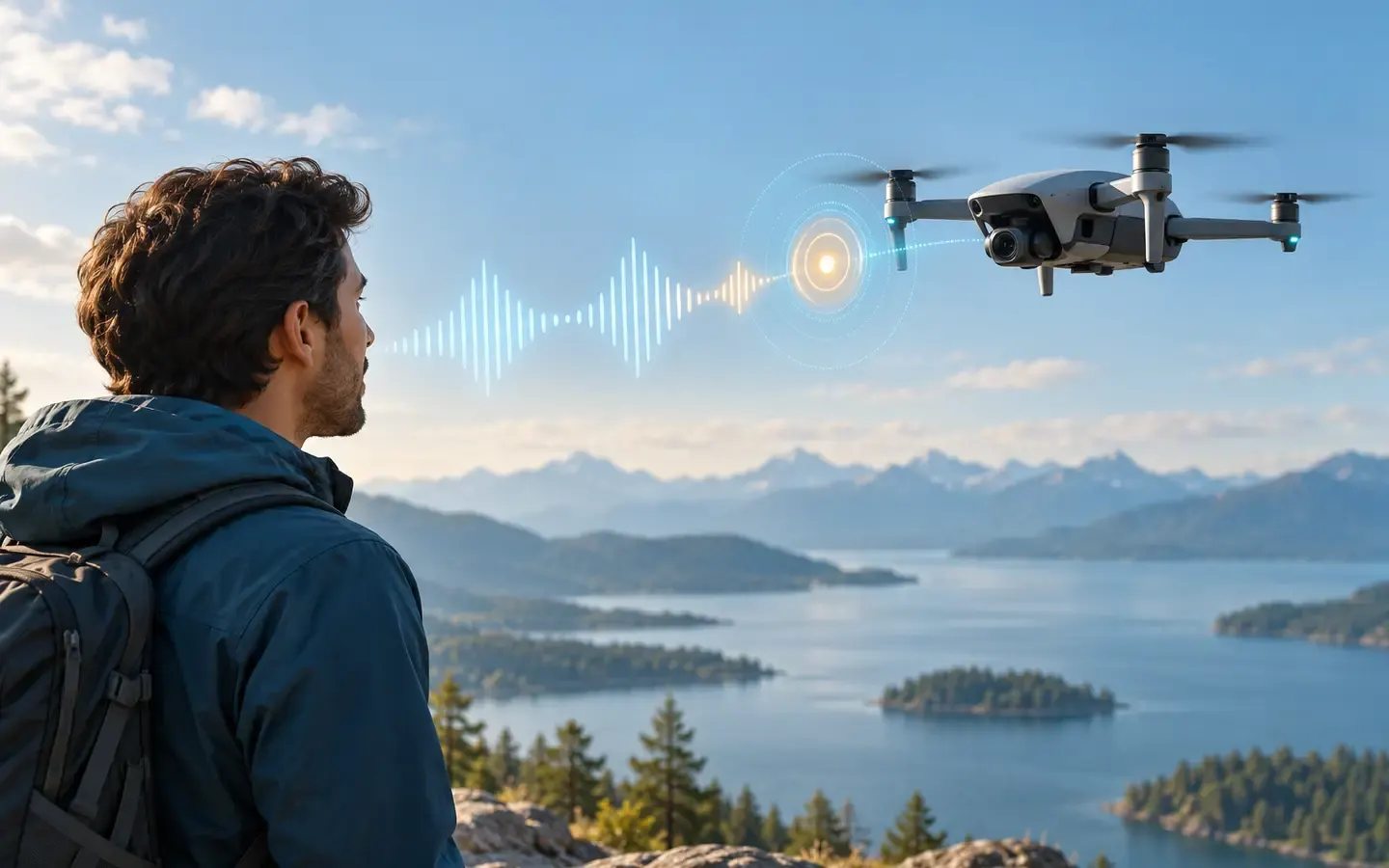 Basic
How Does a Wake Word Detector Work?
Learn how wake word works in a drone system, what data it needs and which limits to check before relying on it.
Artificial intelligence5 min read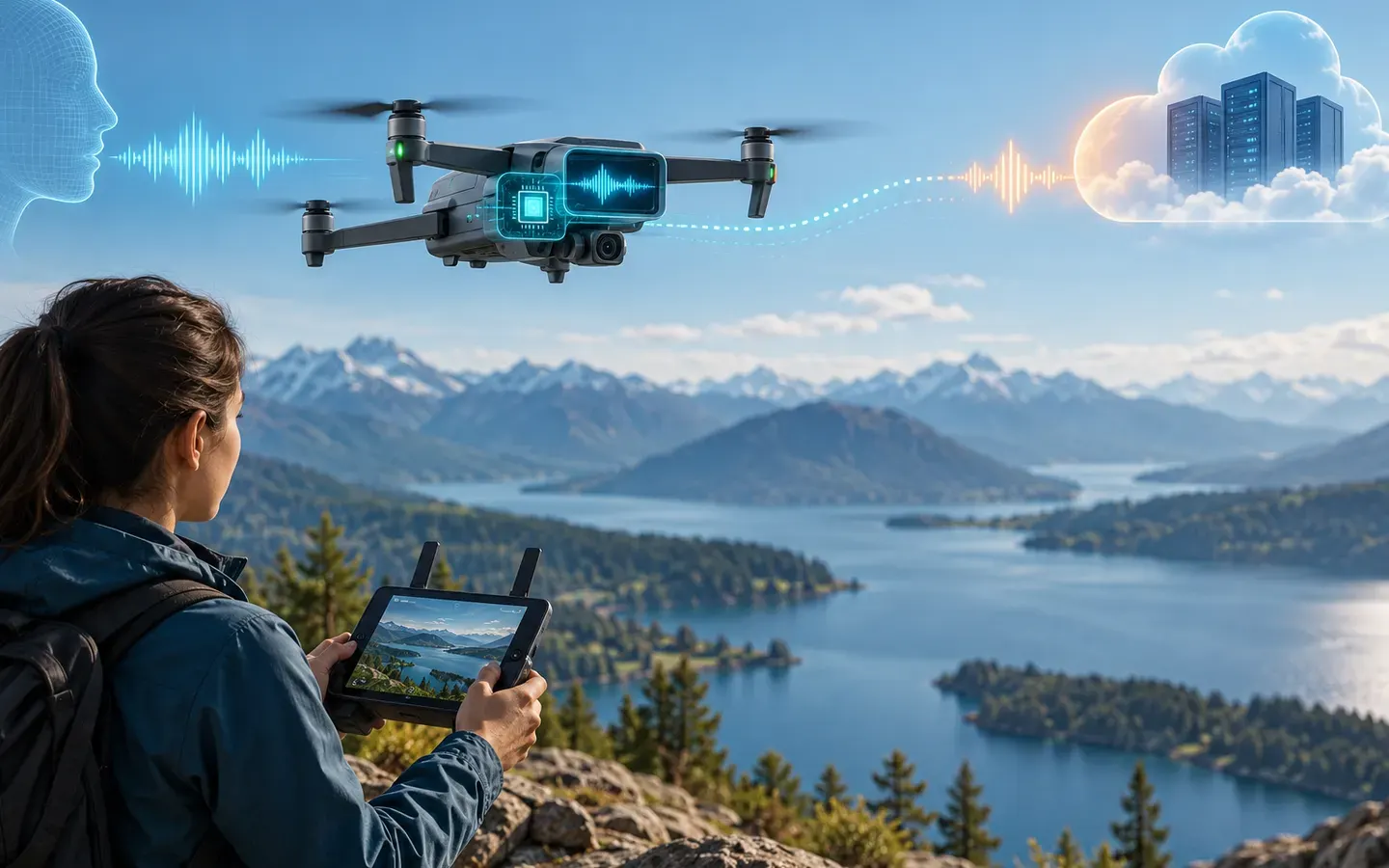 Basic
How Do On-Device and Cloud Speech Recognition Differ?
Compare on-device and cloud speech recognition by data path, connectivity, privacy, latency, quality, resources and cost.
Artificial intelligence5 min read


Sources
These sources are written for older readers. If they feel hard, read them with an adult.
- Gimbal Protocol v2(opens in a new tab)
MAVLinkTier C: other sourcesRead on October 30, 2026
- Gimbal Configuration(opens in a new tab)
PX4Tier C: other sourcesRead on October 30, 2026