

Overview of IoT System Architecture
- Starter
- Article
- Ages 10+
- 4 min read

One useful way to picture an IoT system is as three parts: devices that sense or act on their environment, a way to carry messages, and a place to process and view data. Some devices communicate directly; others use an intermediary such as an MQTT broker or gateway.
Contents
- Device
- Intermediary layer
- Where data is viewed
What you will learn
- Name the three parts in this simple model of an IoT system.
- Understand why small devices have limited resources.
- Describe the role of the intermediary and of combining data.
Before you start
No prior knowledge needed.
What do the devices at the edge do?
The things in the Internet of Things are computing devices that understand and react to the environment they reside in. Constrained devices may face severe limits in one or more resources, such as battery, computing power or memory.
- Environment
- Constrained device
- Limited resources
How do messages pass through the intermediary?
Building-automation devices, cellular phones, machine-to-machine devices and other devices benefit from interacting with other things nearby or somewhere in the Internet. One way is an intermediary server: an MQTT server is a program or device that acts as an intermediary between clients which publish messages and clients which have made subscriptions. The publish/subscribe pattern provides one-to-many message distribution and decoupling of applications.
- Many sending devices
- Intermediary server
- Many receiving places
What is the data finally used for?
An IETF IoT architecture document describes an increasing number of products putting the Internet Protocol Suite on smaller devices and offering ways to process, visualize and gain insight from collected sensor data. The network effect can be increased if the data collected from many different devices can be combined.
- Many different devices
- Data gathered
- View and gain insight
Real-world example
Hypothetical example: with an adult, picture a home with a few sensors. In this illustrative configuration, an intermediary receives readings and a screen gathers them for viewing; another system might communicate directly or use a gateway.
Common misunderstandings
Every IoT device is as powerful as a phone. Constrained devices may be limited in one or more resources, such as battery, computing power or memory.
Every device must know and call every other device. With publish/subscribe, applications can use an intermediary broker without knowing every other client. Some IoT designs also use direct device-to-device communication.
Frequently asked questions
What parts does an IoT system have?
Devices, a communication path, and a place where data is processed and viewed; the communication path may be direct or use an intermediary.
What is a constrained device?
A device with significant limits in one or more resources, such as energy, computing power or memory.
What does an intermediary server do?
It acts as an intermediary between clients which publish messages and clients which have made subscriptions.
What is the network effect?
In the cited IETF document, combining data collected from many different devices can increase the network effect.
Summary
- One simple IoT model has devices, a communication path and a place that uses the data.
- Small devices may be constrained in one or more resources, such as battery, computing power or memory.
- Combining data from many devices can increase the network effect.
Terms in this article
English and Vietnamese terms, with the meanings used here. Hover, tap or Tab to a term with a dotted underline for an explanation as you read.
- ThingVật
- A computing device that understands and reacts to the environment around it.
- Constrained deviceThiết bị bị ràng buộc
- A device with tight limits on battery, computing power or memory.
- Intermediary serverMáy chủ trung gian
- A server that sits between the parties publishing and subscribing to messages.
- Network effectHiệu ứng mạng
- In the cited context, the network effect can increase when data collected from many different devices is combined.
This article is not marked as viewed
Spotted something wrong or unsafe?
Tell the administrator by email. The message already has the article title and address.
You may also like
 Starter
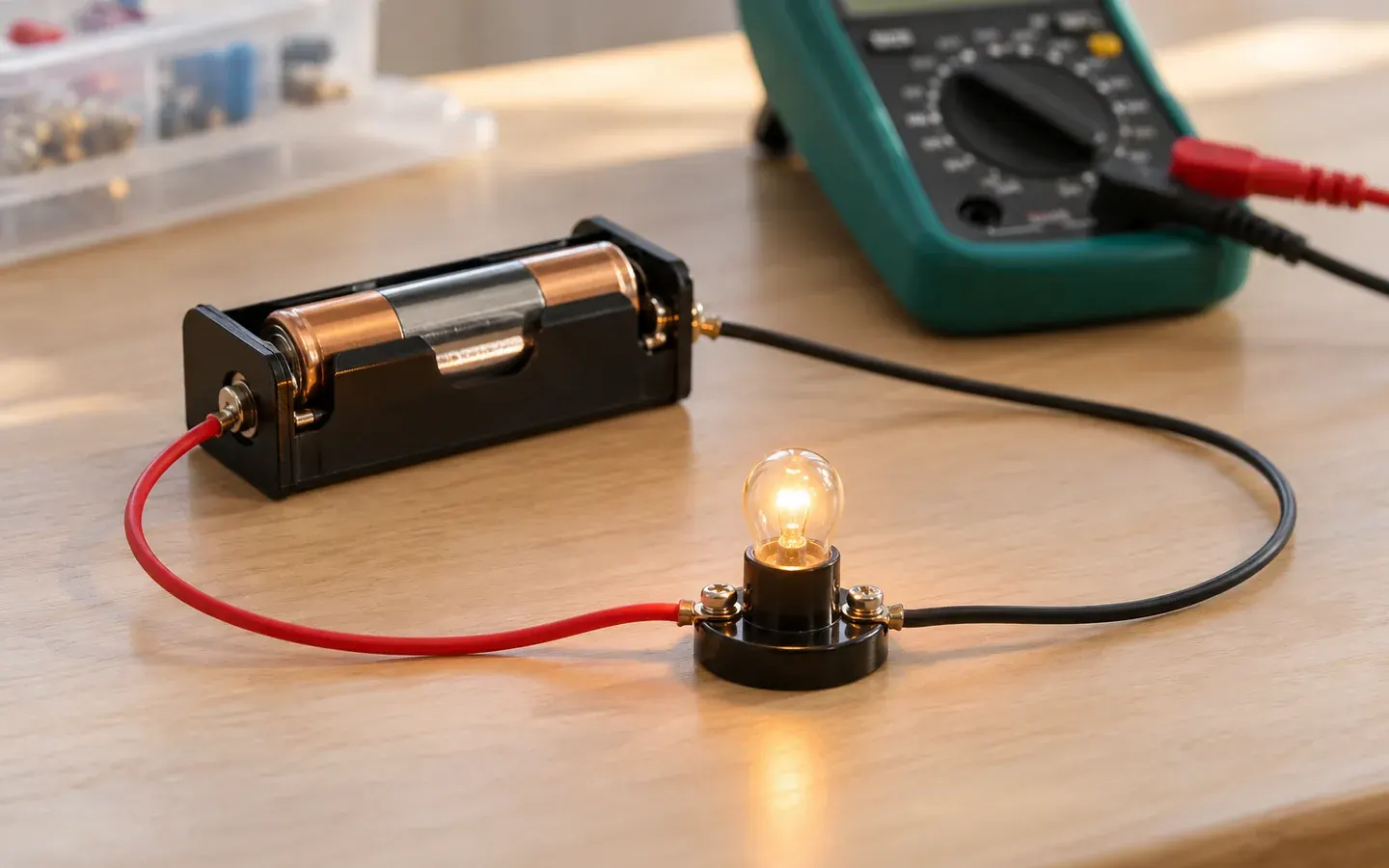
How Do Voltage and Current Differ?
Tell voltage, current and resistance apart with a water-tank picture, see why a circuit must be a closed loop and how Ohm's law links the three.
Internet of Things (IoT)4 min read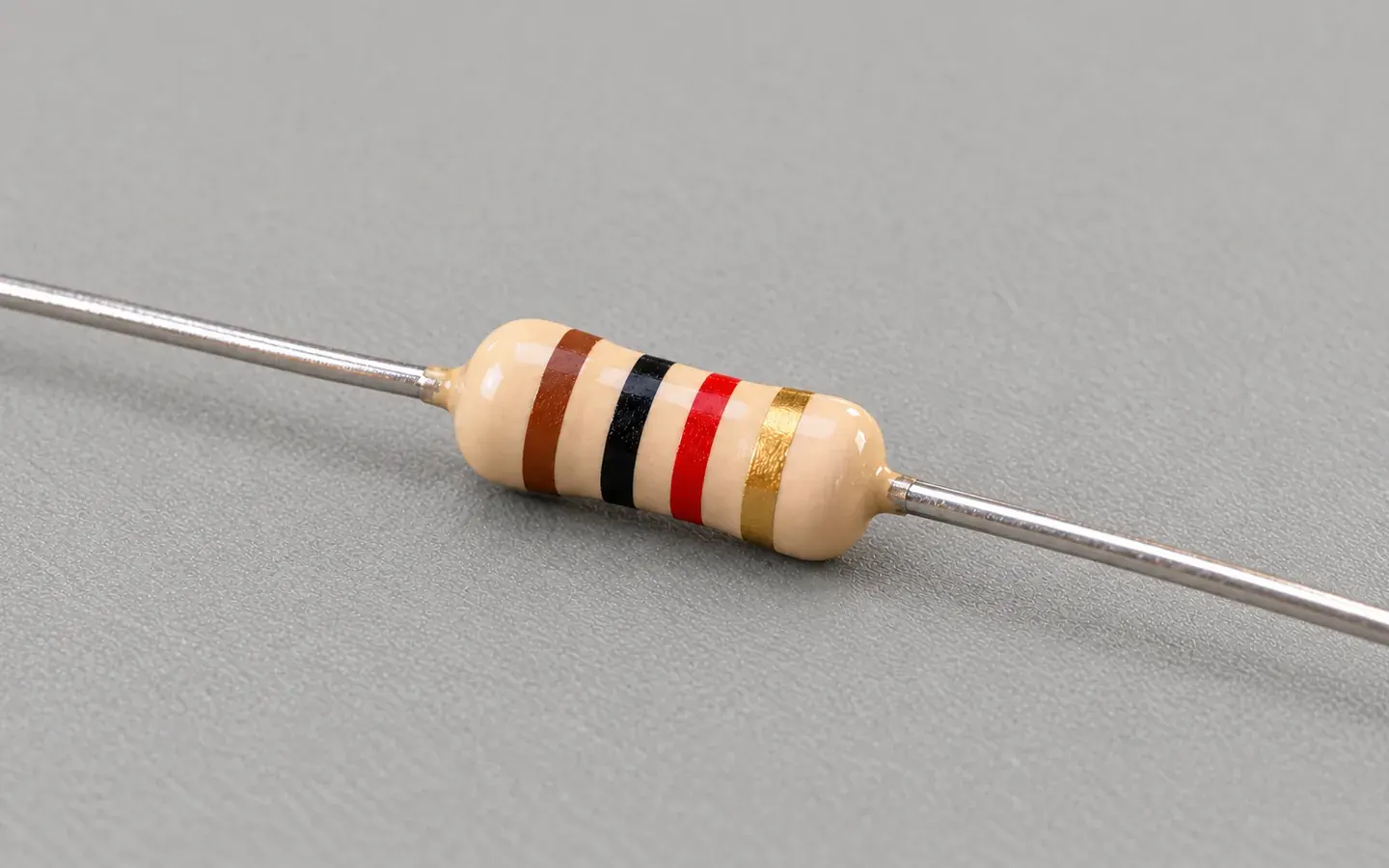 Basic
How Does a Resistor Control Current?
A resistor limits current, divides voltage and holds an input at a clear level; this article covers series, parallel and the pull-up resistor for a button.
Internet of Things (IoT)4 min read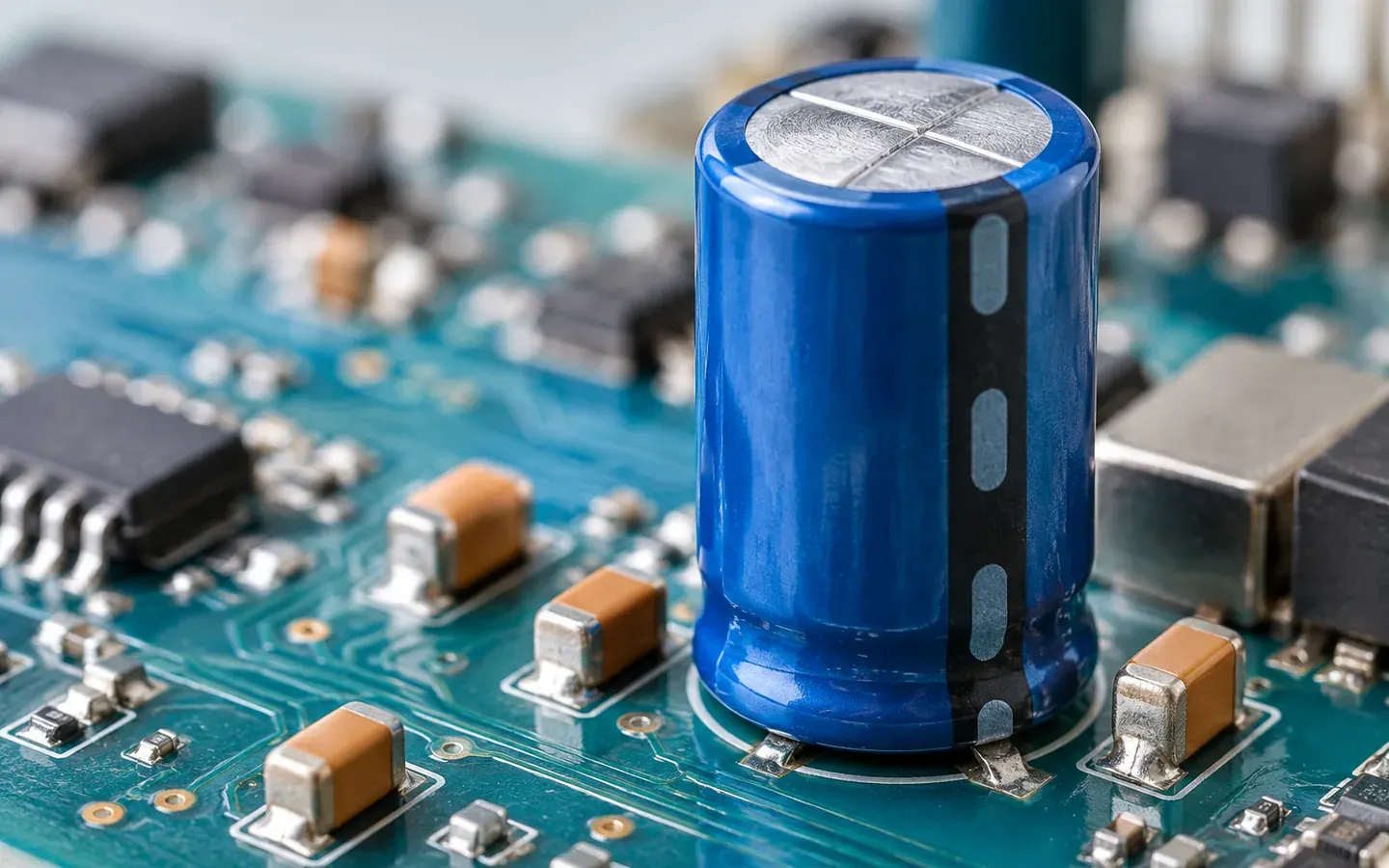 Basic
How Does a Capacitor Charge and Filter Noise?
A capacitor is two metal plates and an insulator that charges and discharges energy, and sits near a chip to calm noise on the power line.
Internet of Things (IoT)4 min read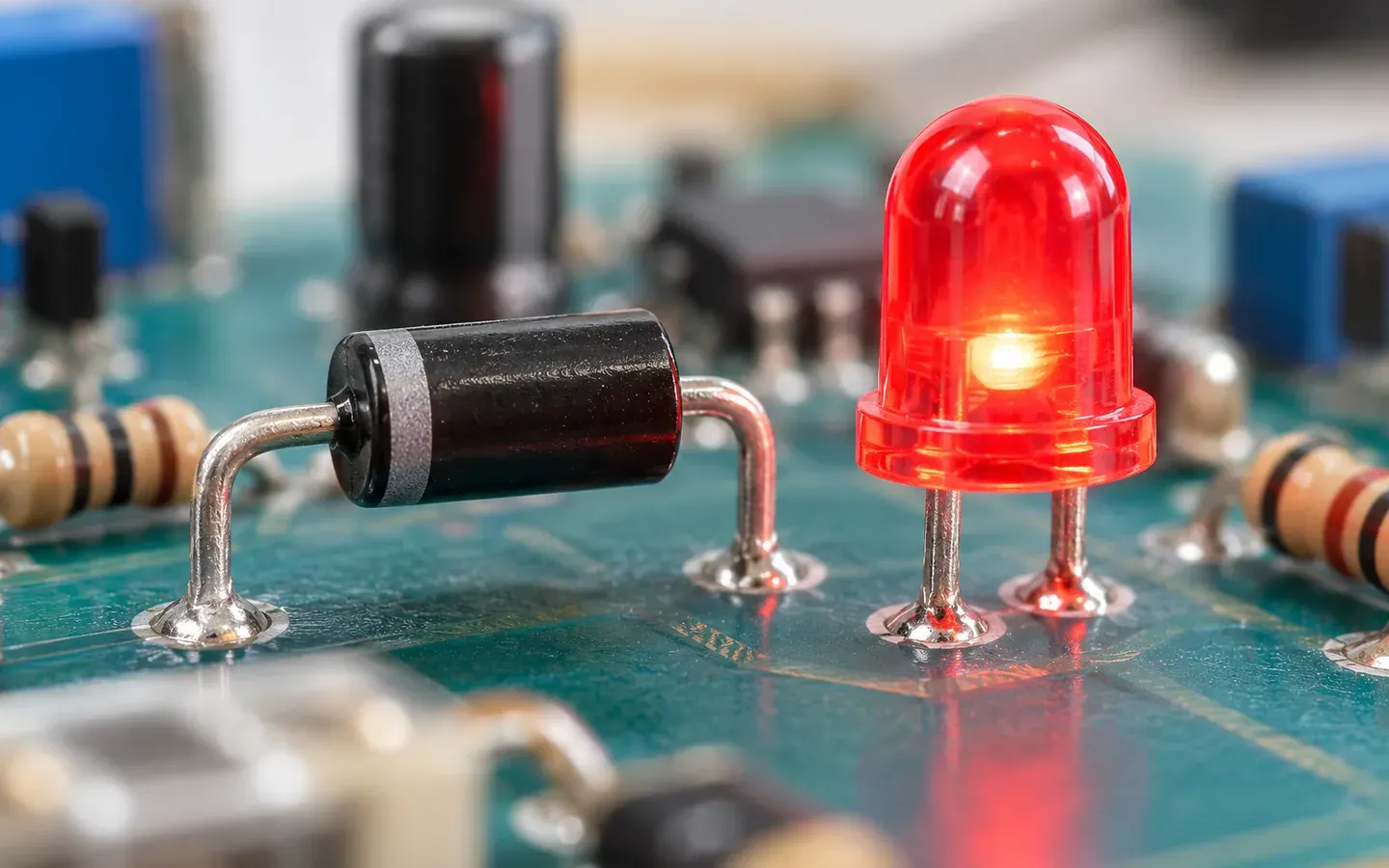 Basic
How Do Diodes and LEDs Conduct Current?
A diode mainly conducts in the forward direction and needs forward voltage to conduct significantly; an LED emits light and needs current limiting.
Internet of Things (IoT)4 min read


Sources
These sources are written for older readers. If they feel hard, read them with an adult.
- RFC 8576: Internet of Things (IoT) Security: State of the Art and Challenges(opens in a new tab)
IETF (RFC Editor)Tier A: government, standards or research bodiesRead on October 29, 2026
- RFC 7228: Terminology for Constrained-Node Networks(opens in a new tab)
IETF (RFC Editor)Tier A: government, standards or research bodiesRead on October 29, 2026
- RFC 7452: Architectural Considerations in Smart Object Networking(opens in a new tab)
IETF (RFC Editor)Tier A: government, standards or research bodiesRead on October 29, 2026
- MQTT Version 5.0(opens in a new tab)
OASISTier C: other sourcesRead on October 29, 2026