

What Structure Lets Aerogel Insulate So Well?
- Basic
- Article
- Ages 14+
- 7 min read

Aerogel insulates well because of its nanoscale porous structure: most of its volume is air trapped in tiny pores, held by a thin, winding solid frame. Small pores make it hard for gas molecules to pass heat on, and the winding frame lengthens the path heat must take, so aerogel can have very low thermal conductivity.
Contents
- Aerogel block
- Solid frame (joined particles)
- Gas in the pores
What you will learn
- Describe how aerogel is made from a gel and what it consists of.
- Explain the two structural features that block heat: nanopores and a winding solid frame.
- State the limits of aerogel and how people work around them.
Before you start
Know that heat travels in three familiar ways: conduction, convection and radiation.
What is aerogel and how is it made?
Aerogel is a porous solid drawn out of a gel. It is made by removing the liquid from a gel and replacing it with air. It is extremely porous and very low in density. An aerogel is an open-celled material typically made up of more than 95 percent air, and it is similar to glass in chemical structure but has gas in its pores instead of liquid.
The hardest step is taking the liquid out without the gel frame collapsing. The liquid is removed by supercritical fluid extraction, which introduces liquid carbon dioxide into the gel. In this process, a NASA researcher considers maintaining the gel structure the most important thing.
- Gel: frame soaked in liquid
- Liquid being extracted
- Aerogel: frame intact, filled with air
By what paths does heat cross a porous material?
There are three paths: through the gas molecules in the pores, along the solid frame, and as radiation. Heat conduction and thermal radiation are the two main heat transfer modes of aerogel insulation materials, and convection can be ignored when considering heat transfer inside aerogel.
Each path is a way for heat to get across:
- Through the gas: gas molecules in a pore collide and pass energy to each other.
- Through the solid frame: heat spreads along the connected particles.
- Through radiation: heat travels as radiation, with no material needed to carry it.
A good insulator has to make all three paths hard. Aerogel makes the gas path and the solid path hard through its own structure.
- Top row: gas heat conduction
- Middle row: solid-frame conduction
- Bottom row: thermal radiation
How does the nanostructure block heat?
Two structural features block heat: nanopores make the gas path hard, and a winding frame makes the solid path hard. The nanoparticles randomly gather into chain skeletons that connect to each other in a complex three-dimensional network.
Nanopores and gas. The pore size inside aerogel is smaller than or close to the mean free path of gas molecules. Such nanoscale pores severely restrict the free movement of gas molecules, so heat transfer between gas molecules is greatly weakened. The pores are so small that gas-phase heat conduction is very poor, but reduced gas-phase heat conduction does not mean that every aerogel is airtight.
A winding solid frame. When heat is transferred through the solid skeleton, its complex structure lengthens the heat transfer path. Heat has to detour around many small particles instead of passing straight through a solid block, so the frame produces large thermal resistance.
This combination is why the nanoporous nature of silica aerogel makes it a very effective insulator.
- Left: large pores in the foam model
- Right: aerogel nanopores
- Left arrow: short, straight path
- Right arrow: long, winding path
Where are the limits of aerogel, and how are they worked around?
Aerogel is fragile and weaker at high temperature. Silica aerogels are very useful but very fragile. Until NASA began pursuing a practical form of aerogel, aerogel in its solid form had always been too fragile to handle. Two fixes are reinforcing it with polymer, which makes aerogel stronger and able to be translucent, and putting it into a fiber web to make a flexible blanket. In the blanket, the spaces within the web of reinforcing fiber are completely filled with silica aerogel.
High temperature is also a weak point. At high temperature, aerogel has strong permeability to near-infrared radiation, and the thermal conductivity of aerogel increases significantly as temperature increases.
NASA uses aerogel as cryogenic insulation for space shuttle and space exploration missions. It also appears in many industrial applications, such as pipe insulation, building and construction, appliances and refrigeration equipment, and trucks and automobiles.
- Reinforcing fibers
- Aerogel filling the gaps
- A sheet that can bend
Real-world example
Imagine two hypothetical insulation sheets of equal thickness, one ordinary foam with large pores and one aerogel. In aerogel, nanopores reduce gas heat transfer, while the winding frame restricts solid heat conduction. To decide which sheet insulates better under specific conditions, compare the materials’ thermal conductivity at the same temperature rather than judging pore size alone. This is an illustrative model, not a measured result for a specific product.
Common misunderstandings
Aerogel insulates because it is dense and heavy. Aerogel is among the lightest solids, about 95% porous. It insulates thanks to nanopores and a winding frame.
Aerogel is just an ordinary sponge. Aerogel pores are in the nanometer range and smaller than or close to the mean free path of gas molecules, while ordinary foam pores are far larger, so gas moves about easily.
Aerogel insulates equally well at every temperature. The thermal conductivity of aerogel increases significantly as temperature increases.
Frequently asked questions
What is aerogel made of?
A gel. The liquid is removed from the gel and replaced with air, usually through supercritical carbon dioxide extraction.
Why do nanopores block heat?
They severely restrict the free movement of gas molecules, so heat transfer between gas molecules is greatly weakened.
Is aerogel durable?
Silica aerogel is very fragile. Reinforcing it with polymer or putting it into a fiber web makes it stronger and easier to use.
Summary
- Aerogel is a porous solid made from a gel and typically more than 95 percent air.
- Nanopores make heat transfer through gas hard, and the winding frame makes heat transfer through the solid hard.
- Aerogel is fragile and weaker at high temperature, so it is often reinforced or made into flexible blankets.
Terms in this article
English and Vietnamese terms, with the meanings used here. Hover, tap or Tab to a term with a dotted underline for an explanation as you read.
- aerogel
- A porous solid made from a gel by replacing its liquid with air.
- nanoporelỗ nano
- A very small pore, on the scale of a nanometer, inside a porous material.
- thermal conductivityđộ dẫn nhiệt
- A quantity that tells how readily a material passes heat on; the lower, the better it insulates.
- supercritical fluid extractionchiết bằng chất lưu siêu tới hạn
- The step that removes liquid from a gel using carbon dioxide above its critical point, keeping the gel structure intact.
- thermal radiationbức xạ nhiệt
- Heat travelling as radiation, without a material to carry it.
This article is not marked as viewed
Spotted something wrong or unsafe?
Tell the administrator by email. The message already has the article title and address.
More in this topic
 Basic
How Do Strength, Hardness and Ductility Differ?
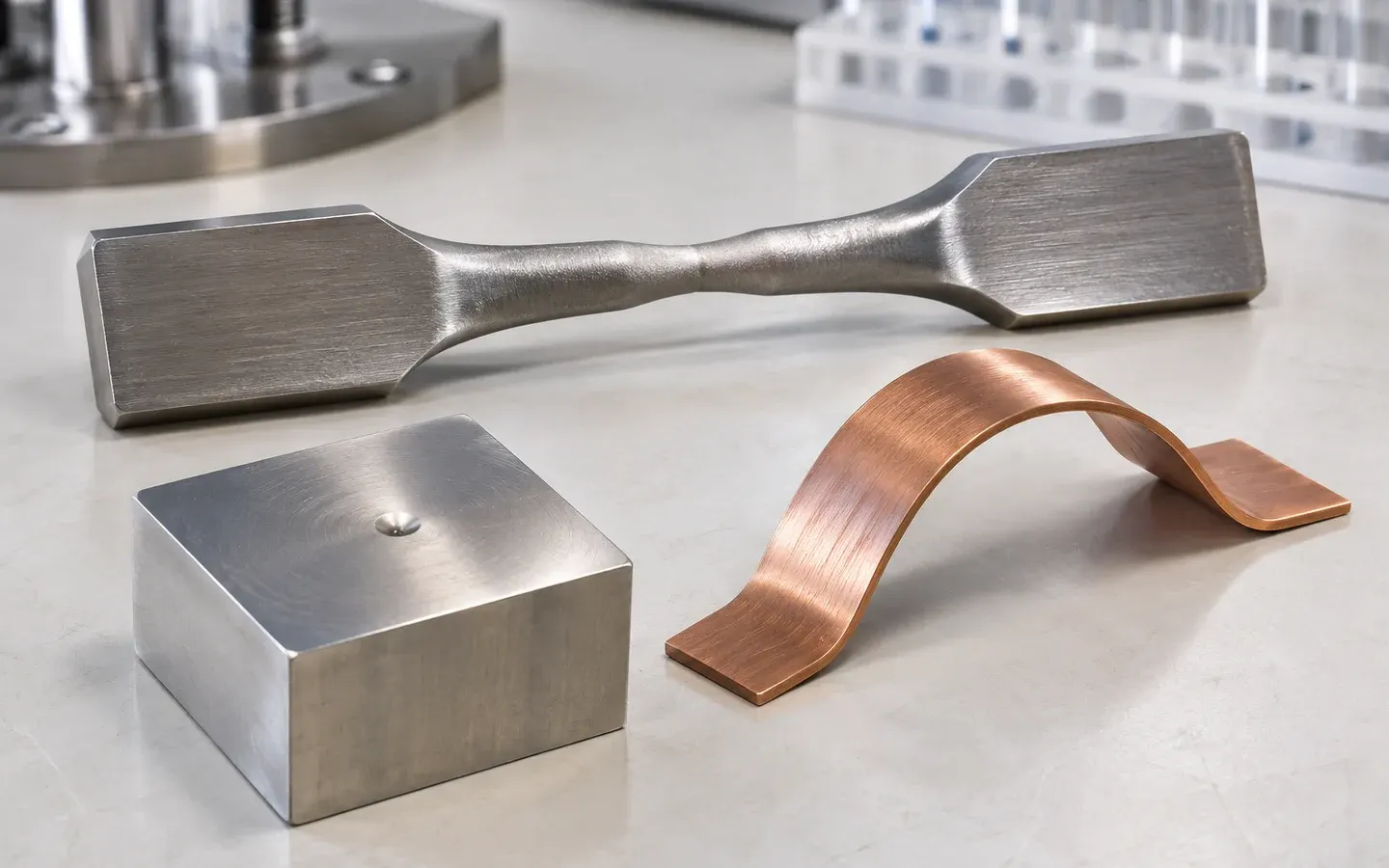
Tell strength, hardness and ductility apart through yield strength, tensile strength and elastic and plastic deformation to read mechanical properties.
5 min read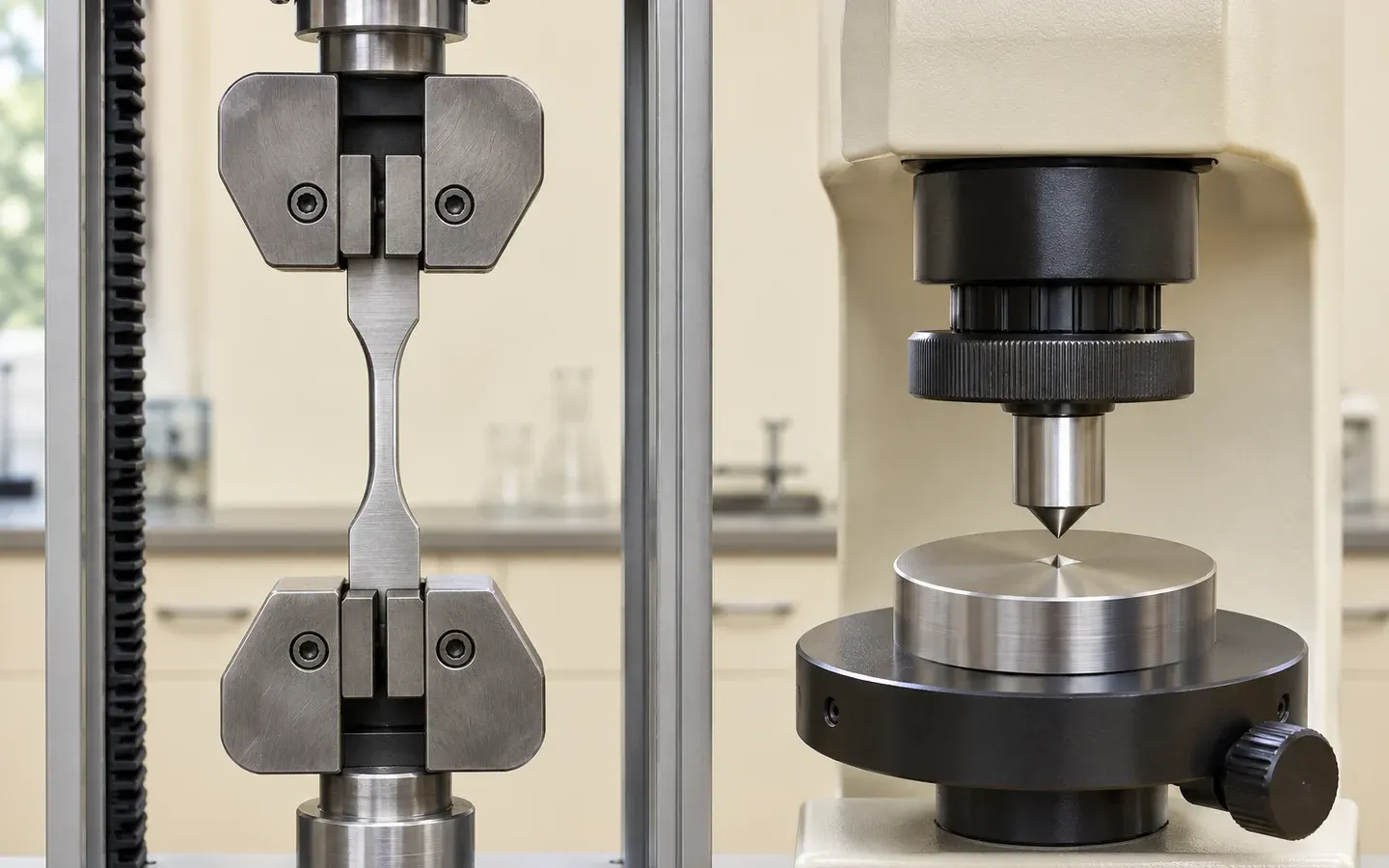 Basic
What Do Tensile and Hardness Tests Measure?
See how a tensile test records force and extension, why results become stress and strain, and what a hardness test derives from the dent of an indenter.
5 min read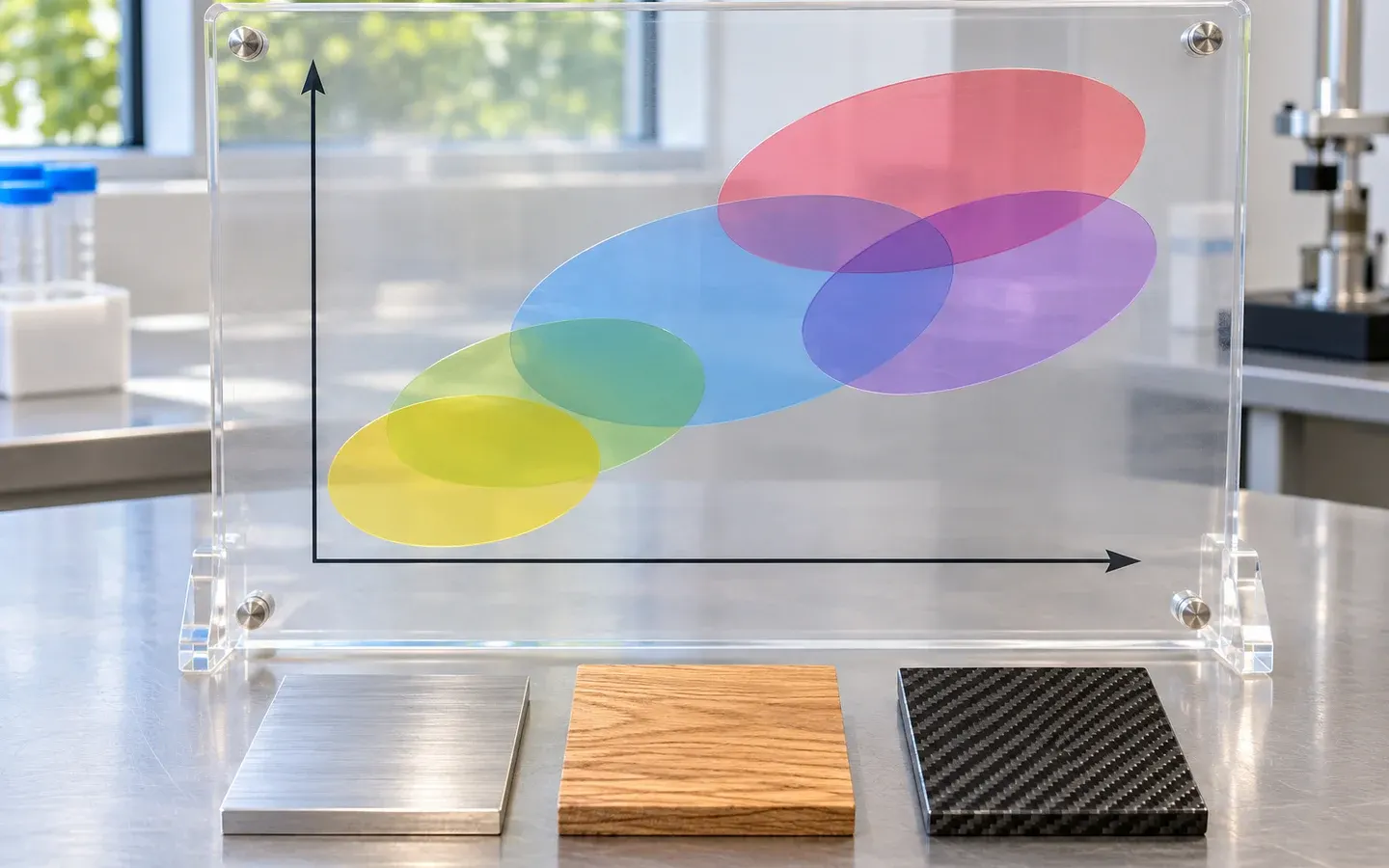 Basic
How Do Ashby Charts Help Compare Materials?
Understand how an Ashby chart puts many materials on two properties, why it uses log scales and how sliding an index line picks a material.
5 min read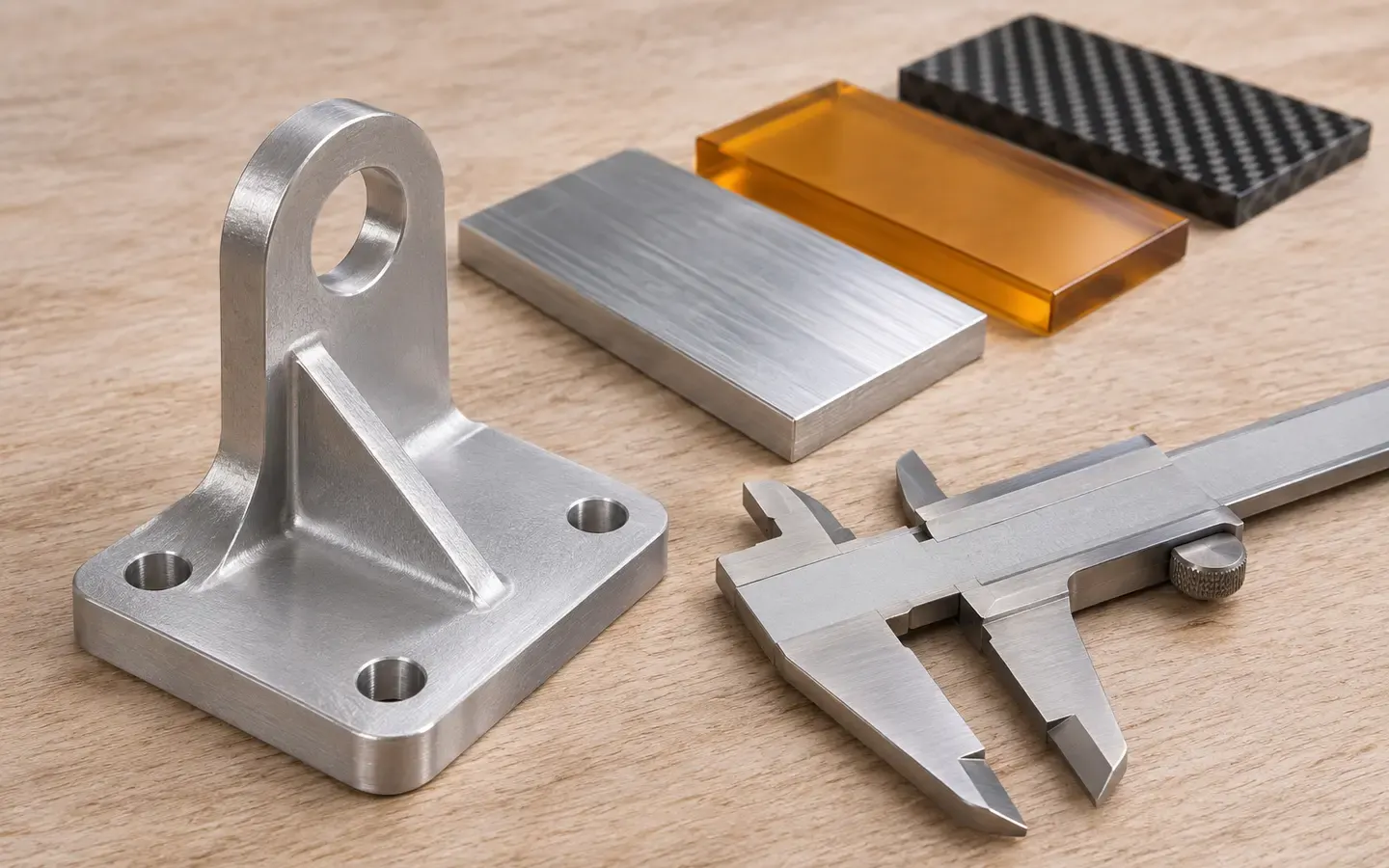 Basic
How Does Material Selection Go from Needs to Options?
Follow material selection from functional requirement, fixed and free variables to a performance index and a shortlist that still needs checking.
5 min read


Sources
These sources are written for older readers. If they feel hard, read them with an adult.
- Aerogels: Thinner, Lighter, Stronger (NASA)(opens in a new tab)
NASATier A: government, standards or research bodiesRead on November 7, 2026
- Aerogels Insulate Against Extreme Temperatures (NASA Spinoff 2010)(opens in a new tab)
NASA SpinoffTier A: government, standards or research bodiesRead on November 7, 2026
- Thermal Insulation Performance of Aerogel Nano-Porous Materials: Characterization and Test Methods(opens in a new tab)
PMC (NIH)Tier A: government, standards or research bodiesRead on November 7, 2026