

How Do Collection and Successful Recycling Mass Differ?
- Starter
- Article
- Ages 10+
- 5 min read

Collected mass is the material taken into the recycling route, including any contaminants. Recycled mass needs a clearly stated measurement stage: sorted material is not yet a new product. According to the US EPA, recycling also involves turning discarded material into new products. According to Pinellas County, in that county about one pound in every five pounds in the bin could not be recycled.
Contents
- Collected mass
- Recovered after sorting
What you will learn
- Tell what goes into the bin apart from what is actually recycled.
- Say where the difference goes.
- Avoid mixing up the contamination rate with the recycling rate.
Before you start
It helps to read the article on recycling-bin contamination first; this one reuses that idea to talk about mass.
Why does what goes in the bin differ from what is recycled?
Because the bin holds things that cannot be recovered. According to Pinellas County, the county's 2024 composition study put the contamination rate at 21.7%, meaning about one pound in every five pounds put in kerbside and drop-off bins could not be recycled.
That is one county's figure. Elsewhere the rate may differ.
Where does the difference go?
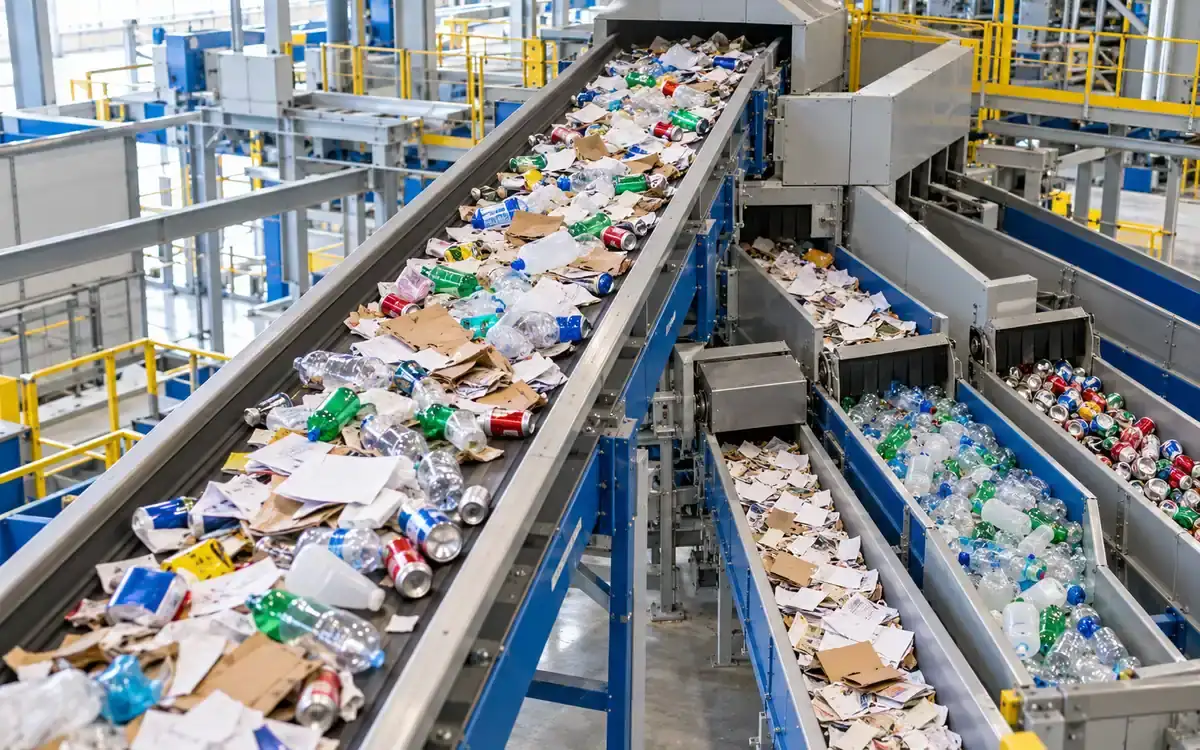
Some of it is removed at the sorting facility, and some can take a whole load with it. According to the Wasatch Integrated Waste Management District, the facility described has a quality-control sorter who removes contamination before the storage bunkers, and only material with value is recovered, baled and sold. According to UW Recycling, if a load holds too much contamination the whole load, clean material included, is sent to landfill.
Track collected mass, material recovered after sorting and mass counted as recycled separately. According to Pinellas County, sorted bales are sold to buyers who turn the material into new products. Weighing a bale measures sorting output; it does not establish the mass of new products eventually made.
- Checkpoint
- Removed part
- Whole load discarded
How does the contamination rate differ from the recycling rate?
The two rates measure different things. According to Pinellas County, a county's recycling rate is the tons counted as recycled divided by the total tons disposed and recycled, and in 2024 the county's rate was 62%. The contamination rate speaks only about the recycling bin, while the recycling rate counts garbage and recyclables together.
So you cannot read 62% as 62% of the bin's contents being recycled, and you cannot use 21.7% to work out the county's recycling rate.
- Contamination rate: recycling bin only
- Recycling rate: garbage and recyclables together
Real-world example
Picture a collection bin full of paper, bottles and a few items the programme does not accept. This is a hypothetical walk-through to follow the two masses. Weighing the collected contents, excluding the bin itself, gives collected mass. After the facility removes unaccepted items, weighing the remainder gives mass recovered after sorting. The bale goes to a buyer for further processing; do not rename its weight as the mass of finished recycled products. Follow the same batch and state the measurement stage when comparing these quantities.
Common misunderstandings
Putting something in the bin does not mean it is recycled. An item that cannot be recovered is part of the collected mass but not of the recycled mass.
A county's recycling rate also does not tell you what share of the bin is recycled. The two rates have different denominators.
Frequently asked questions
What is collected mass?
The mass actually collected into the recycling route, including contaminants and excluding the bin itself.
What is recycled mass?
State the measurement stage and accounting method. A sorted bale is material recovered for further processing, not automatically the mass of new products.
Is the contamination rate the recycling rate?
No. They measure different things and use different denominators.
Summary
- Collected mass may include contaminants; rejected items do not continue in the recovered-material stream.
- Distinguish collection, recovery after sorting and manufacture of new products; always state the measurement stage.
- The contamination rate and the recycling rate are two different numbers.
Terms in this article
English and Vietnamese terms, with the meanings used here. Hover, tap or Tab to a term with a dotted underline for an explanation as you read.
- collected masskhối lượng thu gom
- The mass collected into the recycling route, including contaminants and excluding the bin.
- recycled masskhối lượng tái chế
- The amount counted as recycled under a stated measurement stage and accounting method; not automatically the sorted bale mass.
- contamination ratetỷ lệ nhiễm bẩn
- The percentage of what is put in the bin that cannot be recovered.
- recycling ratetỷ lệ tái chế
- The tons recycled divided by the total tons disposed and recycled.
This article is not marked as viewed
Spotted something wrong or unsafe?
Tell the administrator by email. The message already has the article title and address.
More in this topic
 Starter
How Is Waste Sorted?
Follow sorting from the point of disposal to a materials recovery facility, and understand why local acceptance rules come before bin choice.
6 min read Starter
Which Materials Can Be Recycled?
Compare paper, plastic, glass and aluminium, distinguishing technical recyclability from acceptance by a local collection programme.
5 min read Starter
What Does Source Separation Contribute?
Source separation directs recyclables into the right collection route. See why misplaced items may be lost and why local rules matter.
5 min read Starter
What Requirements Define a Clean Material Stream?
The right kind of item and clean enough, spatula-clean. See why one dirty item can affect the whole stream of recyclables.
5 min read


Sources
These sources are written for older readers. If they feel hard, read them with an adult.
- Recycling FAQ(opens in a new tab)
Pinellas CountyTier A: government, standards or research bodiesRead on November 3, 2026
- What is recycling contamination?(opens in a new tab)
University of Washington SustainabilityTier A: government, standards or research bodiesRead on November 3, 2026
- Material Recovery and Transfer Facility(opens in a new tab)
Wasatch Integrated Waste Management DistrictTier A: government, standards or research bodiesRead on November 3, 2026
- Recycling Basics and Benefits(opens in a new tab)
US Environmental Protection AgencyTier A: government, standards or research bodiesRead on November 3, 2026