

What Stages Make Up a Material Recovery Facility?
- Starter
- Article
- Ages 10+
- 5 min read

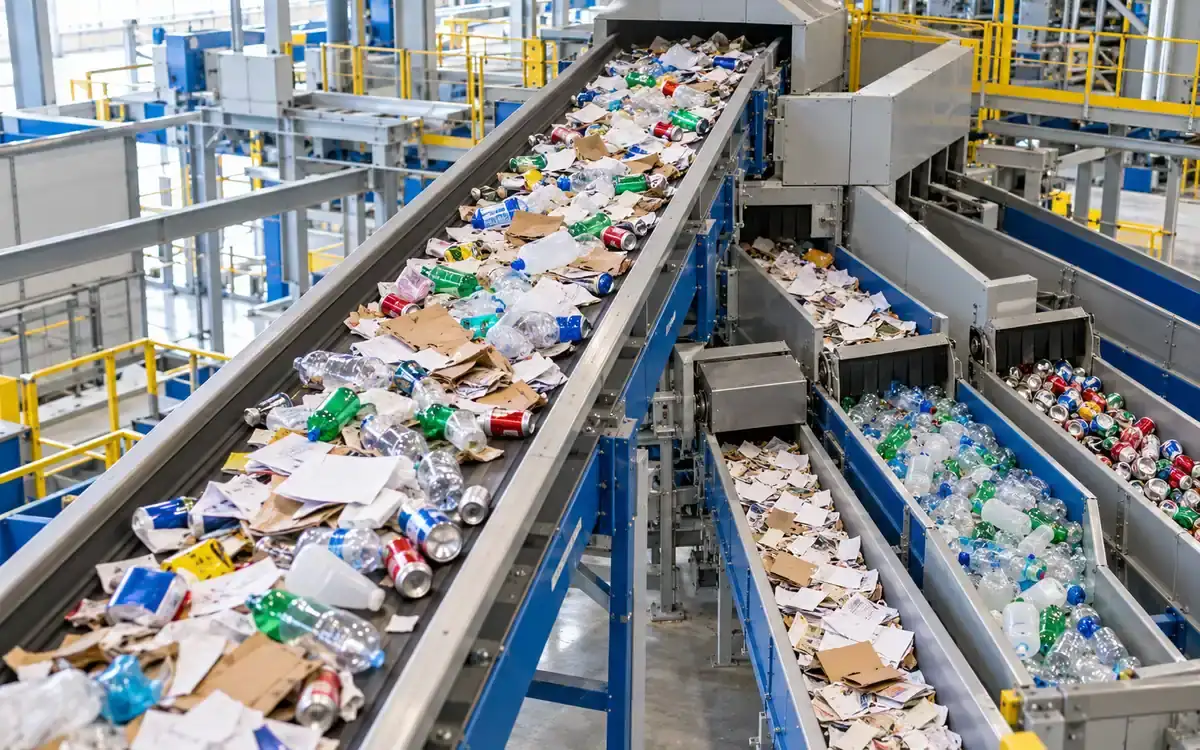
A materials recovery facility works in three stretches: clearing and feeding, machine sorting, then checking and baling. According to the Wasatch Integrated Waste Management District, describing a real facility, recyclables are inspected on a tipping floor, pass through screens and separators, and are then pressed into bales for delivery to market.
Contents
- Feeding
- Screening
- Identifying and separating
- Baling
What you will learn
- List the stages in order from the tipping floor to the baler.
- Say what each group of machines does in the line.
- Understand why baled material is bought and sold like a raw material.
Before you start
You only need to know that collected recyclables are trucked to a recovery facility. This article describes one specific facility; others may order things differently.
How is material cleared and fed into the line?
The start of the line is about clearing large items and feeding evenly. On the tipping floor, the loader operator inspects what has arrived and removes items that cannot be recycled, such as tires, string lights and hoses. The infeed conveyor then feeds material into the system at a uniform, metered rate.
At the presort conveyor, sorters pull off large clean cardboard. They also remove items the system cannot process so they do not jam the line.
- Tipping floor
- Item picked out
- Infeed conveyor
Which machines split and identify the material?
The middle of the line holds the machines that split material by size, shape and kind. Rotary screens remove the oversize part. The disc screen divides flat from round. Optical sorters identify materials with sensors. Magnets take ferrous metal, and the eddy-current separator takes nonferrous metal such as aluminium.
Each machine does one job; after the stream branches, each branch goes to the next appropriate machine. Other articles in this topic go into each machine.
Where does material go after sorting?
It gets a last check, a cardboard screen, a holding bunker and then the baler. A quality-control sorter stands by the conveyor to remove contamination before the material enters storage bunkers. A screen separates cardboard from other fibres, containers and debris. Recovered material sits in bunkers before baling, then is pressed into bales and tied for delivery to market.
According to the US EPA, recyclables are bought and sold just like raw materials, and prices go up and down with supply and demand.
- Quality check
- Storage bunker
- Pressed bales
Real-world example
Follow an aluminium can through a hypothetical walk-through, since every facility arranges its machines differently. The can arrives on the tipping floor, is fed onto the conveyor, passes the screens, is taken out by the eddy-current separator, goes past quality control, waits in a bunker and is pressed into a bale with many other cans.
Common misunderstandings
A recovery facility does not wash everything and then sort it. The machines handle the right kinds of recyclables, and what cannot be processed is removed at the start of the line.
Human checks remain. The line has sorters at the presort conveyor and a quality-control sorter near the end.
Frequently asked questions
What does a materials recovery facility do?
It sorts, cleans and processes collected recyclables into materials that can be used in manufacturing.
What is a bale?
A block of recovered material pressed together and tied for delivery to market.
Who checks quality at the end of the line?
In the facility described, a quality-control sorter stands by the conveyor and removes contamination.
Summary
- The line starts with clearing large items and feeding material evenly.
- Machines split by size, shape and kind, each doing one job.
- The end of the line is quality control, storage and baling for delivery to market.
Terms in this article
English and Vietnamese terms, with the meanings used here. Hover, tap or Tab to a term with a dotted underline for an explanation as you read.
- tipping floorsàn tiếp nhận
- Where recyclables are first dropped off and inspected at a recovery facility.
- presort conveyorbăng tải tiền phân loại
- A conveyor with sorters on each side who pull off large and unprocessable items.
- storage bunkerkho chứa
- A holding bay for sorted material before baling.
- balermáy ép kiện
- A machine that presses recovered material into blocks and ties them.
- balekiện
- A pressed, tied block of recovered material ready for delivery.
- recovery facilitycơ sở thu hồi
- A facility where collected recyclables are sorted, cleaned and processed.
This article is not marked as viewed
Spotted something wrong or unsafe?
Tell the administrator by email. The message already has the article title and address.
More in this topic
 Starter
How Is Waste Sorted?
Follow sorting from the point of disposal to a materials recovery facility, and understand why local acceptance rules come before bin choice.
6 min read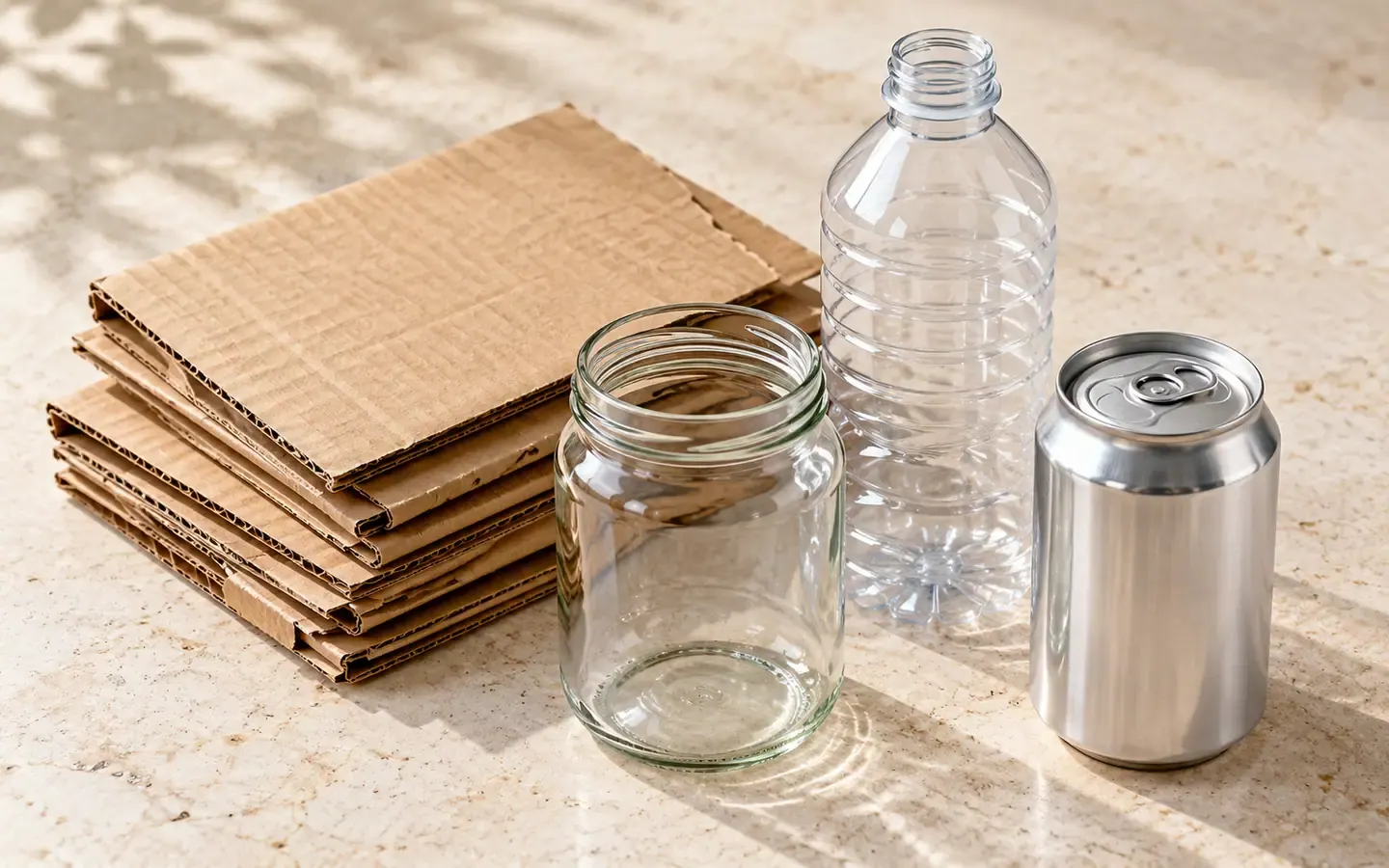 Starter
Which Materials Can Be Recycled?
Compare paper, plastic, glass and aluminium, distinguishing technical recyclability from acceptance by a local collection programme.
5 min read Starter
What Does Source Separation Contribute?
Source separation directs recyclables into the right collection route. See why misplaced items may be lost and why local rules matter.
5 min read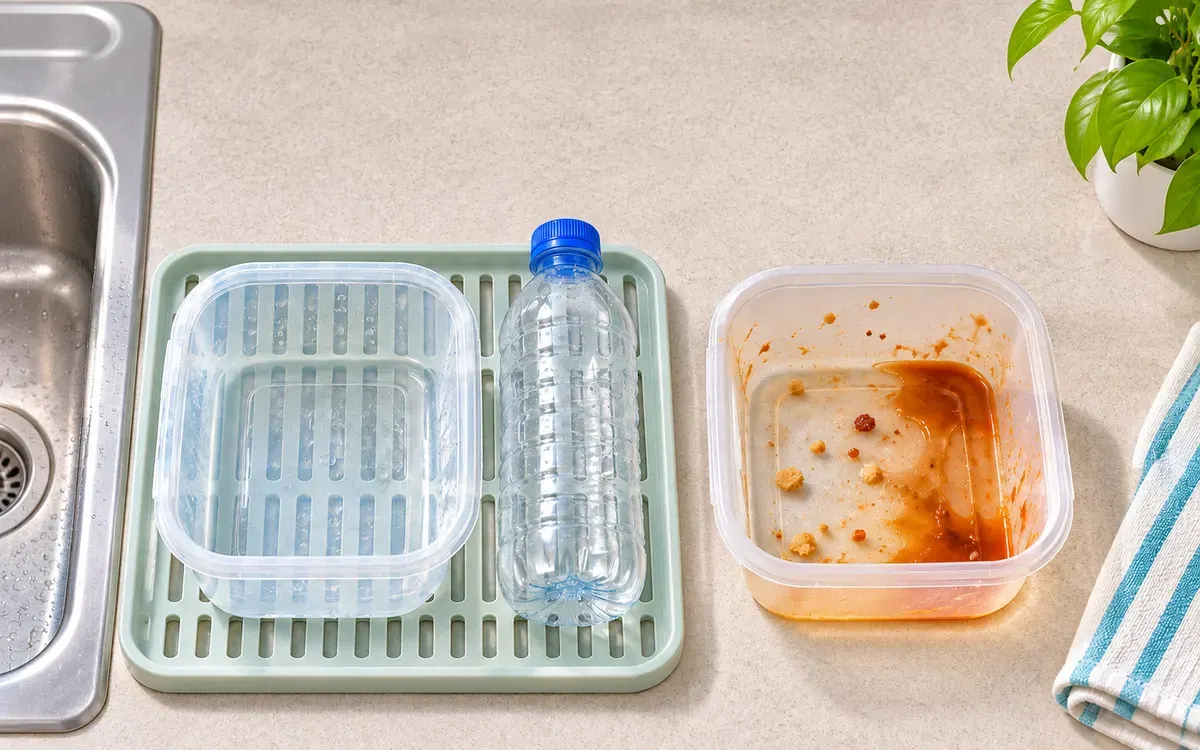 Starter
What Requirements Define a Clean Material Stream?
The right kind of item and clean enough, spatula-clean. See why one dirty item can affect the whole stream of recyclables.
5 min read


Sources
These sources are written for older readers. If they feel hard, read them with an adult.
- Material Recovery and Transfer Facility(opens in a new tab)
Wasatch Integrated Waste Management DistrictTier A: government, standards or research bodiesRead on November 3, 2026
- Recycling Basics and Benefits(opens in a new tab)
US EPATier A: government, standards or research bodiesRead on November 3, 2026